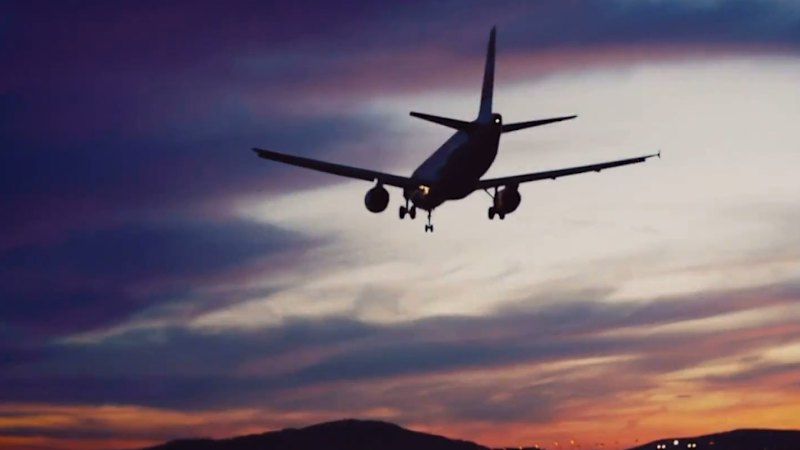
Imagine sitting at LAX with your boarding pass in hand, ready for the 15-hour haul back to Sydney, when every departure board in the terminal suddenly flips to red. That exact nightmare hit thousands of Australian travellers when a nationwide US flight grounding brought American airspace to a standstill. One minute people were queuing for coffee near Gate 148, and the next, an entire aviation network simply stopped moving.
Honestly, most travel coverage treats these meltdowns like a freak weather event. They show a few clips of tired families sleeping on terminal carpets, quote an airline spokesperson apologising for the inconvenience, and move on. They completely miss the real problem. When the Federal Aviation Administration (FAA) issues a ground stop—whether from a Notice to Air Missions (NOTAM) outage, an air traffic control failure, or severe system glitches—international passengers get hit twice as hard as domestic flyers. You aren't just waiting for the next shuttle to Chicago. You're fighting for seats on ultra-long-haul routes where planes only fly once or twice a day.
Why a US Ground Stop Hits Australians Harder Than Anyone Else
If a domestic flight between New York and Miami gets cancelled, an airline can throw you onto five other departures before dinner. Try doing that between Los Angeles, Dallas, or San Francisco and Australia. Transpacific routes run on razor-thin capacity with massive widebody aircraft like the Airbus A380 and Boeing 787 Dreamliner.
When Qantas, United, Delta, or American Airlines loses a single departure window because of a US airspace freeze, thousands of seats vanish overnight. Planes sit out of position. Flight crews time out under strict FAA and Civil Aviation Safety Authority (CASA) duty limits. You can't just swap in a spare pilot at midnight in Houston when that crew needs ten hours of mandatory rest before crossing the Pacific.
I've seen travellers make the exact same fatal mistake during every major US aviation disruption. They stand in the physical customer service queue at the airport terminal while four hundred other panicked passengers do the exact same thing. By the time you reach the desk three hours later, every seat back to Melbourne or Brisbane for the next four days is gone.
The Invisible Domino Effect Behind Nationwide Flight Groundings
People assume a national grounding happens because of a single broken wire or one bad storm. In reality, US airspace operates like a tightly wound clock where one software failure breaks everything downstream.
Look at how the FAA manages traffic across the continental United States. The system relies on centralised data feeds that push real-time safety alerts, runway closures, and airspace restrictions to pilots and dispatchers. When that core infrastructure fails—as we've seen in major US aviation outages—controllers lose the ability to verify flight safety legally. They don't have a choice. Everything on the tarmac stays parked until the system reboots and clears its backlog.
Even after the FAA lifts a ground stop, the chaos has barely started. Airlines face a massive traffic jam on the ground. Gate space runs out because inbound planes can't leave, which forces newly arrived flights to sit on the tarmac for hours. For Australians connecting through hubs like Dallas-Fort Worth (DFW) or San Francisco (SFO) from smaller US cities, a two-hour delay on a regional feeder flight means watching your Sydney connection push back from the gate without you.
What Your Airline Actually Owes You in the United States
Here's the ugly truth that catches most Australians off guard. Consumer protections for stranded flyers in the United States are weak compared to Europe, and they're completely different from what you might expect at home.
Under US Department of Transportation (DOT) rules, airlines are only legally required to refund your ticket if your flight is cancelled or significantly delayed and you choose not to travel. That's it. If you're stuck in Los Angeles for three days because of an FAA system failure or air traffic control outage, US law doesn't force the airline to pay for your hotel room, your meals, or your Uber to a motel near the airport.
Airlines classify FAA groundings and air traffic control failures as "uncontrollable events"—the same bucket they use for blizzards and hurricanes. Because the carrier didn't directly cause the outage, they can legally walk away from your accommodation bill. Some carriers will hand out meal vouchers or partner hotel discounts out of goodwill, especially if you hold high-tier frequent flyer status, but they aren't obligated to keep a roof over your head.
The Ticket Rule Almost Everyone Gets Wrong
There's one massive exception to this mess, and knowing it can save you thousands of dollars. It comes down to who issued your ticket and how your itinerary was booked.
- Single-ticket itineraries: If you booked your entire trip on one ticket—say, flying American Airlines from New York to LAX and connecting onto Qantas to Sydney—the operating carriers share responsibility for getting you home. When the domestic leg collapses, they must rebook you on the next available transpacific flight at no extra cost.
- Separate tickets: If you bought a cheap domestic fare on a budget carrier to position yourself in Los Angeles for a separate international flight home, you're on your own. If the US grounding makes you miss that international flight, the transpacific airline can treat you as a no-show and cancel the rest of your ticket. Never book separate positioning flights on the same day if you're flying out of the US.
How to Get Out of the Terminal While Everyone Else Waits
When a national grounding hits, speed beats loyalty. You have roughly fifteen minutes after the news breaks before the phone lines jam and airport hotel prices triple.
Stop standing in the terminal line immediately. Pull out your phone, open the airline's app, and look for automated rebooking prompts while simultaneously calling the airline's Australian customer service number rather than the US toll-free line. US call centres get obliterated during nationwide outages, with wait times stretching past four hours. Calling the Sydney or Melbourne desk via Wi-Fi calling often connects you to an agent in minutes because their phone queues aren't flooded by domestic American flyers.
Check alternative routing options before you even speak to an agent. Don't just ask for the next direct flight to Sydney. Ask the agent to look at routing you through Auckland on Air New Zealand, Nadi on Fiji Airways, or even Vancouver on Air Canada if your airline shares a joint venture or alliance partnership. Getting across the Pacific to New Zealand puts you a three-hour hop away from home, which is infinitely better than rotting in a terminal chair in Texas for five days.
Making Travel Insurance Actually Pay Out
Most Australians buy travel insurance assuming it covers any flight delay automatically. Then they file a claim after a US airspace grounding and get rejected because they didn't collect the right paperwork at the airport.
Insurers like Cover-More, Allianz, and 1Cover will usually reimburse emergency accommodation, meals, and alternative transport when an air traffic control outage or aviation grounding strands you overseas—provided your policy covers unexpected transport delays and you bought the policy before the disruption became public knowledge. However, claims assessors don't accept screenshots of news articles as proof.
Before you leave the airport, get a written Delay Confirmation Letter from the airline desk or download the official disruption notice directly from your airline's app showing your flight number, original departure time, and the stated reason for the delay. Keep every single itemised receipt for hotels, food, and pharmacy essentials—credit card statements alone won't cut it. Book a reasonably priced airport hotel right away instead of waiting for airline vouchers that might never arrive, document the exact reason for the grounding from the carrier, and submit your claim the moment you land back in Australia.