The air in Beijing has a specific weight to it. It is a mix of humidity, the faint scent of coal dust from the distant industrial belts, and the invisible, crushing pressure of history being made in quiet rooms. When Pedro Sánchez stepped off the plane for his second visit to China in barely a year, he wasn’t just a prime minister on a diplomatic junket. He was a tightrope walker. Below him, the safety net had been shredded by the jagged edges of a world on the brink of a wider war.
Most people see diplomacy as a series of staged handshakes and dry press releases. They see the suits, the flags, and the polished mahogany tables. They don't see the sweat. They don't see the sleepless nights of the trade attaches or the frantic calculations of the factory owners in Valencia who wonder if their shipping containers will ever clear the port of Ningbo. You might also find this connected story useful: Why the US Military Blockade of Iran Ports Changes Everything.
Spain finds itself in an agonizing position. It is a loyal child of the European Union, yet it possesses a streak of independence that makes it the perfect, if reluctant, bridge to the East. Sánchez is back in the Forbidden City because the alternative—silence—is a luxury Spain can no longer afford.
The Shadow of the Levant
While the cameras captured the choreographed smiles between Sánchez and Xi Jinping, the real conversation was happening in the margins. It was colored by the smoke rising over the Middle East. The escalating tensions involving Iran have changed the geometry of global trade. Every missile launched, every drone intercepted, sends a ripple through the Mediterranean. As discussed in detailed articles by Reuters, the implications are widespread.
For Spain, the math is brutal.
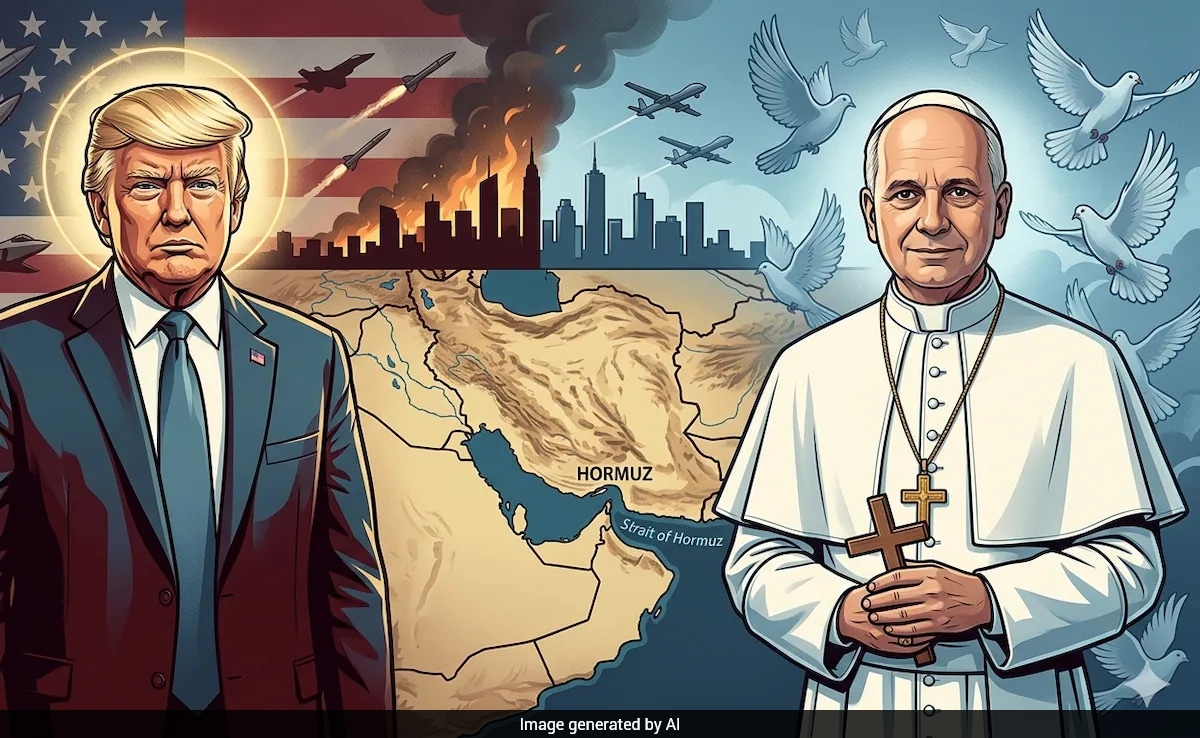
Energy prices are not abstract statistics; they are the reason a grandmother in Seville turns off her heater in February. If the Strait of Hormuz becomes a graveyard for tankers, the Spanish economy doesn’t just slow down. It gasps for air. Sánchez went to China to find a partner who, despite all ideological differences, shares a singular, desperate goal: stability. China needs the world to keep buying its electric vehicles and solar panels. Spain needs the world to keep moving so it can remain the gateway to Europe and Latin America.
Consider a hypothetical olive oil producer in Jaén. Let’s call him Mateo. For generations, Mateo’s family has looked north to France and Germany. But the European market is saturated, and the continent is inward-looking, gripped by a fear of "de-risking" from China. Mateo knows that the future of his grove depends on the growing middle class in Shanghai. When Sánchez speaks to Xi, he is, in a very real sense, Mateo’s salesman. He is trying to ensure that when the EU imposes tariffs on Chinese cars, China doesn’t retaliate by making Mateo’s oil too expensive for a family in Beijing to pour over their salad.
The Electric Tug of War
The centerpiece of this drama isn't oil or olives, though. It’s the battery.
We are currently living through a quiet revolution. The transition to green energy isn't just a moral imperative; it is the greatest shift in industrial power since the steam engine. Spain, with its vast sun-drenched plains and its history of automotive manufacturing, wants to be the "battery of Europe." But to do that, it needs Chinese investment. It needs the expertise of companies like Envision and BYD.
The tension is thick enough to cut. The European Commission is currently investigating Chinese subsidies for electric vehicles, threatening to slap massive duties on imports. It is a move designed to protect European jobs, but for Spain, it is a double-edged sword. If the EU bites the hand that builds the factories, those factories might just go elsewhere—to Morocco, or Turkey, or Hungary.
Sánchez is playing a high-stakes game of "good cop." While Brussels talks tough, Madrid offers a warm embrace. It is a gamble that requires nerves of steel. He must convince the Chinese that Spain is their most reliable friend in a hostile neighborhood, while simultaneously convincing his peers in the EU that he isn't selling out the union's long-term sovereignty for a few thousand factory jobs in Extremadura.
The Human Cost of Cold Statistics
We often talk about "bilateral trade deficits" as if they are scores in a game. But a deficit is just a word for a hole in someone’s pocket. Spain’s trade gap with China is wide, and Sánchez is under pressure to narrow it.
Think about the young fashion designer in Madrid. She has the talent, the vision, and the brand. She wants to tap into the Chinese luxury market, which is currently the largest on the planet. But she faces a wall of bureaucracy, intellectual property concerns, and a digital ecosystem—WeChat, Douyin—that feels like another galaxy.
When Sánchez sits down with Premier Li Qiang, he isn't just discussing "market access." He is trying to lower the wall for that designer. He is trying to ensure that "Made in Spain" carries the same weight in a Hangzhou mall as it does on the Gran Vía.
The stakes are invisible until they aren't. They are invisible until the price of a car jumps by five thousand euros because of a trade war. They are invisible until a shipping route is closed because of a conflict in the Gulf that neither Madrid nor Beijing can control, but both must endure.
The Invisible Bridge
There is a certain irony in a Socialist leader from the fringes of Europe traveling halfway across the world to talk business with the head of the Chinese Communist Party. On paper, they should have nothing in common. But the reality of 2026 is that ideology is increasingly subservient to the raw necessity of survival.
Spain has a unique cultural asset that the rest of Europe lacks: the Spanish language. As China expands its influence in Latin America, Spain becomes the natural translator. Beijing sees Madrid as a portal to the Western Hemisphere. Sánchez knows this. He uses it as leverage. He isn't just representing forty-eight million Spaniards; he is positioning himself as the interlocutor for a Spanish-speaking world that China desperately wants to court.
But bridges are vulnerable. They can be bombed, and they can be burned.
The pressure from Washington is constant. The United States views any European outreach to China with deep suspicion, especially as the "no limits" partnership between Moscow and Beijing continues to cast a shadow over the war in Ukraine. Sánchez has to navigate this without tripping. He has to tell the Americans he is a loyal NATO ally while telling the Chinese he is an independent partner. It is a performance that leaves no room for error.
The Long Game
As the delegation moves from the ornate halls of Beijing to the gleaming skyscrapers of Shanghai, the mood shifts from the political to the practical. In Shanghai, the talk is of green hydrogen, of port logistics, and of the digital yuan.
This isn't a story with a neat ending. There won't be a single moment where we can say Sánchez "won" or "lost." Diplomacy of this scale is a slow-motion grind. It is about building enough trust so that when the next crisis hits—and it will—there is a phone line that stays open.
The world is fragmenting. We are seeing the rise of "fortress" economies, where nations retreat behind walls of tariffs and suspicion. Sánchez is trying to keep one door ajar. He is betting that the interconnectedness of our world—the fact that a Spanish pig farmer’s livelihood is tied to a Chinese tech worker’s lunch—is a stronger force than the drums of war.
It is a fragile hope.
As the sun sets over the Huangpu River, reflecting off the glass of the Pudong skyline, the scale of the challenge becomes clear. Spain is small, and China is vast. But in the theater of global politics, the smallest actor can sometimes hold the most important key.
Sánchez boards his plane back to Madrid with a suitcase full of memorandums and promises. Back in Spain, the farmers are still checking the weather, the factory workers are still punching their clocks, and the grandmothers are still watching the news from the Middle East with a sense of dread. They may not know the details of the meetings in Beijing, but their lives are the silent ink on every document signed.
The red carpet has been rolled up. The flags have been tucked away. But the razor edge remains, and the walk continues.