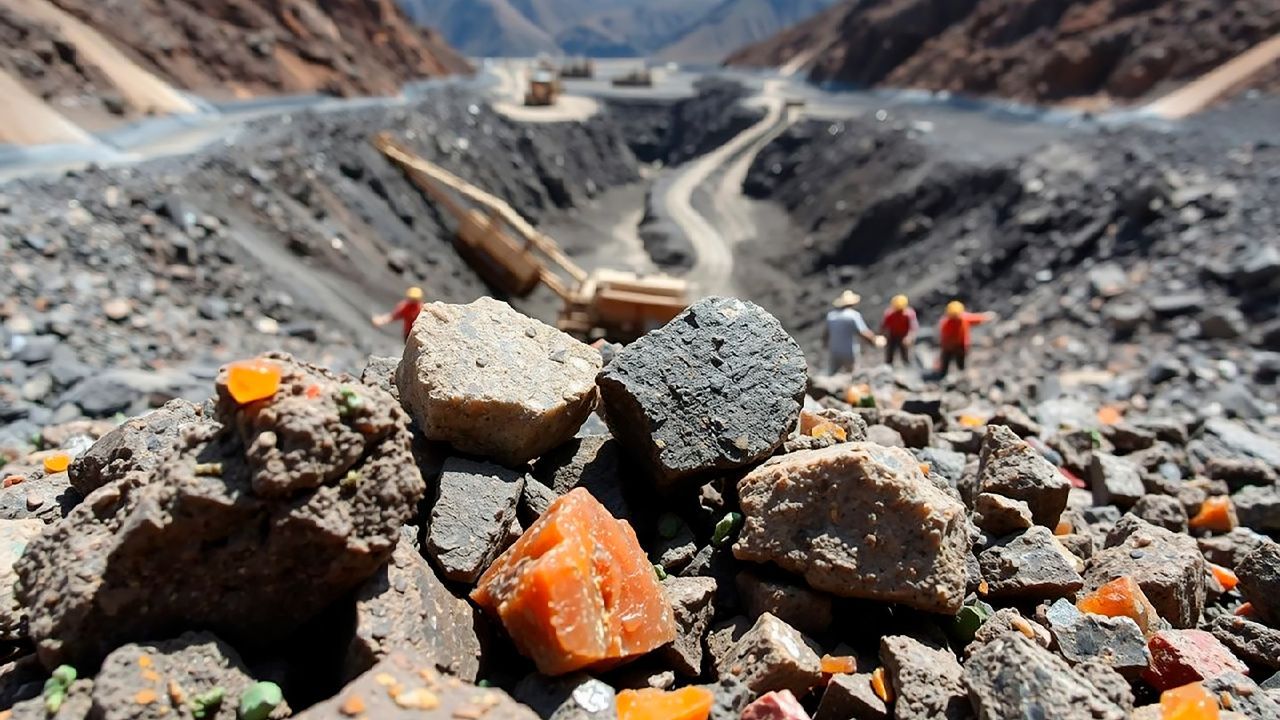
The seizure of nearly $920 million in illicit copper exports marks the collapse of a shadow industry that has operated under the nose of the Chilean state for years. This was not a simple case of cargo theft or a one-off heist. It was a sophisticated, multi-year laundering operation that converted stolen industrial scrap and high-grade minerals into legitimate-looking exports destined for Chinese smelters. By exploiting regulatory blind spots in the world’s largest copper producer, a criminal network managed to move thousands of tons of "red gold" without triggering a single alarm until the scale of the fraud became too massive to hide.
The scheme functioned through a network of shell companies and falsified customs declarations. These entities claimed to be exporting low-value metal waste or legitimate scrap, while actually shipping high-purity copper cathodes and concentrates stolen from major mining sites. This wasn't just about the money. It was about the systematic corruption of the supply chain that provides the world with the essential ingredient for the green energy transition.
The mechanics of a billion dollar heist
To understand how nearly a billion dollars in metal vanishes, you have to look at the logistical gaps between the mine mouth and the port of San Antonio. Chile produces roughly a quarter of the world's copper. When you move that much volume, the sheer inertia of the bureaucracy works in favor of the criminal.
The criminal organization, centered around a group of Chilean businessmen and their international facilitators, utilized a method known as "laundering through origin." They would purchase stolen copper—often taken from the trucks of legitimate mining giants like Codelco or BHP—and bring it to illicit processing plants. There, the metal was mixed, re-stamped, or melted down to erase its corporate DNA.
Once the physical evidence of the theft was obscured, the ring used front companies to generate a paper trail. These companies would issue invoices to each other, creating a "legal" history for the metal. By the time the copper reached the docks, it had a full set of customs documents declaring it as legally sourced scrap. Customs officials, overwhelmed by the volume of containers moving through the ports, often rely on spot checks and paperwork audits. If the papers look right, the container moves.
Why the Chinese market is the perfect vacuum
China’s insatiable demand for copper creates a "no questions asked" environment at the tail end of the supply chain. Chinese smelters are the primary destination for over half of the world's copper. In a market where margins are thin and the pressure to meet production quotas is high, the origin of a shipment of scrap metal is often secondary to its price and purity.
The Chilean investigation revealed that the buyers in China were often legitimate trading firms that may or may not have known the illicit nature of the goods. However, the complexity of the global commodities trade provides a convenient layer of deniability. When a shipment arrives with a stamped government export certificate from Chile, the buyer has little incentive to dig deeper. This creates a feedback loop. As long as there is a buyer willing to pay near-market rates for "scrap" that happens to be high-grade copper, the incentive for theft remains astronomical.
The failure of digital oversight
For years, the mining industry has talked about blockchain and digital signatures as the cure for supply chain fraud. This case proves that technology is only as good as the data entry. If the initial "birth certificate" of the copper is forged at a local warehouse, the most advanced tracking system in the world will simply track a lie with high efficiency.
The Chilean tax authority (SII) and the National Customs Service found that the ring exploited the lack of real-time communication between mining company logs and export filings. There is a massive disconnect between what is reported stolen on a remote mountain road and what is being loaded onto a ship three days later.
The human and economic toll of mineral leakage
The impact of this $917 million leak extends far beyond the balance sheets of mining conglomerates. This is a direct hit to the Chilean treasury. Copper exports are the backbone of the country’s social programs and infrastructure development. When copper is stolen and exported as scrap, the state loses out on royalties, export duties, and corporate taxes.
- Royalties: Stolen copper bypasses the mining royalty structures that fund local communities.
- Tax Evasion: The shell companies involved in the ring reported minimal profits or manufactured losses to avoid paying any corporate tax on the hundreds of millions they were moving.
- Market Distortion: Large-scale smuggling creates an uneven playing field for legitimate scrap metal recyclers who cannot compete with the margins of those selling stolen primary ore.
Security in the "Atacama" region has become a paramilitary affair. Mining companies are now forced to spend hundreds of millions annually on private security, armored transport, and drone surveillance. These costs are ultimately passed down to the consumer, making the raw materials for electric vehicles and power grids more expensive for everyone.
The blind spots in international maritime law
One of the most troubling aspects of the investigation is how easily the shipments cleared international waters. Once a container is on a ship, it enters a jurisdictional gray zone. The "Red Gold" ring understood that the friction points are at the port of entry and exit. By the time a suspicious shipment is flagged, it is often already being processed in a foreign smelter, the physical evidence melted down and integrated into the global supply.
Interpol and local authorities face a massive hurdle in reclaiming these funds. The money generated from these sales was quickly moved through a labyrinth of offshore accounts in jurisdictions known for banking secrecy. This wasn't just a theft ring; it was a sophisticated financial operation that mirrored the very global economy it was preying upon.
A systemic vulnerability
The Chilean government’s response—arresting over 30 individuals and seizing dozens of properties—is a necessary first step, but it doesn't solve the underlying vulnerability. The mining industry operates on a high-trust model that is increasingly incompatible with the rise of organized crime in South America. Cartels and criminal syndicates are diversifying away from narcotics and into "green" commodities because the risks are lower and the profits are comparable.
If you steal a shipment of cocaine, every law enforcement agency in the hemisphere is on your trail. If you steal twenty tons of copper, it’s often written off as a logistics loss or an insurance claim. This perception of "low risk" is what allowed the ring to scale to nearly a billion dollars before being toppled.
Beyond the arrests
The current crackdown will likely cause a temporary dip in smuggling activities, but the vacuum remains. As the global price of copper stays high due to the electrification of the global economy, the incentive to steal will only intensify. Chile's challenge is to move beyond reactive policing and toward a proactive, integrated monitoring system that links mining production data directly to port manifests in real-time.
The industry needs to stop treating copper theft as a "shrinkage" issue and start treating it as a threat to national security. The sheer scale of the $917 million ring proves that this is no longer the work of petty thieves. This is corporate-scale crime that requires a corporate-scale defense.
The reality is that as long as the paperwork can be bought and the ports remain porous, the red gold will continue to flow into the shadows. The Chilean bust is a wake-up call for the global commodities market. The supply chain is only as strong as its weakest link, and right now, that link is being melted down in a smelter halfway across the world.
Stop looking for the thieves at the mine gates and start looking for them in the accounting offices and customs brokerage firms where the real transformation of stolen goods happens.