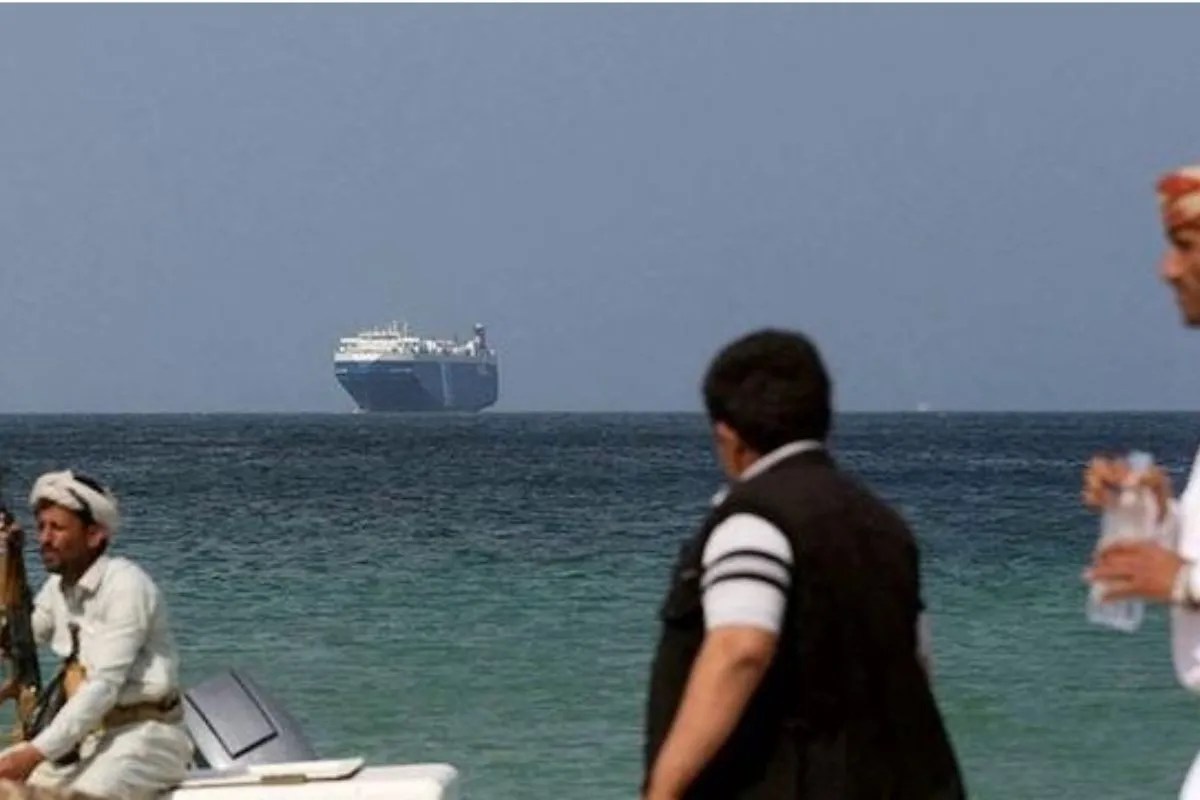
A cargo ship glides through a narrow strait under a blistering sun, carrying thousands of tons of refined fuel meant for gas stations half a world away. On paper, it is a routine transit. In reality, that vessel sits inside one of the most volatile maritime corridors on Earth. When news breaks that Yemen's Houthi forces have declared a naval blockade targeting Saudi shipping lanes, the shockwave does not stop at the coastline. It ripples immediately into international commodities markets, sending energy traders into a frenzy and leaving everyday consumers bracing for the inevitable price spike at the pump.
To understand why a statement issued thousands of miles away can instantly shift the global economy, one must look closely at the geography of energy security.
The Tightrope of Maritime Trade
The Bab-el-Mandeb Strait serves as a primary artery connecting the Red Sea to the Gulf of Aden and the Indian Ocean. Millions of barrels of crude oil and petroleum products pass through this narrow waterway every day. It is a critical link between energy producers in the Middle East and major consumer markets in Europe and North America.
When maritime routes in this region are threatened, ships face a dangerous dilemma: risk transit through targeted waters or take the long route around the southern tip of Africa. Neither option comes without serious costs.
Consider a hypothetical commercial tanker navigating these waters. Continuing on the direct route through the Red Sea means taking on astronomical marine insurance premiums, assuming insurers are willing to cover the voyage at all. Diverting around the Cape of Good Hope adds thousands of nautical miles and up to two weeks of travel time. That extra travel time consumes tons of additional fuel and ties up fleet capacity, creating a bottleneck that reverberates across global supply chains.
Why Oil Markets React Instantly
Commodity markets run on anticipation. Traders do not wait for supply to physically dry up before adjusting prices; they trade on risk profiles and projected shortages.
- Insurance Costs Escalation: War risk surcharges for vessels entering high-risk zones can multiply overnight, directly increasing the landed cost of crude oil.
- Supply Chain Delay: Longer transit routes reduce the immediate availability of tankers, making freight transport significantly more expensive.
- Geopolitical Risk Premium: Uncertainty surrounding energy infrastructure prompts buyers to bid up prices to secure immediate reserves.
When news of a naval blockade spreads, energy desks around the world recalibrate their exposure within minutes. Crude benchmarks jump, shipping stocks fluctuate, and logistics directors work overtime to reroute fleets.
The Human Impact at the End of the Chain
It is easy to view these developments purely through financial metrics, ticker symbols, and economic charts. But every upward tick in Brent crude or West Texas Intermediate has real-world consequences for ordinary people.
A local delivery driver trying to keep fuel costs manageable sees profit margins shrink overnight. Small business owners relying on freight distribution face sudden surcharges on raw materials. In developing nations that depend heavily on imported fuel, elevated oil prices strain national budgets, reducing funds available for public infrastructure and social services.
The vulnerability of modern life is tied directly to these narrow maritime corridors. A single announcement, accompanied by the threat of sea mines, drone strikes, or vessel seizures, exposes the fragile nature of global trade networks.
Beyond the Immediate Headlines
Regional tensions in the Middle East have long cast a shadow over energy markets, but the mechanics of modern maritime blockades have evolved. Unmanned aerial vehicles and low-cost anti-ship missiles allow regional groups to project power into critical waterways with unprecedented ease.
This shift presents a complex security challenge for international coalitions attempting to safeguard commercial shipping. Ensuring open lanes of trade requires continuous naval patrols, intelligence sharing, and active defensive measures—a high-stakes effort where a single miscalculation can trigger wider conflict.
As long as key transit points remain exposed to political and military volatility, global markets will remain on edge, serving as a constant reminder that the global economy hangs on a remarkably thin thread.