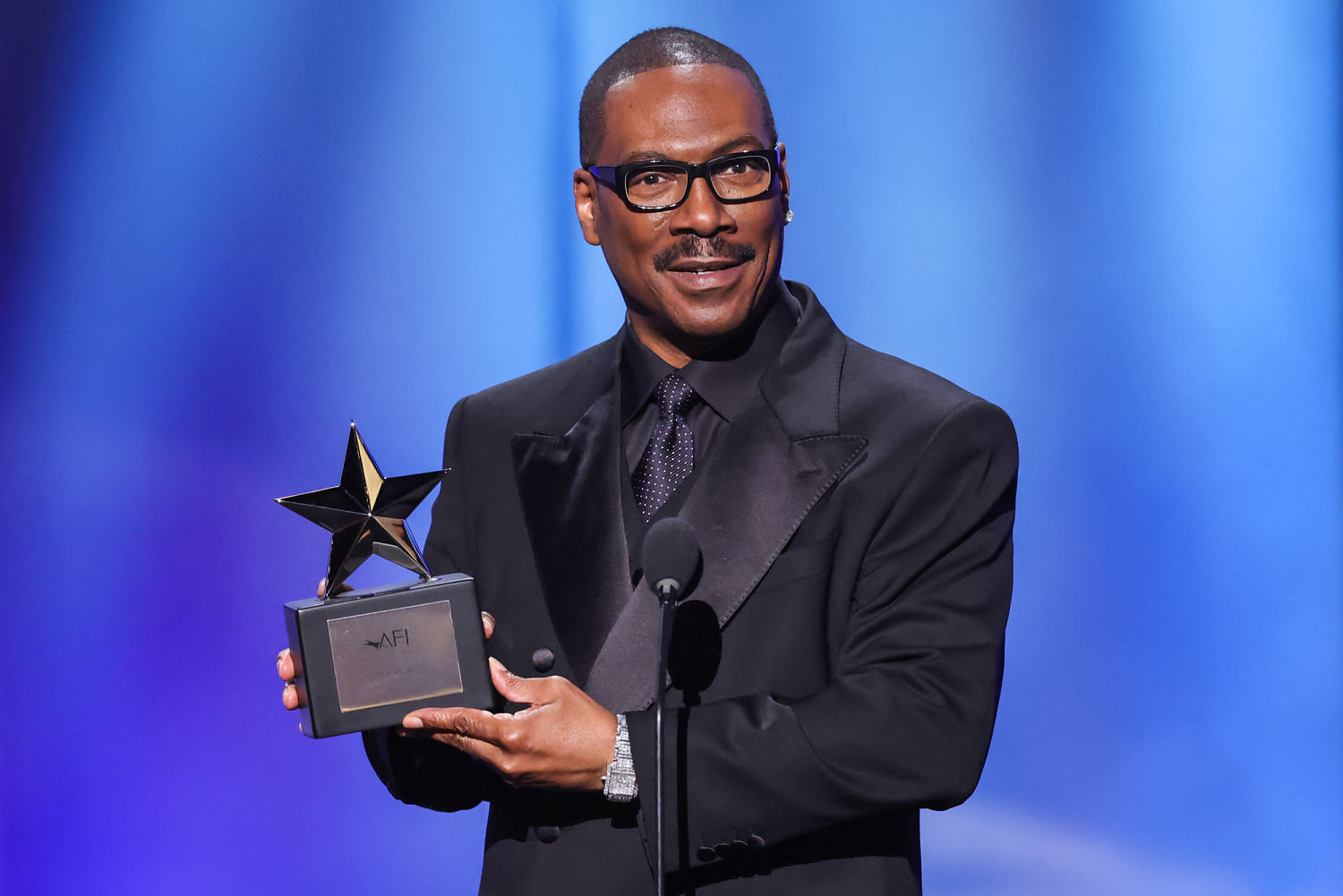
Eddie Murphy spent decades running away from the very idea of being an elder statesman. In the 1980s, he didn't just dominate the box office; he broke the existing machinery of stardom and rebuilt it in his own image. Now, as the American Film Institute prepares to grant him its 54th Life Achievement Award, the industry isn't just celebrating a comedian. It is reckoning with the man who forced Hollywood to accept that a Black lead could be the biggest draw on the planet without making any apologies for it.
The AFI Life Achievement Award remains the most prestigious honor in film because it usually requires a certain level of gravitas—a seriousness that Murphy often mocked during his meteoric rise. To understand why this moment matters, you have to look past the red carpet and into the structural shifts Murphy triggered. He wasn't just funny. He was a one-man economy.
The Architect of the Modern Blockbuster
Before Murphy, the industry followed a rigid script for Black actors. You were either the sidekick, the victim, or the heavy. Murphy ignored those options entirely. When he stepped onto the set of 48 Hrs., he wasn't playing a supporting role to Nick Nolte. He was the engine of the film.
The "buddy cop" genre as we know it exists because Murphy figured out how to balance street-smart cynicism with a vulnerability that the camera loved. He didn't ask for permission to be the center of the frame. He simply took it. This wasn't just talent; it was a hostile takeover of the leading man archetype.
The Saturday Night Live Lifeline
It is often forgotten how close Saturday Night Live came to total collapse after the original cast departed. Murphy didn't just join the show; he saved it from becoming a footnote in television history. By the time he left for Hollywood full-time, he had established a blueprint for the "SNL-to-Superstar" pipeline that dozens would try to replicate, though few with the same surgical precision.
The Cost of Total Dominance
Being the biggest star in the world comes with a unique set of pressures that usually break a person. Murphy’s career shifted from the raw, dangerous energy of Raw and Delirious to the prosthetic-heavy family comedies of the late 90s and early 2000s. Critics often saw this as a retreat. They claimed he had lost his edge.
The reality is more complex. Murphy realized earlier than most that the "bad boy" persona has an expiration date. To survive four decades in a fickle industry, he had to evolve into a brand. This meant moving from the R-rated firebrand to the voice of Donkey in Shrek. It was a calculated move into longevity. He traded the immediate rush of the stand-up stage for a seat at the table where the real power lives.
The Dolemite Resurrection
If there was any doubt about Murphy's dramatic range or his commitment to the craft, Dolemite Is My Name silenced it. This wasn't a man coasting on his laurels. It was a masterclass in character acting, showing a deep reverence for the history of Black independent cinema. It reminded the voters at the AFI that Murphy’s influence extends far beyond the jokes. He is a historian of the hustle.
Why the AFI Honor is Different
Most awards are about a single performance. The AFI Life Achievement Award is about a body of work that changes the culture. When you look at previous recipients—names like Hitchcock, Spielberg, and Streep—they all share a common thread of fundamental influence.
Murphy belongs in that room because he broke the ceiling for everyone who came after him. Without Eddie Murphy, there is no Chris Rock, no Dave Chappelle, and arguably no Kevin Hart. He proved that Black humor wasn't niche. It was universal. He didn't adapt to the industry; he made the industry adapt to him.
The Silence of the Stand-up Mic
One of the most intriguing aspects of Murphy’s recent years is his public flirtation with returning to stand-up. For a man who hasn't toured in over thirty years, the anticipation is suffocating. Yet, he remains disciplined. He knows that his legacy is a delicate thing. By accepting the AFI award, he is finally leaning into the "legend" status he spent so long avoiding.
The industry is currently obsessed with franchises and intellectual property. Murphy, however, was his own intellectual property. He didn't need a cape or a shield. He just needed a leather jacket and a laugh that everyone on earth could recognize.
The Myth of the Comeback
People love to talk about the "Eddie Murphy Comeback," but the truth is he never really left. He just stopped playing the game by Hollywood's rules. He retreated to his estate, raised a massive family, and waited for the right projects. He stopped being a workhorse and started being a curator.
This AFI honor is less about a return to form and more about a formal recognition of his permanence. The award usually goes to the person who has reached the summit and stayed there. In Murphy's case, he built his own mountain.
The ceremony will likely be filled with montages of Axel Foley and Prince Akeem. There will be speeches about his timing and his smile. But the real story is the grit it took to remain relevant in an industry designed to discard you the moment you stop being the "new thing." Murphy isn't the new thing anymore. He is the standard.
When the lights go down and the standing ovation begins, the applause isn't just for the movies. It is for the audacity of a kid from Roosevelt, New York, who decided he was going to be the biggest star in the world and then actually did it. Hollywood is finally saying thank you for the billions of dollars and the cultural shifts, but Murphy's real achievement was surviving the machine with his identity intact.