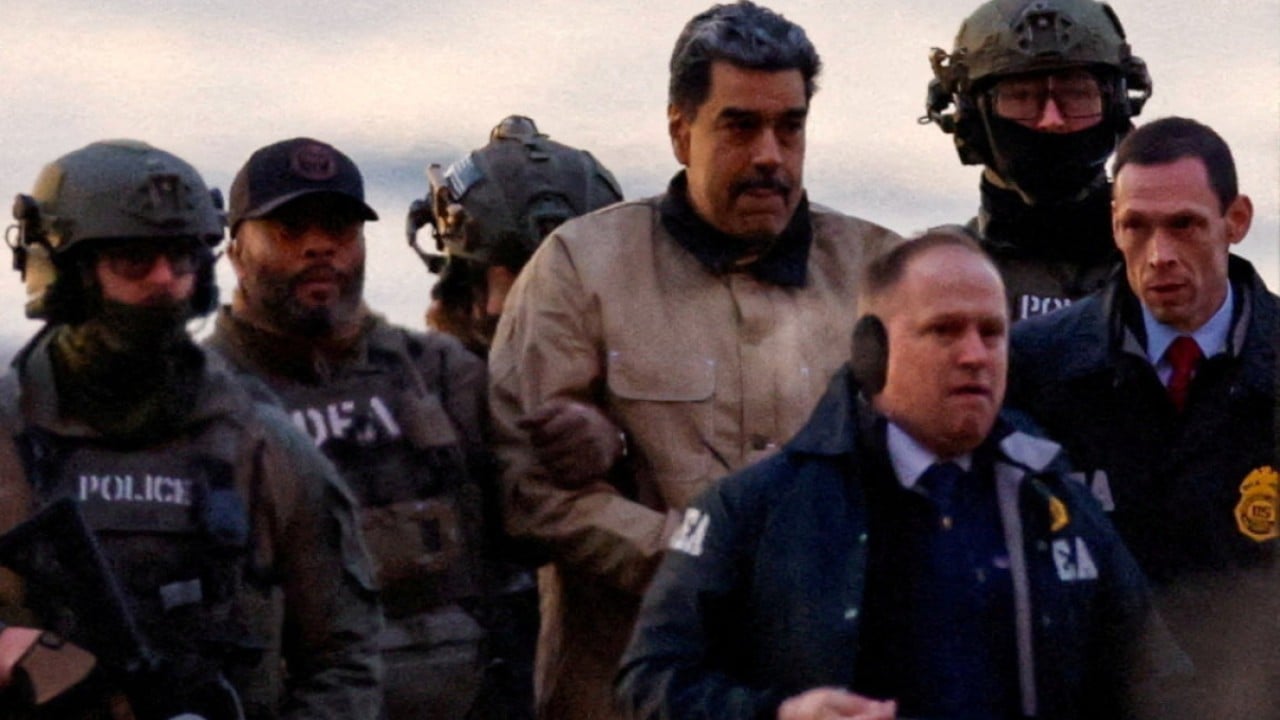
Retired flag officers lined up to oppose livestreaming the execution of Fort Hood shooter Nidal Hasan. Predictable. Safe. Politically tidy.
They did not defend a constitutional principle. They defended an institutional comfort zone. Meanwhile, you can explore other stories here: Inside the Resort Tragedy Nobody Wants to Examine.
Whenever high-profile military justice or capital punishment enters public view, retired generals and admirals rush to the microphones with warnings about "dignity," "spectacle," and "propaganda value." On paper, those objections sound sober and statesmanlike. In practice, they treat a decade-old legal and institutional failure as a media-production problem.
Nidal Hasan killed 13 people and wounded more than 30 at Fort Hood (now Fort Cavazos) in November 2009. His case dragged through years of pretrial litigation, a self-representation dispute, a conviction in August 2013, a death sentence, and years of appellate review. The public debate over how—or whether—that sentence is carried out routinely gets stuck on two shallow poles: cheerleaders demanding a public spectacle, and retired brass insisting the state kill quietly behind closed curtains. To see the complete picture, check out the recent analysis by BBC News.
Both sides are asking the wrong question.
The Lazy Consensus Around Quiet Executions
The standard argument against livestreaming an execution rests on three claims: it turns a murderer into a martyr or propagandist, it degrades the solemnity of justice, and it traumatizes survivors or the public.
Those concerns are not imaginary. Extremist networks routinely repurpose footage of trials, courtrooms, and state violence for recruitment. A raw camera feed can easily be clipped, reframed, and circulated far outside its intended context.
Yet the lazy consensus treats secrecy as a cure-all. It assumes that if the public does not see the needle or the gurney, the event loses its symbolic weight. That assumption is backwards.
Secrecy does not erase propaganda. It hands the narrative over to rumor, speculation, and ideological spin. When an execution happens behind closed doors with minimal visual record, opponents of capital punishment claim the state is hiding behind sanitized procedures, while extremists claim whatever suits their grievance cycle. Pulling the curtain shut does not stop mythmaking. It just moves it off-camera.
More importantly, focusing on whether a camera should roll distracts from a much harder institutional reality: why a mass casualty attack on an active U.S. military installation took years to resolve in the first place, and why capital punishment in the military justice system operates like a museum piece rather than a functioning mechanism of accountability.
Defining the Terms Before Throwing Stones
Precision matters here because sloppy language fuels sloppy outrage.
First, a livestream is real-time, unedited broadcast or online distribution of an event as it occurs. That is fundamentally different from witness pool reporting, where accredited journalists or designated representatives observe an execution and file written accounts or limited pool summaries afterward. Confusing the two turns a debate over real-time mass distribution into a cartoon argument between "total secrecy" and "reality television."
Second, military capital punishment under the Uniform Code of Military Justice (UCMJ) is not ordinary civilian sentencing. A death sentence in a court-martial requires a unanimous verdict by a panel of members, adherence to specific aggravating factors under the Rules for Courts-Martial, and mandatory appellate review that moves slowly through military courts and civilian appellate tiers, including potential review by the Supreme Court of the United States.
Third, deterrence in terrorism and ideological violence is frequently misunderstood. Criminologists and national security scholars have debated general deterrence for decades, and the consensus among serious researchers is nuanced: severe penalties may incapacitate an individual permanently, yet ideological offenders rarely calculate punishment the way white-collar defendants calculate fines or prison terms.
When commentators talk as if livestreaming—or not livestreaming—Hasan's execution will somehow settle the moral ledger of Fort Hood, they are confusing theater with justice.
What Survivors Actually Ask When Cameras Are Mentioned
Whenever pundits debate cameras in the death chamber, someone inevitably invokes "closure" for victims and families. That word gets used like a sledgehammer.
In high-profile violence cases, survivors and bereaved families do not speak with one voice. Some want the state to carry out the lawful sentence without further delay. Some oppose the death penalty altogether. Others care far more about institutional accountability—how warning signs were handled before the shooting, how wounded soldiers and civilians were supported afterward, and whether bureaucratic silos were actually broken—than they do about the viewing format of an execution years later.
Treating "the families" as a single prop to justify opposing a livestream is intellectually lazy. You do not honor grief by turning grieving people into rhetorical shields for an old institutional preference.
At the same time, pushing for a livestream just to satisfy public curiosity has its own obvious ugliness. Watching a human being die in real time on a screen is not civic education. Most people who click a livestream link do not do so to study constitutional due process. They do so out of anger, morbid curiosity, or tribal score-settling.
Battle Scars From High-Stakes Crisis Narratives
I have spent years watching organizations, agencies, and leadership teams get blindsided because they fought yesterday's communications battle instead of fixing the underlying breakdown. I have seen institutions blow millions of dollars and years of credibility polishing external optics while ignoring internal friction, slow decision chains, and misaligned incentives.
Crisis communication fails when leaders confuse control of imagery with control of reality.
In military and national security institutions, there is a deep cultural reflex to manage appearances tightly. That reflex has real value during active operations, tactical movements, or intelligence protection. Applied blindly to public accountability debates, though, it backfires. The more defensive and opaque an institution looks, the less trust it earns when hard questions arise.
Heavy hitters in military law, administrative law, and national security—including former military judges, legal scholars who study the UCMJ, and historians of civil-military relations—have long pointed out that the military justice system's legitimacy rests on fairness, predictability, and adherence to law, not on dramatic optics. When the public perceives years of delay and procedural friction, no amount of quiet dignity at the end of the line magically restores confidence in the whole process.
Where My Contrarian Take Has Real Flaws
A sharp contrarian position is worthless if it pretends there are no trade-offs. There are real downsides to rejecting the retired brass consensus without endorsing livestreaming.
First, operational and security risks are real. Even when an attack is domestic or tied to radicalization, anything touching violent extremism carries copycat and agitation risks. Giving bad actors fresh visual material—even if it is not a livestream, or especially if it is—can feed online grievance loops.
Second, legal and practical hurdles around executions are massive. Debates over execution protocols, lethal injection drugs, statutory challenges, and appellate timelines often stall capital cases for years regardless of media rules. Focusing on livestreaming can look like arguing about window tint on a car that has been sitting on cinderblocks.
Third, challenging retired generals and admirals invites instant dismissal if you sound flippant about service or sacrifice. Flag officers who spent decades in uniform carry real weight in public debates, even when their institutional instincts are overly conservative. Ignoring their perspective rather than dissecting its weak spots makes an argument weaker, not stronger.
Answering the Questions People Actually Type Into Search Bars
People searching around this topic usually ask a handful of predictable questions. Most of those questions start from a shaky premise.
"Should Nidal Hasan's execution be livestreamed?"
Wrong framing. The better question is whether real-time broadcast of any execution serves a legitimate public interest that outweighs the risks of spectacle, exploitation, and harm.
In almost every modern democratic system, the answer is no. Real-time streaming strips context, accelerates viral distortion, and turns state action into on-demand content. Rejecting a livestream does not require adopting the retired generals' argument that everything should stay buried in institutional silence. Transparency through strict, verifiable oversight and accurate pool reporting is not the same thing as live entertainment.
"Why does it take so long to carry out a military death sentence?"
Because capital punishment in the United States—civilian or military—is heavily layered with constitutional safeguards, appellate review, and procedural litigation, and military capital executions are rare in the modern era.
Years pass between sentencing and execution due to mandatory appeals, collateral challenges, executive review steps, and broader legal disputes over capital procedures. Anyone who expects rapid finality from a capital case has not been paying attention to how U.S. capital litigation actually works.
"What do retired generals and admirals usually get right—and wrong—about public controversy?"
They usually get institutional stability right. They understand how chains of command, morale, and public perception interact inside large organizations.
They frequently get information dynamics wrong. In a fragmented media environment where clips travel globally in seconds, trying to maintain old-school information control often creates a vacuum that outsiders fill with hostility and conspiracy.
Thought Experiment: Two Ways to Handle High-Stakes Accountability
Imagine a scenario where a major security or justice proceeding concludes after a decade of legal battles.
In Path A, officials keep everything locked down tightly, offer minimal explanation for delays, and treat public scrutiny as an annoyance to be managed by senior retirees issuing stern warnings about decorum. Short-term tension drops slightly, maybe. Long-term skepticism hardens. Critics see an insular system protecting itself.
In Path B, leadership separates decorum from accountability. They refuse to turn human death into a livestream spectacle, while insisting on clear, plain-English explanations of legal timelines, strict rules against unnecessary secrecy, and honest accounting of systemic failures that allowed the underlying tragedy to happen in the first place.
Path B is harder. It requires leaders to answer uncomfortable questions about institutional competence instead of hiding behind ceremonial language. It also works far better over time.
What Actually Works Instead of Culture-War Posturing
If you want serious outcomes rather than cable-news noise around high-stakes cases like Fort Hood, stop treating media format as the main event.
- Separate spectacle from transparency. Oppose livestreamed executions without defending opaque secrecy. Insist on clear rules, factual reporting, and documented accountability.
- Audit the prevention chain, not just the punishment. Punishing a perpetrator years later never fixes intelligence gaps, behavioral warning signs, or bureaucratic blind spots. Focus scrutiny on what failed before the attack.
- Demand plain explanations for legal delays. When cases take a decade or more, explain the exact procedural stages and bottlenecks clearly so the public understands the difference between legal process and mere drift.
- Judge institutions by consistency, not tough talk. Loud demands for harsher optics rarely improve security. Consistent execution of law, clear standards, and honest self-examination actually do.
Retired generals and admirals may dislike the idea of cameras in a death chamber, and they have plenty of company. Yet guarding institutional decorum is not the same thing as earning public trust—and pretending a closed door solves an open credibility problem is a habit the system can no longer afford.