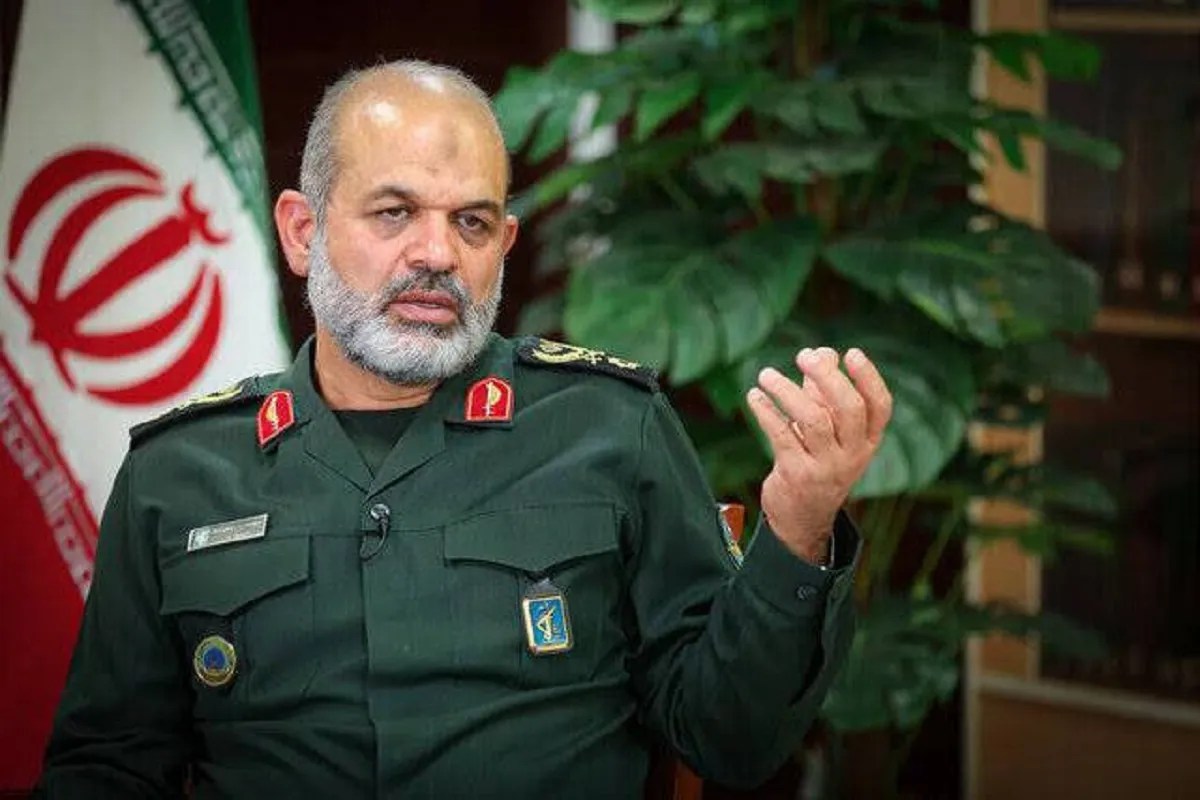
Iran just signaled a massive shift in its military hierarchy. Following the reported death of Supreme Leader Ali Khamenei, the landscape of Middle Eastern geopolitics has been thrown into a blender. While the world's eyes were on the mourning rituals and the potential for civil unrest, a more calculated move was happening in the shadows of the Supreme National Security Council. Ahmad Vahidi, a name that sends chills through certain international intelligence circles, has stepped into a role that essentially makes him the architect of Iran's next move against Israel.
This isn't just a standard promotion. It's a wartime pivot. If you've been following the tension between Tehran and Tel Aviv, you know that the "shadow war" isn't in the shadows anymore. It's loud, it's kinetic, and it's increasingly personal. By placing Vahidi in a position of supreme military command, Iran is telling the world they aren't looking for a diplomatic off-ramp. They're looking for a strategist who knows how to handle asymmetrical warfare and high-stakes regional escalation.
Who is Ahmad Vahidi and why does he matter right now
To understand why this appointment is a big deal, you have to look at Vahidi’s resume. This isn't a guy who spent his career pushing papers in a comfortable office in Tehran. He was the first commander of the Quds Force, the elite branch of the Islamic Revolutionary Guard Corps (IRGC) responsible for unconventional warfare and military intelligence operations outside Iran's borders.
Think about that for a second. The Quds Force is the primary link between Iran and its "Axis of Resistance"—groups like Hezbollah in Lebanon, Hamas in Gaza, and various militias in Iraq and Syria. Vahidi didn't just lead this group; he built the foundation of how Iran projects power across the region. He understands the mechanics of proxy warfare better than almost anyone else alive.
His background as a former Defense Minister also gives him a unique edge. He knows the industrial side of war. He knows how to keep the drone factories running and how to move ballistic missiles across borders without them getting picked up by satellite imagery. When you're facing a high-tech adversary like Israel, that logistical expertise is just as important as tactical brilliance.
The shadow of the AMIA bombing and international friction
If you look up Vahidi’s name in international databases, you'll find an INTERPOL Red Notice. This stems from his alleged involvement in the 1994 bombing of the AMIA Jewish community center in Buenos Aires, Argentina. That attack killed 85 people and remains one of the deadliest acts of terrorism in South American history.
Why does this matter for the current Iran-Israel war? It proves that Vahidi is someone who has long been comfortable with high-impact, global operations. He doesn't see the conflict as being limited to the borders of the Middle East. For him, the entire world is a potential theater of operations. This makes the current situation even more volatile.
Western intelligence agencies have been tracking him for decades. His rise to Commander in Chief (or its equivalent operational role in the post-Khamenei transition) suggests that Iran is doubling down on its "hardline" philosophy. There will be no softening of the stance toward the "Zionist entity." If anything, Vahidi’s history suggests he’ll look for creative, perhaps even non-traditional, ways to strike back at Israeli interests.
Shifting tactics in the Iran Israel conflict
The war between these two powers has evolved. It used to be about cyberattacks on water infrastructure or the occasional assassination of a nuclear scientist. Now, we're seeing direct missile exchanges. When Iran launched hundreds of drones and missiles toward Israel earlier this year, it broke a decades-old taboo.
Vahidi’s job is to figure out what comes next. Does Iran continue with massive, telegraphed strikes that are mostly intercepted by the Iron Dome and Arrow systems? Or do they revert to the Quds Force playbook?
I suspect we’ll see a mix of both. Vahidi is a master of the "gray zone." This means actions that fall just below the threshold of an all-out, conventional ground war but still cause maximum pain for the opponent. We’re talking about:
- Increased precision-guided munition transfers to Hezbollah to saturate Israeli defenses.
- Coordinated multi-front attacks involving militias from Yemen to Iraq.
- Cyber warfare targeting civilian infrastructure to create internal pressure within Israel.
He’s a pragmatist in a sea of ideologues. He won’t waste resources on symbolic gestures if they don't serve a long-term strategic goal.
The internal power struggle after Khamenei
Let's be real. Replacing a Supreme Leader is a messy business. Khamenei wasn't just a political head; he was the spiritual glue holding the various factions of the Iranian state together. With him gone, there’s a vacuum. The IRGC, the regular army (Artesh), and the clerical establishment are all jockeying for position.
Ahmad Vahidi is a unifying figure for the security apparatus. He bridges the gap between the old guard of the 1979 Revolution and the modern military technocrats. His appointment provides a sense of continuity and strength during a period where Iran looks vulnerable from the outside.
There’s also the question of the Mojtaba Khamenei factor. Some believe the late leader’s son was being groomed for the top spot. But a hereditary succession is a tough sell in a republic, even an Islamic one. By putting a "war hero" like Vahidi in a central command role, the regime can project stability while they figure out the long-term political succession.
What this means for regional stability
If you're living in Lebanon, Jordan, or the UAE, this news is stressful. A more aggressive Iranian military leadership usually means more regional friction. Vahidi’s appointment likely signals a "forward defense" strategy. Instead of waiting for Israel to strike Iranian assets in Syria or Isfahan, Iran might start taking more "pre-emptive" actions.
The risk of miscalculation is through the roof. When you have two highly capable militaries led by people who view the conflict as existential, one wrong move can trigger a regional conflagration. Vahidi knows the limits of the Americans and the Israelis. He’s spent his life studying them. But even the best strategists can get caught in an escalation ladder they can’t climb down from.
Don't expect a quiet transition. The next few months will likely see an uptick in "unclaimed" incidents at sea, more drone activity in the Levant, and a hardening of rhetoric from Tehran.
Taking a closer look at the military hardware shift
Under Vahidi's influence, expect a faster pivot toward indigenous tech. Iran can't buy F-35s. They can't outspend the IDF on conventional hardware. But they've become world-class at "asymmetrical" tech.
The Shahed drones that have caused so much trouble in Ukraine were born out of the tactical philosophy Vahidi helped pioneer. He understands that 50 cheap drones are often more effective than one expensive cruise missile because they overwhelm the math of missile defense. It costs Israel millions to intercept what costs Iran thousands to build. Vahidi knows that economic attrition is a viable path to victory.
Watch for advancements in Iran’s "Fattah" hypersonic missile program. If Vahidi can prove that Iranian tech can bypass the most advanced defense systems in the world, the entire power dynamic of the Middle East changes overnight. It’s not about winning a war in a day; it’s about making the cost of opposition too high to bear.
Practical steps for tracking the situation
If you're trying to keep a pulse on how this transition is actually playing out, don't just watch the headlines from state media. State media is for propaganda. Instead, look at the movements of IRGC commanders in the Levant. Look at the shipping insurance rates in the Persian Gulf.
Keep an eye on the diplomatic backchannels in Oman and Qatar. Usually, when a hardliner like Vahidi takes the reigns, the "quiet" channels become even more important to prevent a total meltdown. If those channels go dark, that’s when you should really start to worry.
The era of Khamenei is over, but the era of the IRGC’s dominance in Iranian foreign policy is just beginning. Ahmad Vahidi is the face of that dominance. He’s seasoned, he’s dangerous, and he has a very long memory. Anyone expecting Iran to go through a period of "retrenchment" or "isolationism" after the death of their leader hasn't been paying attention to who's actually holding the keys to the armory.