The ground in the Texas Hill Country remembers everything, even when the people on top of it choose to forget.
For months leading up to the summer of 2025, a brutal, baking drought had torched the earth around Hunt, Texas. The soil had baked into a hard, ceramic crust. It was beautiful, in that harsh, sun-bleached way Texas can be, but it was dangerous. When soil turns to stone, it loses its ability to breathe. It loses its capacity to absorb. If rain falls on earth like that, the water does not sink. It runs. It gathers speed. It searches for a channel, and when it finds one, it moves with the terrifying velocity of a liquid avalanche.
On July 4, 2025, that channel was the Guadalupe River, right where it bends to meet Cypress Creek.
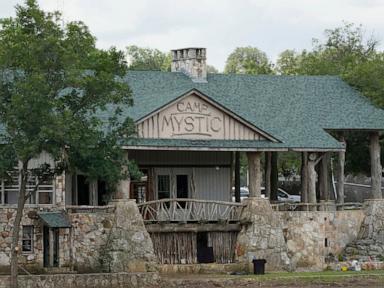
Tucked into that low-lying confluence sat Camp Mystic, a century-old Christian summer camp where generations of Texas families had sent their daughters to learn archery, sing hymns, and build lifelong friendships. It was a place of screen doors, gravel paths, and cypress-plank recreation halls. But beneath the nostalgia lay a stark geographic reality: the camp was sitting directly in the crosshairs of America's flash-flood capital.
What followed that night became the sixth-deadliest freshwater flooding disaster in United States history. Today, almost a year later, the financial ghost of that tragedy finally materialized in a Houston federal courtroom. Camp Mystic, LLC, alongside three of its corporate affiliates, filed for Chapter 11 bankruptcy protection. The paperwork lists more than $10 million in debt against a meager $100,000 to $500,000 in assets.
To the lawyers and financial analysts tracking the docket, it is a standard corporate restructuring—a shield used to freeze a mountain of wrongful death lawsuits while a business tries to figure out how to survive. But to anyone who remembers the screams echoing through the dark on that horrific Independence Day, the bankruptcy filing is something else entirely.
It is the final, clinical end to a century-old institution that tried to negotiate with nature, and lost.
To understand how a beloved Texas institution ends up in a bankruptcy court, you have to look at the invisible lines drawn on maps years before the clouds ever opened up.
Between 2011 and 2020, Camp Mystic’s leadership successfully appealed to the Federal Emergency Management Agency (FEMA) to redraw its Special Flood Hazard Area maps. The goal was simple, predictable corporate housekeeping: by adjusting the lines, they managed to exclude 30 camp buildings from the high-risk, 100-year flood zone. It minimized insurance premiums. It eased regulatory burdens.
But water does not read federal maps.
By the summer of 2025, at least 12 structures remained entirely inside the high-risk zone, with several others hugging the line. They were the cabins closest to the river. They were the ones housing the youngest campers—little girls aged eight to ten, experiencing their very first taste of independence away from home.
Consider what happens when corporate complacency meets an unpredictable atmosphere. At 1:18 a.m. on July 4, the National Weather Service issued a flash flood watch for Kerr County. The sky was dumping over seven inches of rain into the upstream tributaries. Because there were no physical sensors monitoring those remote streams, nobody at the camp knew that a colossal wall of water was already rushing down the dark valleys toward them.
The river did not rise inch by inch. It did not give the traditional, slow warnings of a rising tide.
It rose 26 feet in just 45 minutes.
State investigators would later reveal that the camp’s director, 70-year-old Dick Eastland, received a specific flash flood warning at 1:14 a.m. Yet, the camp did not begin moving children until roughly 2:30 a.m. An hour and sixteen minutes slipped away in the dark. In that lost hour, the camp’s strict policy of confiscating counselors' cell phones turned the cabins into islands of isolation. There were no backup radios. There was no public address system echoing through the trees.
There were 39 adults on the property who could have been mobilized to carry those little girls to the safety of the upper hills. But a devastating 115-page legislative report later confirmed they had never been trained for this. They had no assigned roles. They stood by, detached and unaware, while the youngest campers were trapped in their beds by a black, roaring torrent that smashed through the cypress walls.
In the chaos, Dick Eastland climbed into an SUV, desperately trying to launch an eleventh-hour evacuation. The river swallowed the vehicle whole. When rescue teams finally found the truck battered against the debris downstream, Eastland was dead inside.
Alongside him were three little girls from the Bubble Inn cabin.
By the time the sun came up on July 5, twenty-five campers, two teenage counselors, and the camp director were gone. The destructive surge killed at least 136 people along that single stretch of the river, leaving a community entirely broken.
The true horror of a disaster like Camp Mystic is not just the night it happens; it is the long, agonizing aftermath where the survivors realize how fragile the systems around them truly were.
For months, the families of the victims packed into legislative hearings and courtroom benches. They wore small, silver pins labeled "Heaven's 27," featuring the smiling faces of their daughters. They sat in agonizing silence as lawyers played audio clips from that night—clips where the sound of rushing water was punctuated by a lone child’s voice, somewhere out in the dark, screaming for help over and over again.
The defense from the camp’s legal team was predictable: the flood was an act of God. It was a statistical anomaly that defied historical models, an unprecedented event that exceeded a 1,000-year flood threshold.
But the families saw a different pattern. They saw five separate lawsuits representing 15 families, all pointing to the same systemic failure. They argued that the camp had prioritized profit over safety, keeping children in flood-prone cabins to avoid the steep capital costs of relocating the structures to higher ground.
The friction reached a boiling point earlier this spring. In a move that fractured the local community, Camp Mystic’s management announced plans to partially reopen the unaffected Cypress Lake campus for the 2026 summer season. They argued that hundreds of alumni families wanted to return, that the camp was a sacred tradition that shouldn't be erased by a single tragedy. They even promised to build a beautiful memorial on the grounds.
The response from the grieving parents was swift and searing. Cici Steward, whose eight-year-old daughter Cile was swept away that night and remains the only victim whose body has never been recovered, wrote a letter that permanently halted the camp’s momentum. She asked how anyone could allow children to swim in the exact same river that might still hold her daughter's body.
The public outcry was massive. Under immense pressure from state lawmakers and the Texas Department of State Health Services, the camp finally surrendered its operating license application in April.
That brings the story back to the quiet courtroom in Houston, where the Chapter 11 paperwork was stamped and filed.
Bankruptcy is often viewed as a cold, bloodless math problem. It is an ledger of red ink, corporate entities like Natural Fountains Properties, Inc. shifting assets to shield themselves from liabilities. But in cases of profound human tragedy, bankruptcy acts as a legal freezing mechanism. It pauses the civil lawsuits. It prevents the victims' families from taking the camp's remaining assets through individual judgments, forcing everyone into a single, structured line managed by a federal judge.
The historic, century-old property along the Guadalupe River is now locked in place. A Travis County district judge has already ordered that the scarred land and the ruined cabins must be preserved exactly as they are—a ghost town of splinters and dried mud kept intact for ongoing litigation.
The camp will not reopen this summer. It likely will never reopen again.
The lesson left behind in the hardened mud of Kerr County is a heavy one. We build our institutions on the thin veneer of paperwork, safety plans approved on a desk two days before a disaster, and maps redrawn to save a few thousand dollars in premiums. We convince ourselves that history and tradition can act as a shield against the realities of geography.
But the river doesn't care about a century of tradition, and a balance sheet cannot bring back the children of the Bubble Inn cabin.
Now, there is only the silence of an empty campground, the slow grind of federal bankruptcy dockets, and a stretch of the Guadalupe River that continues to flow quietly past the empty hills, carrying the permanent weight of twenty-eight lost lives.