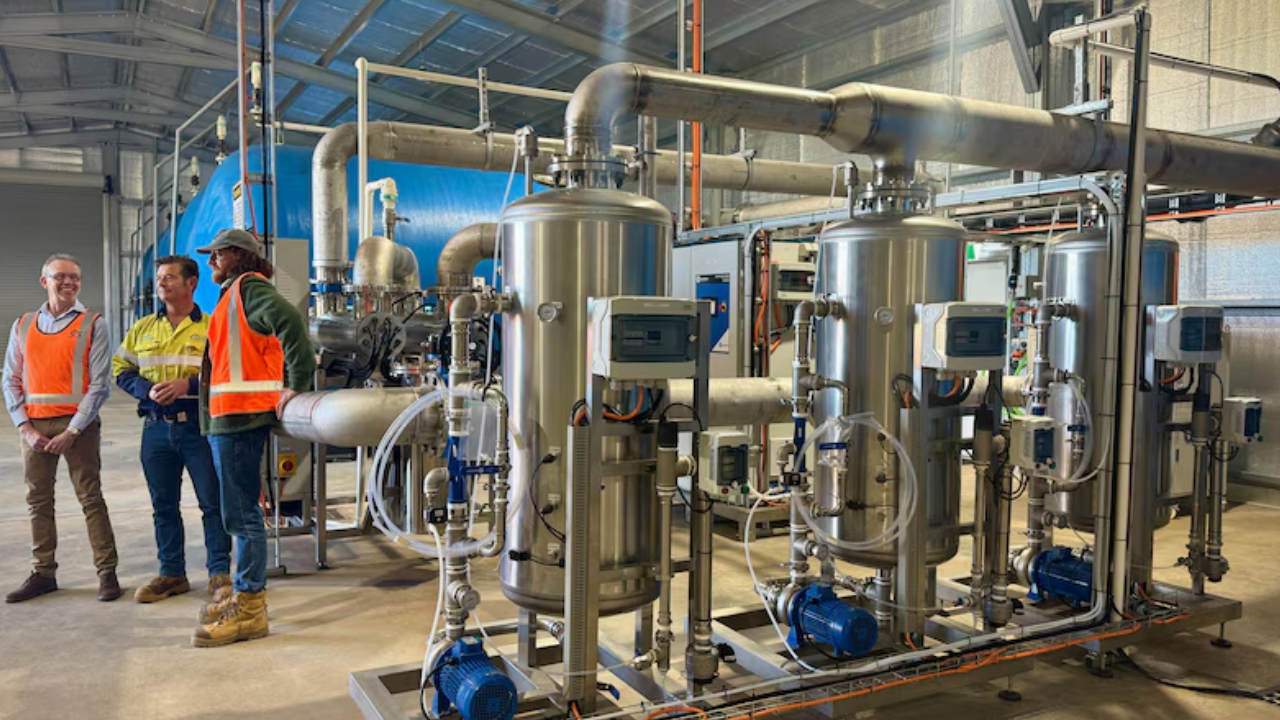
The Macquarie River does not shout. It winds through the central west of New South Wales with a patient, ancient murmur, past sheep stations, river red gums, and the broad, sun-baked sprawl of Dubbo. For generations, the river has been a silent partner to the people who built their lives along its banks. It gives. It sustains. And, for far too long, it absorbed whatever humanity left behind.
Walk down near the water on a humid January afternoon, when the cicadas are rattling the dry air, and you can smell the invisible friction of modern survival. Nitrogen. Phosphorus. Industrial
The River Remembers What We Tried to Hide
technology, news
Water never forgets. It carves stone, it swallows cities, and it carries the invisible signatures of everything we consume, wash away, and pretend does not exist.
Stand on the banks of the Macquarie River in Dubbo on a blistering summer afternoon, and you will smell the ancient, dry heat of the Australian bush mixed with the quiet murmur of a town that has learned to look its own thirst in the eye. For generations, communities like this one operated under a quiet, unspoken pact with the earth: we take clean water from the source, we use it, and we treat it just enough to send it downstream so someone else can deal with the consequences.
That pact is dead. And what is rising in its place is an extraordinary quiet revolution in how we handle the liquid that keeps us alive.
To understand why a wastewater treatment plant starting up a new catalyst in regional New South Wales matters to anyone outside of a municipal engineering office, you have to look closer at what modern life leaves behind. We think of water pollution as oil slicks or floating plastic. Those are the easy enemies because you can see them. The real danger is microscopic, invisible, and deeply woven into the fabric of daily convenience.
Pharmaceutical residues. Perfluorinated chemicals. Industrial solvents. Micro-pollutants that standard biological treatment processes treat like ghosts, letting them drift right through the filters and back into the ecosystem. These are stubborn compounds designed by modern chemistry to be indestructible. They do not break down in the sun. They do not care about traditional chlorine. They accumulate in fish tissue, slip through standard filtration, and eventually find their way back into the glass of water on your bedside table.
Enter a new kind of catalyst.
Imagine dropping a microscopic chemical trap into a rushing torrent of grey, murky effluent—water heavy with the invisible chemistry of fifty thousand human lives. This catalyst does not just strain the water; it shatters the molecular bonds of the contaminants. Through advanced oxidation processes, it generates localized bursts of reactive energy that tear stubborn pollutants apart, reducing complex, toxic pharmaceutical chains into harmless molecules of water and carbon dioxide.
When Dubbo’s upgraded plant fires up this technology, it is not merely checking a regulatory box. It is changing the physics of municipal survival.
Let us be honest about how most people feel regarding recycled water. Call it what it is: the yuck factor. Mention drinking purified wastewater, and a visceral hesitation ripples through the room. We prefer our water to come from pristine mountain streams or deep, mysterious aquifers, wrapped in the comforting illusion of untouched nature.
Yet nature has always recycled everything. Every drop of water you drank this morning has already passed through the kidneys of a dinosaur, an ancient civilization, and an industrial town fifty miles upstream. The Earth is a closed-loop system. The only real question is whether we purify that water with intention and precision, or leave it to chance.
Communities across the inland are facing a brutal reality check. Rainfall patterns are shifting. Droughts are growing longer, sharper, and more unforgiving. When the river runs low, the margin for error vanishes. A city cannot simply pack up and move when the wells go dry. It must learn to close the loop right where it stands.
By investing heavily in advanced recycled water infrastructure, Dubbo is betting its future on a radical premise: that wastewater is not waste at all. It is a drought-proof reservoir hiding in plain sight.
Consider what happens when a town untethers its growth from the whims of the clouds. Farmers no longer have to watch their crops wither while municipal lawns stay green. Industrial users can pull from high-grade recycled sources instead of competing with households for dwindling river flows. The pressure on the Macquarie River eases. The ecosystem breathes.
This is the hidden human element of civil engineering. Behind every schematic diagram of pumps, membranes, and oxidation reactors are families who want to know their children will have water to drink thirty years from now. There are local business owners trying to plan for the next decade without checking the rainfall index every single morning with a knot in their stomach.
The transition is never easy. Upgrading complex municipal assets requires capital, patience, and a willingness to embrace technologies that sound like science fiction to the uninitiated. Skeptics will point to the energy costs. Accountants will wince at the price tags. But the true cost of inaction is unquantifiable.
Water does not care about our political cycles or our economic anxieties. It simply flows where gravity pulls it, carrying our choices along for the ride.
In the heart of Dubbo, a new catalyst is quietly going to work. It is stripping away the invisible residue of modern existence, transforming what we cast off into something clean enough to sustain life anew. It is a quiet, profound defiance of scarcity. And as the treated water flows back toward the river, shimmering under the vast Australian sky, it carries a simple, stubborn message about the future. We can fix what we broke, drop by drop, molecule by molecule, until the water remembers only our care.