Politics is a brutal trade, and it rarely rewards the people who do the heavy lifting in the dark.
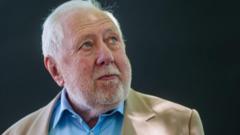
Roy Hattersley, who has died at the age of 93, is the ultimate testament to that reality. If you look at his career strictly through the lens of cabinet titles and electoral triumphs, it looks like a tragedy of missed timing. He was the youngest member of James Callaghan’s cabinet when Labour got wiped out by Margaret Thatcher in 1979. He never held government office again. He spent a decade as deputy leader under Neil Kinnock, eating dirt, losing elections, and getting turned into a spluttering, spitting latex puppet on national television.
Yet, without Hattersley, the Labour Party might not exist today.
When people talk about the modernisation of Labour, they usually start the clock in 1994 with Tony Blair. That’s a mistake. Blair didn’t build the modern Labour Party; he inherited the keys to a house that Hattersley and Kinnock spent a decade rebuilding from the foundations up. Hattersley was the ideological anchor of the Labour right and center during its darkest civil war. He didn’t just survive the hard-left insurgency of the 1980s—he broke it.
The Dream Ticket That Had to Fight its Own Party
To understand why Hattersley matters, you have to look at the wreckage of 1983. Labour had just run on a manifesto famously dubbed "the longest suicide note in history." The party was deeply infiltrated by the Militant Tendency, a Trotskyist group operating as a party within a party. Voters didn't just dislike Labour; they were terrified of them.
Enter the "Dream Ticket" of Neil Kinnock as leader and Roy Hattersley as deputy.
It was an arranged marriage born out of sheer desperation. Kinnock came from the soft left; Hattersley was a proud, unapologetic disciple of Hugh Gaitskell and the party's right wing. They didn't always get along. Privately, things could get tense. But they understood a fundamental truth that today’s politicians frequently forget: purity is worthless without power.
Hattersley took the fight directly to the insurgents. In 1981, he helped found Labour Solidarity, an internal faction designed to protect moderate MPs from being systematically hunted down and deselected by left-wing activists.
It wasn't polite politics. It was a vicious, grinding organizational street fight. Hattersley used his considerable intellectual weight and absolute ruthlessness to marginalize the Militant group. He didn't offer compromises. He pushed for expulsions. He knew that if the public saw Labour as an extremist sect, the party was finished.
Why New Labour Left Him Behind
Here is the irony of Hattersley's life. He spent fifteen years dragging his party toward the political center so it could win again. But when Tony Blair finally achieved that victory in 1997, Hattersley hated what it looked like.
He became one of New Labour's fiercest critics.
Why? Because Hattersley was never a pragmatist for the sake of it. He was an egalitarian. He believed deeply in public services, comprehensive education, and the redistribution of wealth. To him, modernising the party meant making socialist principles palatable to the British public, not throwing those principles out the window to court middle-class suburban voters.
"Politics is a tough business," Hattersley once wrote, "and the proper response to assaults and abuse from the wilder shores of socialism is neither surrender nor retreat. It is a determination to take the ideological battle into enemy territory."
When Blair started tinkering with the welfare state and embracing market solutions for public services, Hattersley felt betrayed. He argued that New Labour cared far too much about winning managerial arguments and far too little about actual equality. He wasn't a centrist technocrat; he was an old-school democratic socialist who believed the state should actively intervene to level the playing field.
The Intellectual Who Refused to Turn Boring
Most modern politicians sound like they were generated by a corporate PR department. They read from scripts. They refuse to say anything that might upset a focus group.
Hattersley was the exact opposite. He possessed a thumping, aggressive parliamentary style, a trait he picked up while working under Denis Healey. He spoke with what colleagues called "callous candour."
He was also arguably the most intellectually curious politician of his generation. He wrote more than 20 books. He wrote biographies of John Wesley and David Lloyd George, deep histories of the Edwardians, and beautifully observed memoirs of his Yorkshire youth. He was a regular columnist for major broadsheets, writing with a self-deprecating wit that completely contradicted his fierce political reputation.
He even turned his own family history into literature. His father had been a Roman Catholic priest who literally ran away with Hattersley's mother, a woman at whose wedding service the father had officiated just two weeks prior. That's not the kind of background you find in a standard political resume.
The Lessons for Today’s Left
History has a habit of repeating itself in British politics. Hattersley lived long enough to see the Labour Party fall into the exact same traps he fought against forty years ago.
When Jeremy Corbyn took the leadership in 2015, Hattersley didn't mince words. He called it a worse crisis than the one the party faced in the 1980s. He watched with horror as the party dropped its opposition to Brexit and struggled to deal with systemic antisemitism within its ranks. He even publicly mused about leaving the party he had electioneered for since he was 12 years old.
Even as Keir Starmer took the reins and moved the party back toward government, Hattersley remained a critical friend. He warned that the right of the party couldn't just offer competent management. They had to offer a vision. They had to offer a clearer articulation of Labour's moral purpose.
If you want to understand how a political party rebuilds itself after a historic drubbing, don't look at the slick media campaigns of the late nineties. Look at the grueling, thankless work Roy Hattersley did in the mid-eighties. He showed that you can fight for the center ground without losing your soul, and that sometimes, the most important battles you win are the ones against your own side.
The next time a political party finds itself lost in the wilderness of ideological purity, its leaders would do well to pick up a biography of Hattersley. They need to study how he managed to save a dying institution by forcing it to face reality.