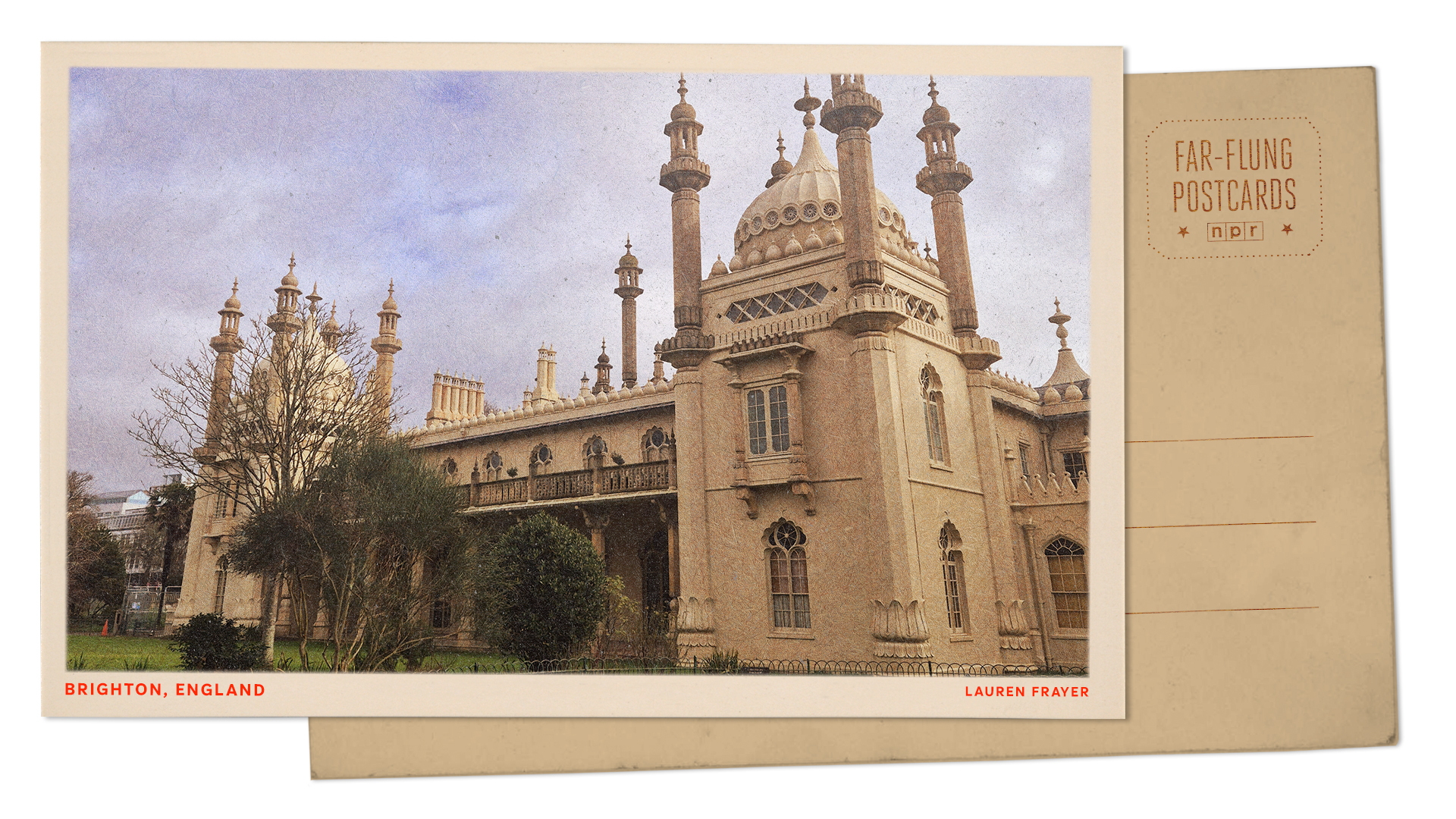
You step off a normal seaside street in southern England, look up, and suddenly find yourself staring at an skyline of Mughal domes, minarets, and cusped arches. It feels less like a British coastal town and more like a relocated palace from Rajasthan.
The Royal Pavilion in Brighton breaks every rule of traditional European architecture. Most people assume it was built as an official colonial outpost or a diplomatic gift. The truth is much stranger. It started as a humble seaside farmhouse and morphed into an extravagant playground for a prince who simply wanted to escape the rigid boredom of London court life.
If you plan to visit, you need to look past the postcard aesthetics. The building carries a complicated history involving imperial expansion, artistic obsession, and a surprising second life as a wartime hospital.
The Royal Rebel Who Built a Fantasy Palace
King George IV—back when he was still the Prince Regent—first came to Brighton in the 1780s on medical advice. Doctors told him that seawater dips and sea air would cure his ailments. Instead of renting a modest room, he fell in love with the town's energy and decided to build a permanent escape.
Architect Henry Holland initially shaped the modest lodging house into a neat neoclassical villa. That wasn't enough for the Prince. George possessed an insatiable appetite for the theatrical. By 1815, he hired architect John Nash to completely reinvent the exterior.
Nash wrapped the old brick structure in a lightweight iron frame. He layered onion domes, towers, and pinnacles across the roofline. Critics at the time hated it. Writer William Hazlitt famously called it a madhouse, while others joked that a London cathedral had gone down to the sea and reproduced. Yet the public loved the sheer audacity of the design.
Inside the Mad Mix of China and India
Walking through the front doors throws your senses into overdrive. You aren't stepping into a standard English stately home lined with stiff portraits. You are entering a fever dream of Asian design influences.
The interior rooms feature massive lotus-shaped chandeliers, golden dragons climbing up the walls, and bamboo furniture that is actually carved out of solid oak or cast iron painted to deceive the eye. The Prince didn't care about strict cultural accuracy. He mixed Chinese export wallpapers with Mughal architectural motifs because they looked stunning together.
I always tell travelers to spend extra time in the Banqueting Room and the Music Room. The scale is overwhelming. The centerpiece of the Banqueting Room is a thirty-foot-high chandelier held by a silver dragon claw, surrounded by painted plantain leaves. It is loud, proud, and entirely unbritish.
When the Palace Became a Wartime Sanctuary
The Pavilion's story didn't stop with royal parties. When World War I broke out, the palace underwent a radical transformation. It stopped hosting aristocrats and started treating wounded soldiers.
Between 1914 and 1916, the former pleasure palace served as a military hospital for soldiers of the Indian Army. Over two thousand men who fought on the Western Front recovered in these opulent halls.
The military went to extraordinary lengths to respect the cultural and religious needs of the patients. They built nine different caste kitchens on the grounds. Muslim soldiers had designated spaces to pray facing Mecca, and Sikh soldiers received a special tented gurdwara on the lawns. Outside, the grand Indian Gate—donated later by the Maharajah of Patiala—still stands as a permanent monument to this powerful chapter.
Making the Most of Your Trip Today
If you want to experience the Pavilion properly, ditch the quick weekend rush. Buy your tickets online ahead of time to skip the morning queue at the entrance gates.
Give yourself at least two hours for the interior rooms. Audio guides are included with admission and they provide sharp, witty context about the Prince's massive debts and design choices. Wear comfortable shoes because the historic flooring requires careful stepping, and do not miss the underground tunnels exhibition if it is open during your visit.
When you finish the tour, walk out onto the eastern lawns. Grab a coffee, look up at those massive white domes against the grey English sky, and remember that you are standing inside one of the most eccentric architectural experiments in European history.
Plan your visit for a weekday morning if you want to avoid heavy crowds. Take your time wandering through the restored gardens outside. The building challenges what you expect from historic British architecture, and that alone makes it worth the trip.


