Offshore fish farming is a grueling, noisy business. For decades, if you managed an industrial aquaculture site far from the main power grid, you had exactly one option to keep the lights on and the feeding barges running: diesel generators.
They chugged along 24 hours a day. They burned through thousands of gallons of fuel every month. Worst of all, they vibrated the water constantly, creating a stressful environment for the fish below.
When operations managers at Mowi’s Huar Norte salmon farm in Chile's Los Lagos region decided to install floating solar panels, they were just trying to slash their fuel bills and meet carbon reduction targets. They didn't expect to build a sanctuary.
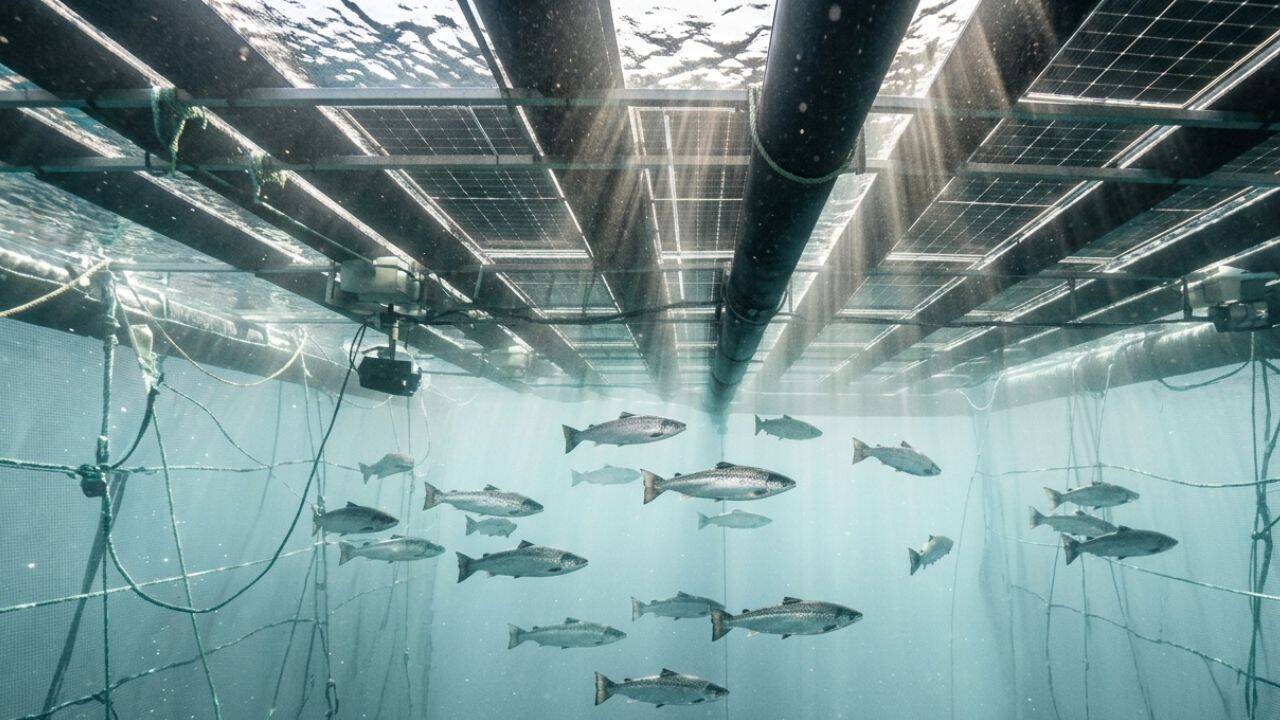
But shortly after the project went live, thousands of salmon began packing into the shade directly underneath the new structures. The engineering upgrade unintentionally transformed the local marine environment.
The Accidental Underwater Oasis
The Huar Norte project wasn't a small trial. Mowi teamed up with aquaculture infrastructure specialists AKVA group, clean energy provider Alotta Energy, and battery firm Fjord Maritime to build a hybrid setup capable of handling the farm’s heavy operational loads. The system uses flexible membrane technology designed by Ocean Sun, allowing the solar modules to sit directly on the water's surface inside heavy-duty flotation collars similar to the fish pens themselves.
The immediate industrial results were clear. The system covers roughly 57% of the farm's annual electricity needs. It eliminates the consumption of more than 36,000 gallons of diesel each year and keeps 386 tons of carbon out of the atmosphere.
The real surprise happened right beneath the surface. When the diesel generators quieted down, the underwater acoustic profile of the farm changed completely.
The constant thump and vibration vanished. Salmon are highly sensitive to noise and pressure changes, and the sudden tranquility, combined with the massive physical footprint of the solar array, created a perfect storm of positive environmental factors.
- Continuous Shade: The massive solar rafts block direct, harsh sunlight, creating a cool, low-light zone where salmon naturally prefer to rest.
- Predator Protection: The physical barrier of the floating panels offers absolute protection from diving predatory birds that frequently target aquaculture pens from above.
- Acoustic Calm: Shifting the baseline energy load to solar-powered batteries cut the underwater racket, lowering stress levels for the population.
Site workers quickly noticed that wild salmon from the surrounding waters were actively moving in, treating the underbelly of the solar arrays as a permanent home. This behavior mirrors similar observations in northern Europe, where wild cod populations have been documented using floating industrial platforms as artificial reefs and nurseries.
Shifting Aquaculture Away from Fossil Fuels
The success at Huar Norte isn't an isolated experiment anymore. It’s proving the viability of a commercial model that's spreading across South America's aquaculture sector. Clean energy firms are moving away from selling expensive hardware upfront, which historically killed these projects during the budgeting phase.
Instead, companies like Alotta Energy are deploying an energy-as-a-service approach. They design, build, own, and maintain the floating solar stations. The seafood producers simply sign long-term power purchase agreements to buy the green kilowatt-hours generated on-site.
Trusal S.A., a major subsidiary of Salmones Austral, recently signed a 15-year deal to roll out these floating solar plants across its marine farms in southern Chile. If the planned six-plant expansion is fully realized, it will cut diesel use by 10 million liters over the contract period. That removes 27,000 tons of carbon dioxide from the regional environment.
Operating at sea is incredibly brutal on equipment. Standard land-based solar racks would disintegrate under the constant pounding of ocean waves and saltwater corrosion. The marine-grade PVC membranes used in these systems are designed to rise and fall naturally with the swells, reducing wind drag and structural fatigue.
An added benefit of the marine environment is natural cooling. Solar panels degrade in efficiency as they get hot. Because these modules rest directly on the cold Chilean waters, the sea acts as a giant heat sink, keeping the panels cool and boosting their energy output compared to identical arrays sitting on a hot roof ashore.
Next Steps for Coastal Operations
If you operate a marine facility or nearshore industrial site dependent on remote power, the transition away from diesel is no longer just an environmental talking point. It’s a proven optimization strategy.
Start by auditing your daily energy baseline to see if your peak operational loads align with daytime sun exposure. Look into energy-as-a-service contracts to avoid capital expenditure risks, and ensure any marine deployment utilizes flexible, wave-tolerant membranes rather than rigid pontoon structures. The data from Chile shows that cleaning up your power supply doesn't just protect your bottom line; it actively improves the ecosystem right under your feet.