The Pacific Ocean does not care about geopolitics. It doesn't care about budget reconciliations, the prestige of the Artemis program, or the fact that humans haven't touched lunar regolith since 1972. It is a vast, indifferent weight. When the Orion capsule hits that water, it isn't just a technical maneuver. It is a collision between the most sophisticated engineering in human history and the raw, ancient physics of our own planet.
White foam sprays. The heat shield, scorched to a blackened crisp by 2,760°C of atmospheric friction, hisses as it meets the brine. For a few seconds, there is only the radio silence of the plasma blackout and the prayer of ten thousand engineers held in a collective breath. Then, the parachutes bloom.
This is the moment Artemis II ends—and the moment the new race for the Moon actually begins.
The Ghost in the Cockpit
We talk about Artemis II as a mission of numbers. Four astronauts. Ten days. A loop around the Moon that stretches 370,000 kilometers away from the safety of home. But look closer at the Orion capsule bobbing in the swells. To the technicians on the recovery ship, it’s a hunk of aluminum and Avcoat. To the rest of us, it’s a lifeboat.
When Apollo 17 left the Moon, the world was tired. The miracle had become mundane. We traded the cosmic for the terrestrial. Now, fifty years later, the stakes have shifted from "Can we do it?" to "Can we stay?"
The success of a splashdown is the ultimate proof of concept. If the heat shield holds—if those four humans inside can walk out onto the deck of a Navy ship without the vacuum of space having claimed them—the momentum becomes an avalanche. It is the difference between a daring stunt and a sustainable highway. We are no longer throwing stones at the moon; we are building a bridge.
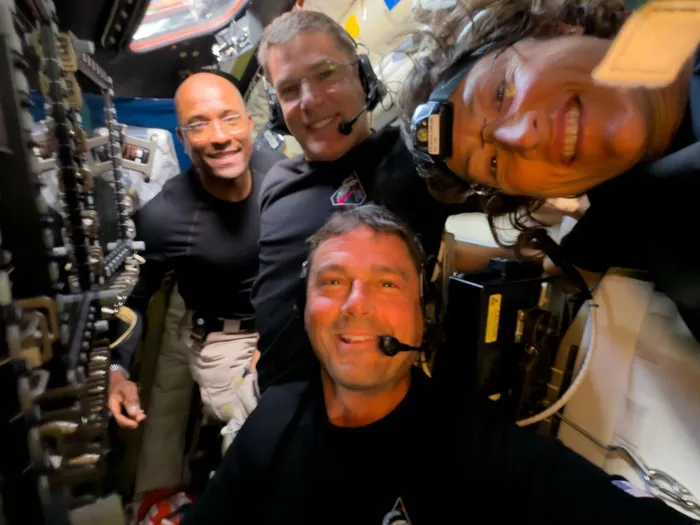
Consider the four individuals chosen for this flight. Reid Wiseman, Victor Glover, Christina Koch, and Jeremy Hansen. They aren't just pilots. They are the avatars of a global anxiety. We live in a fractured era, yet these four will sit in a space the size of a large SUV, hurtling through the Van Allen radiation belts, relying on a thermal protection system that must shed energy equivalent to thousands of cars traveling at highway speeds suddenly slamming on their brakes.
The Invisible Gravity of the Second Place
While NASA celebrates a successful return to Earth, the silence from the other side of the world is deafening. This isn't the 1960s. The Soviet Union is a memory, but the CNSA (China National Space Administration) is a very present reality.
The "Renewed Moon Race" isn't just a catchy headline for a news cycle. It is a cold, hard calculation of lunar resources. The lunar south pole contains water ice. Water is hydrogen. Water is oxygen. Water is fuel. Whoever controls the ice controls the inner solar system.
Artemis II is the signal flare.
By proving Orion can survive the return trip from lunar velocities—which are significantly faster and hotter than a return from the International Space Station—NASA is staking a claim. It’s a loud, splashing declaration of presence. If Artemis II had failed, the vacuum left behind would have been filled instantly by competitors. Space is a vacuum, but politics loathes one.
The Human Cost of a Soft Landing
Logistics are boring until they fail.
The recovery of a spacecraft is a choreographed ballet of divers, helicopters, and heavy steel cables. Imagine being in that capsule. You’ve spent over a week in microgravity. Your bones feel like lead. Your inner ear is screaming. Every time the capsule crests a wave, your stomach turns. You are a hero of the modern age, and you are likely incredibly seasick.
This vulnerability is what the standard reports miss. We focus on the "Momentum" and the "Strategic Advantage," but the real story is the fragility of the meat inside the machine. NASA’s momentum is built on the physical endurance of people who are willing to be shot out of a cannon and dropped into an ocean.
Statistics tell us the Orion heat shield has over 180 individual blocks of ablative material. Each one is hand-installed. Each one is a tiny insurance policy against a fiery death. When the recovery teams see that capsule intact, they aren't just seeing a successful mission. They are seeing the vindication of a million man-hours of obsessive, terrifying attention to detail.
Why the Water Matters
We often wonder why we don't just land on a runway like the Shuttle did. The answer is energy. Returning from the Moon requires a "skip entry" or a direct, high-velocity plunge. The atmosphere is a brick wall. The ocean is the only catcher's mitt big enough and soft enough to absorb the residual violence of a lunar return.
The splashdown is a homecoming to our origins. We leave the celestial to return to the primal.
But the "Momentum" the headlines crave isn't just about the hardware. It’s about the psychological shift. For the first time in two generations, the Moon is no longer a photograph in a history book. It is a destination. Artemis II is the penultimate step. It is the dress rehearsal for the boots on the ground of Artemis III.
When that hatch opens and the salt air rushes into the cabin, it carries the scent of every explorer who ever pushed a wooden boat into the surf. The technology is new, but the fear and the exhilaration are ancient.
The Moon is a harsh mistress, but the Pacific is a forgiving mother. As the recovery crane lifts the blackened, scorched Orion onto the deck, the "Race" takes a backseat to a simpler truth: they are home. And because they made it home, others can now go.
The momentum isn't in the engines. It’s in the ripples spreading out from the point of impact, crossing the ocean, and hitting every shore on Earth. We are going back. Not to visit, but to stay.
The next time we see that flash in the sky, it won't be a miracle. It will be the arrival of the scheduled flight.