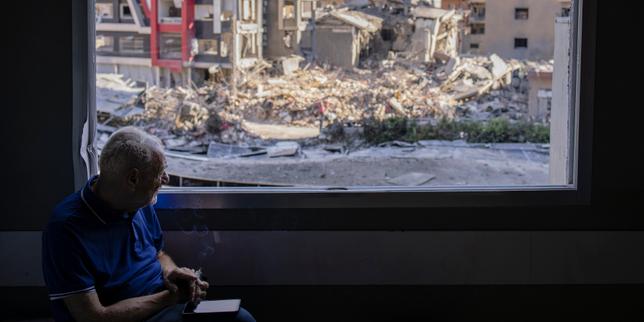
You can't recreate a five-thousand-year-old Phoenician port once it is reduced to dust. Right now, the ancient coastal city of Tyre is shaking under heavy Israeli airstrikes. Entire neighborhoods face unprecedented evacuation orders. The regional conflict has pushed this UNESCO World Heritage site to the brink of ruin. As bombs fall closer to priceless ancient monuments, local residents and activists are making a desperate plea. They want Tyre declared an open, demilitarized city.
It is a last-ditch effort to save history. Declaring an open city means a municipality formally strips away all military presence, offering no resistance to an advancing adversary in exchange for immunity from destruction. Locals want Hezbollah out and Israeli bombs stopped. They want the stones that survived Alexander the Great to survive modern warfare. But in the current landscape of Middle Eastern combat, can international humanitarian law actually save what remains of the Queen of the Seas?
The Heavy Toll of the Campaign on Ancient Tyre
The situation changed drastically when the military declared all areas south of the Zahrani River an active combat zone. Mass displacement followed. Thousands fled north, while some twenty thousand locals and previously displaced refugees remained trapped inside the city under constant threat.
The physical destruction is hitting closer to the core of Tyre's heritage. Strikes hit the Al-Athar neighborhood, sending fireballs over residential blocks adjacent to historical sites. An eleven-story building northeast of Tyre was flattened. Another strike severely damaged the historic old quarters, shaking the foundations of centuries-old churches, mosques, and Phoenician ruins.
Local cultural group Green Southerners has been documenting the damage. They warn that the relentless bombardment amounts to a systematic eraser of history. When the shrine of Prophet Shamoun al-Safa was damaged in the nearby village of Shamaa, it proved that religious and cultural landmarks are no longer safe boundaries in this conflict.
What It Means to Declare a City Open
The demand from Tyre's remaining citizens is rooted in a specific legal doctrine under the Geneva Conventions. Calling for a city to be recognized as an open city means removing every weapon, checkpoint, and fighter from its borders. It means turning the keys over to history rather than armies.
- Total Demilitarization: Every piece of partisan infrastructure must be dismantled. No rocket launchers hidden in orange groves, no underground command centers, and no armed patrols.
- No Resistance: The city agrees not to fight back if an adversary enters.
- Immunity from Attack: Under Article 59 of the 1977 Protocol I additional to the Geneva Conventions, it is forbidden for civilian authorities to be attacked once a locality is declared non-defended.
We saw this work during World War II. Paris was declared an open city in 1940, sparing its iconic architecture from Luftwaffe and Allied bombs. Rome followed the same path in 1943.
But implementing this in southern Lebanon is an uphill battle. The Lebanese state, led by Prime Minister Nawaf Salam and President Joseph Aoun, has openly criticized foreign interference and called for state sovereignty. Yet, the central government lacks the muscle to enforce total demilitarization on its own. Hezbollah operates as an independent military entity, heavily opposed to direct negotiations or surrendering tactical positions. If one side refuses to leave, the open city declaration stays on paper.
The International Failure to Protect Heritage
UNESCO explicitly protects cultural property during armed conflicts under the 1954 Hague Convention. Tyre has been on the World Heritage list since 1984. It holds some of the best-preserved Roman hippodromes and Phoenician naval ruins on earth.
International law states that targeting cultural property constitutes a war crime, unless the site has been turned into a military objective by the adversary. This is where the legal system breaks down. Israel claims its airstrikes target hidden Hezbollah command centers and Quds Force weapon caches embedded in civilian neighborhoods. Lebanon's Foreign Minister Youssef Raggi has engaged in intensive diplomatic contacts, appealing to the global community to safeguard this shared civilizational heritage.
The reality on the ground shows that designations don't stop missiles. When an active combat zone expands across an entire region, historical borders blur. The international community wrings its hands while the concrete dust settles over Roman mosaics.
Real Steps Needed to Prevent Catastrophe
Saving Tyre requires more than diplomatic statements on social media. If the city is to survive this offensive, immediate, pragmatic steps must be taken by local authorities and international monitors.
First, the Lebanese army must establish an exclusive security presence inside the municipal boundaries of the historic city. Blue-helmeted UN peacekeepers need an expanded mandate to inspect and verify the total absence of partisan military infrastructure within a two-kilometer radius of the archeological zones.
Second, international cultural bodies must pressure both combatants to establish a digital geofenced no-strike zone around the Al-Bass and City Site ruins. These coordinates must be explicitly removed from automated military targeting systems.
Finally, local civilian committees must keep documenting every single strike near heritage sites. Public accountability is often the only tool left when international treaties fail to hold the line. Go to the UNESCO digital archives, share the live updates from local journalists in Tyre, and keep the pressure on international diplomatic forums. History doesn't get a rewrite once it is gone.