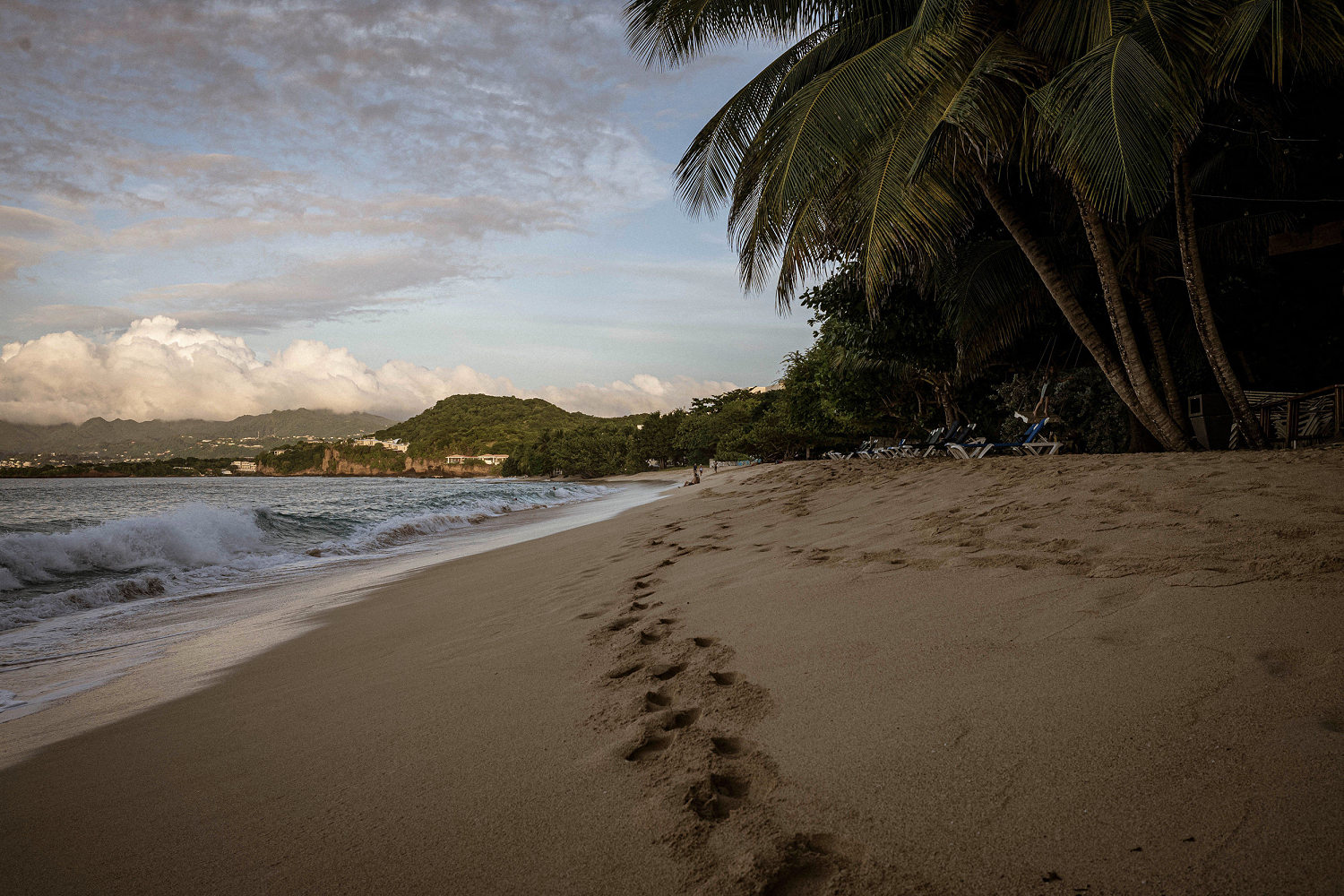
The water was seventy-eight degrees that afternoon. It looked like green glass, clear enough to see the pale curve of sand rippling twenty feet below the surface. There was no wind. The horizon melted into a hazy, pale-blue wash where the Caribbean met the sky.
Paradise does not look dangerous. That is its primary defense mechanism. If you found value in this article, you might want to look at: this related article.
Linnea Veinotte knew water. She knew movement, breath, and the quiet rhythm of the earth. An educator by trade, she had traveled to Grenada—the Spice Isle—seeking the warm embrace of the tropics. But islands have edges, and the ocean has an indifferent memory.
On a quiet Monday in late December, she walked down to a stretch of Grand Anse Beach. She wore her swimming gear. She left her home with the casual ease of a routine errand. For another angle on this event, check out the recent coverage from NPR.
She swam out.
And then, the shoreline lost her.
The initial hours after someone vanishes are a strange, suspended animation. To the casual observer, the world moves on. Music plays from beachside shacks. Coconut shells litter the sand. Tourists shake salt from their towels and laugh about sunburns.
Yet, beneath that ordinary surface, a silent panic begins to bleed outward.
Linnea did not return for dinner. Her partner noticed first. Then the local authorities. Then an entire island nation that prides itself on safety awoke to a terrifying void. How does a person simply evaporate from a sun-drenched beach?
Physics offers cold explanations. Currents. Rip tides. Undertows that pull outward with the silent strength of a locomotive. The waters surrounding Grenada are deceptive. They look calm, cradled by coral reefs and sheltered bays, but deep channels run just beyond the shallows. The Atlantic presses in from the east, bringing heavy swells and unpredictable shifts in momentum.
But physics does not account for the human weight of absence.
When the search began, planes scanned the turquoise water from above. Coast guard vessels cut white scars across the blue. Volunteers walked the perimeter of the coastline, looking into crevices, under docks, anywhere the tide might deposit something precious.
Days bled together.
The story hit international headlines. People in cold, gray winter climates read about the missing woman in paradise, shuddering at the stark juxtaposition. Sunshine and sorrow. Safety and sudden terror.
Travel changes us because it requires surrender. We step off an airplane and hand our safety over to new terrain, foreign languages, and unfamiliar ecosystems. We assume the universe is hospitable. We trust the beaches to hold us.
Most of the time, they do.
Every year, millions of travelers cross borders seeking transformation, rest, or escape. We research hotels, flights, and restaurants. We obsess over packing lists and currency exchange rates. But rarely do we research the quiet, ancient mechanics of the environment itself. We forget that nature does not negotiate.
Consider what happens when a swimmer meets an invisible current. Panic arrives instantly. The heart hammers against the ribs. Breath shortens. The instinct is to fight, to swim directly against the invisible hand pulling you away from the shore. That instinct is fatal. The current is stronger than muscle.
Experts in water safety repeat a grim mantra: float, signal, fight smart. But in the shock of the moment, theory dissolves.
Linnea’s disappearance left behind more than an unsolved mystery. It left a fracture in the lives of those who loved her. Families are not built to process ambiguity. Grief has a shape, a funeral, a grave to visit, a stone to touch. But when someone vanishes into the sea, the absence has no boundary. It lingers in the empty chair at breakfast. It echoes in the sound of rushing water.
As the days turned into weeks, the search shifted from rescue to recovery, and finally, to acceptance of the unanswerable. The Grenadian government and local community rallied, offering support, deploying resources, and wrapping the grieving family in profound compassion. Yet, the ocean kept its counsel.
There is a haunting beauty to the Grenadian coastline. The spices of nutmeg and cinnamon still drift on the humid air. The sun still sets in a blaze of violet and orange over the western cliffs.
The beach remains.
And for anyone who walks along Grand Anse today, the sand holds a double meaning. It is a place of breathtaking joy and a quiet reminder of how fragile our tether to this world truly is. We are visitors here. The earth is ancient, powerful, and completely indifferent to our plans.
Linnea Veinotte became part of that landscape, absorbed into the vast, blue mystery of the sea she swam into on a quiet afternoon. The waves roll in, gentle and rhythmic, washing clean the footprints left behind.


