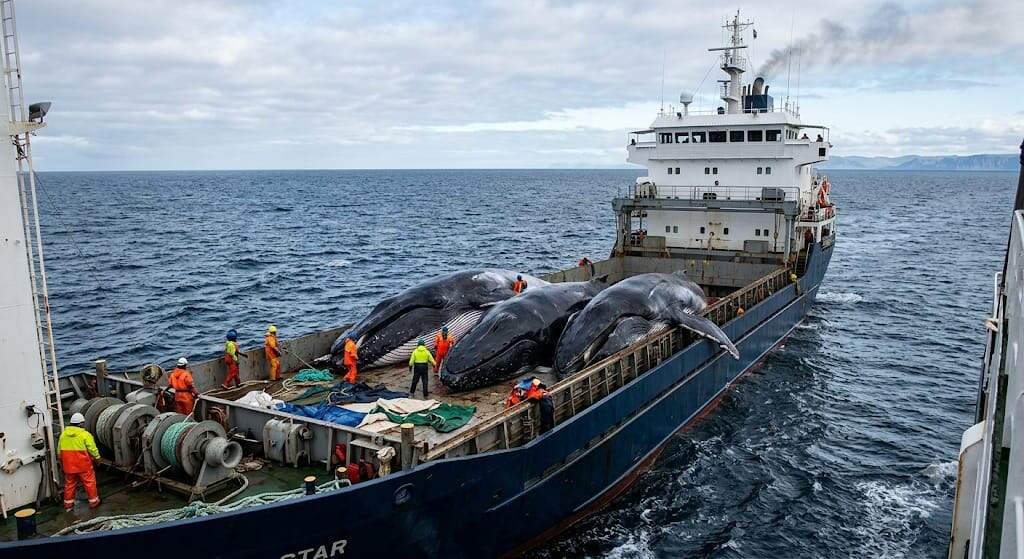
The mainstream media loves a story of tragic defeat.
When Japan officially withdrew from the International Whaling Commission (IWC) and resumed commercial whaling in its own territorial waters, the post-mortem was swift. Activists wept. Commentators declared that Sea Shepherd’s decade-long, high-seas guerrilla campaign in the Southern Ocean had ended in failure. The narrative was set: the eco-warriors had run out of steam, and the whalers had won.
This narrative is completely wrong.
It ignores the actual economics of maritime industries, the psychology of domestic Japanese politics, and the reality of how dying industries survive.
Sea Shepherd did not lose the whaling war. They won it—but they did so entirely by accident, and only after spending fifteen years actively keeping their enemy on life support. By turning a dying, unprofitable domestic industry into an international struggle of national sovereignty, high-seas activism gave Japanese whalers the political cover and government funding they needed to survive.
If you want to understand how environmental campaigns actually succeed—and how they disastrously backfire—you have to look past the reality TV drama of Whale Wars and look at the ledger sheets.
The Sovereign Pride Trap
Before Paul Watson and his fleet of black-painted ships arrived in the Antarctic, Japanese whaling was quietly suffocating.
The industry was a relic of post-World War II protein shortages. In the 1950s and 1960s, whale meat was a staple of Japanese school lunches. But by the late 1990s, Japan's palate had changed. Cold storage facilities were piling up with unsold whale meat. The younger generation did not eat it, did not want it, and did not care about it.
The Institute of Cetacean Research (ICR), the entity behind Japan's "scientific" whaling program, was bleeding cash. Left to the free market, the Southern Ocean whaling program would have folded under its own financial weight by the mid-2000s.
Then, the activists showed up with cameras.
When Sea Shepherd began ramming Japanese vessels, throwing stink bombs, and broadcasting these confrontations to global audiences, they did not stop whaling. Instead, they transformed a boring, unprofitable fisheries dispute into a highly visible attack on Japanese national identity.
In Japan, domestic politics are driven by a deep aversion to foreign pressure, known as gaiatsu. The moment white Western activists started aggressively harassing Japanese sailors on the high seas, whaling ceased to be a question of fisheries management. It became a question of national sovereignty.
No Japanese politician could stand up and suggest cutting subsidies to a dying industry when that industry was under physical attack by foreigners. To do so would look like bowing to eco-terrorists.
The result? The Japanese government poured billions of yen in emergency subsidies into the whaling fleet. Following the 2011 earthquake and tsunami, the Japanese Fisheries Agency even diverted 2.28 billion yen (nearly $29 million USD at the time) from the earthquake recovery fund to bolster the security of the whaling fleet against Sea Shepherd.
Activists did not stop the whalers. They gave the Japanese government a politically bulletproof reason to fund them.
The Illusion of the Southern Ocean "Defeat"
The common critique is that Sea Shepherd lost because Japan continued to hunt whales. But look at where they hunt now.
When Japan withdrew from the IWC, they agreed to stop whaling in the Southern Ocean entirely. They withdrew their massive factory ship, the Nisshin Maru, from the Antarctic sanctuary and restricted all whaling activities to their own Exclusive Economic Zone (EEZ).
This was not a victory for Japan. It was a massive, face-saving retreat.
Whaling in the Southern Ocean was incredibly expensive. Running a fleet thousands of miles away in some of the most treacherous waters on Earth required astronomical fuel costs and massive logistical support. By forcing Japan to abandon the Southern Ocean, the global activist community achieved what decades of diplomatic stalemates could not: they stripped Japanese whaling of its international footprint.
By retreating to their own EEZ, the Japanese whalers lost access to the vast populations of minke whales in the Antarctic. They were forced to hunt smaller quotas in their own depleted coastal waters.
More importantly, leaving the Southern Ocean stripped Japan of its primary defense: the "scientific research" loophole.
Under IWC rules, Japan could sell the meat from its "scientific" hunts on the open market. This allowed them to pretend they were doing research while running a commercial operation funded by government grants. Now that they are openly whaling commercially within their own waters, they have to survive on actual market demand.
And the market is dead.
The Cold, Hard Economics of Whale Meat
To understand why the Japanese whaling industry is on life support, you only have to look at the consumption data.
- Peak consumption (1962): Over 230,000 tons of whale meat consumed annually.
- Modern consumption (2020s): Less than 3,000 tons annually.
To put that in perspective, the average Japanese citizen eats roughly 40 grams of whale meat per year—the equivalent of a single slice of ham. The vast majority of the population never touches it.
Japanese Whale Meat Consumption (Tons per Year)
===================================================
1962: [████████████████████████████████████] 233,000
1990: [█] 10,000
2024: [] <3,000
===================================================
When commercial whaling resumed in Japanese waters, the government set strict quotas. But the whalers could not even sell what they caught. The stockpiles in cold storage continued to grow. To get rid of the meat, distributors have resorted to selling it to school lunch programs at deep discounts or processing it into pet food.
Recently, a Japanese whaling company installed whale meat vending machines in Tokyo and Yokohama in a desperate bid to spur demand. When an industry is reduced to selling its product via vending machines alongside canned coffee and cheap umbrellas, it is not an industry that is winning. It is an industry in the terminal ward.
The False Weapon of Moral Outrage
The fundamental mistake of Western environmental campaigns is the belief that moral outrage is a universal currency.
Sea Shepherd operates on a model of spectacular confrontation designed to generate media coverage and donations. This model is highly effective for fundraising in Western countries, where donors want to see direct, heroic action. But it is completely useless—and often counterproductive—at changing policy in highly bureaucratic, consensus-driven societies like Japan.
The real blow to Japanese whaling did not come from a water cannon or a prop-foulur. It came from the slow, unglamorous grind of economic reality and diplomatic isolation.
By pulling out of the Southern Ocean, the Japanese government managed to quiet the international outcry. But in doing so, they also removed the external threat that was keeping the industry politically relevant. Without Sea Shepherd to fight, the Japanese Fisheries Agency can no longer justify the massive, unending subsidies required to keep the fleet afloat.
The new whaling factory ship built in Japan, the Kangei Maru, was funded largely by private loans and local municipality backing, not the massive federal security packages of the Whale Wars era. The industry is being pushed onto its own financial feet, and those feet are made of clay.
The Playbook for Real Impact
If activists want to actually dismantle destructive industries, they need to drop the theatrical combat and target the structural realities of the market.
First, stop providing the enemy with a nationalist rally cry. When external pressure is applied aggressively, target societies close ranks. Activism should amplify internal, domestic dissent rather than imposing Western moral frameworks from the outside. In Japan, the most effective anti-whaling advocates were not foreign NGOs, but domestic journalists and taxpayers who pointed out that their money was being wasted on an industry that younger generations found irrelevant.
Second, target the distribution channels. An industry cannot survive if it cannot sell its product. Instead of fighting ships at sea, the focus should be on the domestic retailers, supermarkets, and distributors who refuse to stock the product due to low margins and reputational risk.
The theatrical era of environmental activism succeeded in making great television, but it nearly sustained the very target it sought to destroy. The decline of Japanese whaling was not stopped by the whalers' victory; it was delayed by the activists' spotlight. Now that the cameras have moved on, the economics of the 21st century are doing what the eco-warriors never could: quietly shutting down the fleet.