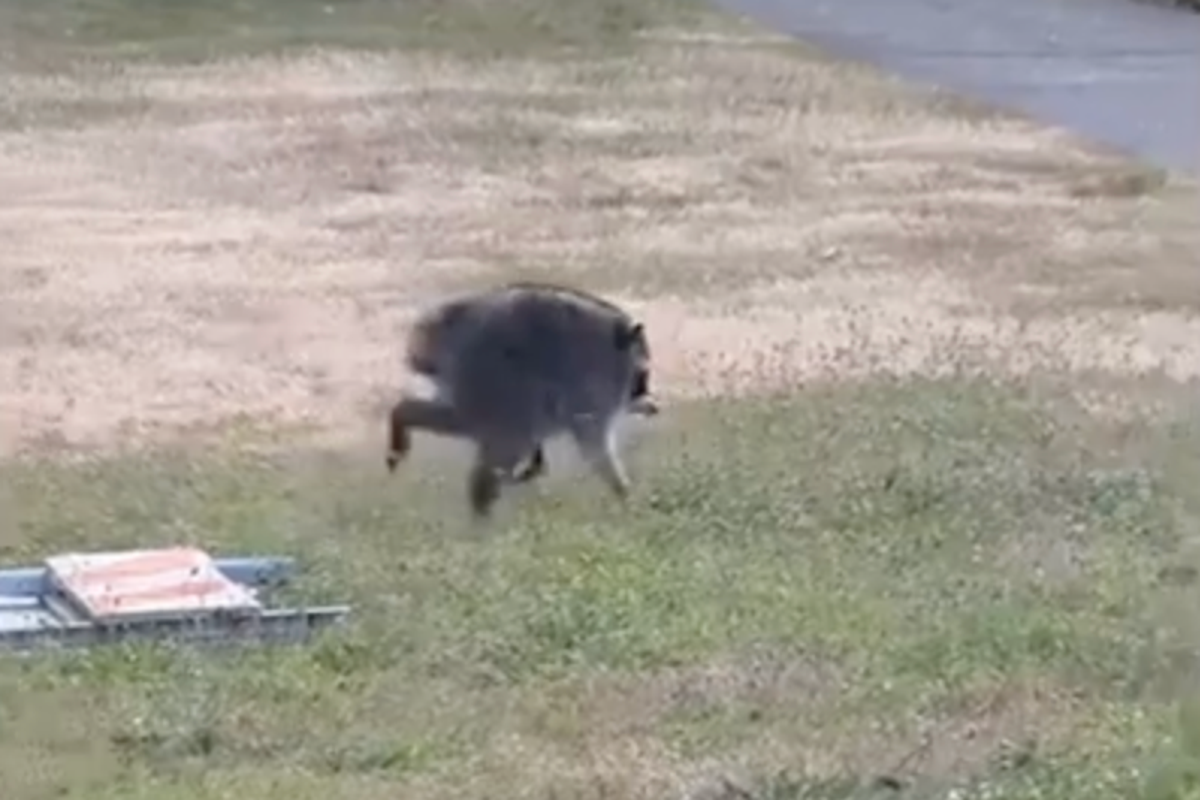
Seattle has lost the plot. Local media outlets are currently fawning over "Jimothy," a raccoon sporting a genetic anomaly that has turned its fur into a matted, hairless mess. The narrative is nauseatingly predictable: it’s a “Hot Jimothy Summer,” a viral sensation, a creature “scurrying into our hearts.”
It is not a mascot. It is a biological red flag.
By framing a diseased, symptomatic animal as a quirky urban celebrity, the public is actively encouraging the breakdown of necessary boundaries between human habitats and wildlife. We aren't witnessing a Disney movie; we are witnessing the normalization of zoonotic risk.
The Aesthetic of Pathogen Exposure
The "mutant raccoon" aesthetic isn’t charming. It is a textbook presentation of sarcoptic mange, a parasitic infestation caused by Sarcoptes scabiei mites. In raccoons, this isn’t just an itchy skin condition; it is a death sentence that leads to secondary infections, severe dehydration, and, eventually, a brutal end.
When you see a raccoon wandering in daylight with patchy, crusty skin, you are looking at an animal that is biologically compromised. Yet, social media users in Seattle are lining up to snap selfies and leave food out.
Why Feeding Wildlife is an Act of Aggression
The urge to feed a suffering animal feels compassionate. It is, in practice, a form of ecological sabotage.
Feeding wildlife creates a dependency loop that ruins an animal's ability to forage. Worse, it congregates animals in high-density areas. Disease transmission thrives on density. When you leave a bowl of kibble out for a mangy raccoon, you aren't helping it; you are creating a viral buffet for every other scavenger in the neighborhood.
I have consulted with urban wildlife biologists who have spent decades trying to educate the public on the "do not feed" mandate. The pushback is always the same: "But it looked hungry."
Hunger is the mechanism that keeps wild populations in check. When we interfere, we create "habituated" animals—creatures that lose their natural fear of humans. A fearful raccoon stays in the woods. A habituated raccoon enters your garage, corners your cat, or—given the right provocation—bites a toddler.
The Silent Threat of Zoonosis
Let’s dismantle the "it’s just a raccoon" defense. Raccoons are primary vectors for Procyonid baylisascaris, a roundworm that causes visceral larva migrans in humans. If you ingest eggs from contaminated soil or surfaces—which are often found near communal feeding sites—the larvae can migrate to your eyes or brain.
While the risk of a headline-grabbing rabies outbreak is statistically lower than the hysterical masses believe, the risk of common, manageable, yet unpleasant parasites is nearly guaranteed at any site where humans interact with symptomatic wildlife.
Seattle’s obsession with this specific raccoon demonstrates a profound lack of biological literacy. We have reached a point where urban residents treat local fauna like animatronics in a theme park. They forget that the animal has no concept of "cute." It has a concept of "survive."
The Cost of Sentimentality
Imagine a scenario where a child attempts to pet this "viral celebrity." The animal, likely suffering from extreme neurological stress due to parasite load, reacts defensively. The child is bitten. The raccoon is trapped, euthanized, and tested for rabies.
The public outcry would be instantaneous, blaming the city for "failing to protect" the animal. But the fault would lie squarely with the "fans" who encouraged the proximity that made the tragedy inevitable.
The Logic of Professional Wildlife Management
Wildlife management isn’t about being cruel; it’s about maintaining equilibrium. The standard protocol for a raccoon with visible mange is observation—not intervention, and certainly not viral fame.
If the condition is severe, professional animal control officers have the tools to humanely euthanize the animal to prevent prolonged suffering and environmental contamination. Turning it into a meme prevents this. It makes the animal "off-limits" for necessary management because the public has attached a name and an identity to a creature that is actively dying.
Stop Treating Nature Like Content
The internet thrives on anthropomorphism. We project human traits onto animals because it makes the world feel safer, more connected, and more narrative-driven. But nature is indifferent to your "Hot Jimothy Summer."
If you want to help Seattle’s wildlife, start by practicing radical disengagement:
- Secure your waste. If they aren't eating your trash, they aren't congregating in your streets.
- Remove external food sources. Stop putting out birdseed or pet food at night. You are feeding the rat population just as much as the raccoons.
- Respect the distance. If an animal is behaving abnormally—daytime activity, unsteadiness, or hair loss—call your local wildlife control agency. Do not document it for likes.
We are living in an era of unprecedented urban-wildlife interface. We have the data to understand the risks of proximity, and yet we choose the dopamine hit of a viral post every single time.
The raccoon is dying. The city is enabling the spread of parasites. The "hearts" it scurried into are objectively less safe than they were before the internet decided this tragedy was a trend.
Stop naming the pests. Start respecting the ecology. Put the phone down and walk away.