The cabin air always smells of recycled static and stale coffee. Thirty thousand feet below, the earth is just a slow-moving green quilt. Passengers adjust their neck pillows, re-read the third chapter of a paperback, or stare blankly at the map tracking their arc across the sky. They trust the physics. They trust the silence of the jet engines humming beneath the wings. They trust the person in the left seat.
Then the world tilts.
Imagine sitting on the flight deck of a Cathay Pacific widebody as the runway lights rush up to meet you through a grey, weeping sky. It is early July. The monsoon air is thick, heavy with moisture, acting like an invisible hand pushing against the aluminum skin of the aircraft. This is not a movie scene with dramatic music. It is quiet. It is clinical. It is the sound of checklists being read aloud by rote.
And then, the math breaks.
Investigators would later dryly record the event in government ink. They would call it an "abnormal runway contact." They would use tidy, antiseptic classifications designed to soothe jittery stock markets and comfort insurance underwriters. Bureaucracy loves a good euphemism. It takes a terrifying, violent jolt of kinetic energy and wraps it in a polite cardigan.
Let us be honest about what that phrase actually means.
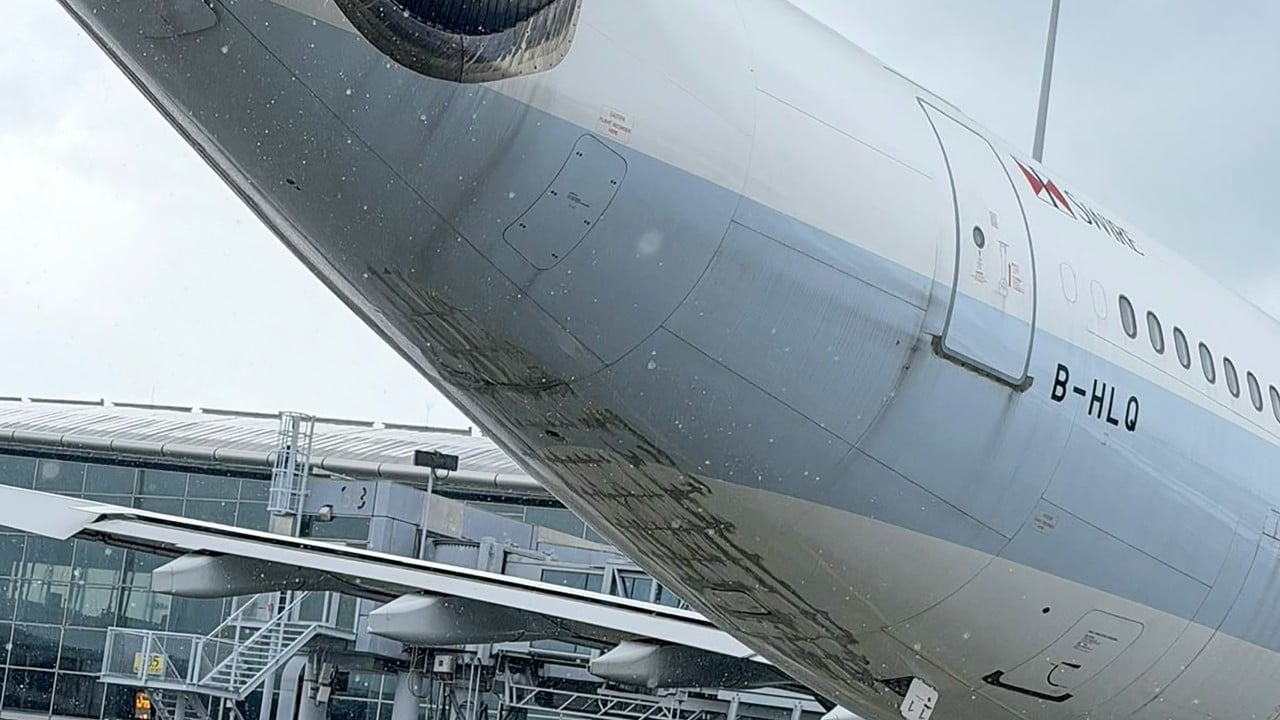
An abnormal runway contact means the tail of a multimillion-dollar machine kissed the concrete much harder than the laws of engineering ever intended. It means metal groaned, rivets strained, and passengers felt their stomachs leap into their throats as gravity reminded everyone in the cabin who was truly in charge.
Consider the pilot. Captain Miller—a hypothetical name for a very real human archetype—has logged thousands of hours above the clouds. He knows the subtle vibrations of a Boeing or an Airbus the way a violinist knows the grain of their instrument. He has landed in crosswinds that would make a sailor seasick. Yet aviation is an unforgiving mistress of fractions. A knot too slow, a gust too sudden, a half-second hesitation in the flare, and the geometry of descent changes entirely.
The tail strikes. The cabin erupts into that collective, held-breath silence. The overhead bins rattle. Heart rates spike.
What happens next is where the real story lives. Not in the immediate flash of panic, but in the slow, meticulous unspooling of accountability that follows.
When a commercial flight touches down incorrectly, an invisible ecosystem springs into life. Safety boards convene. Flight data recorders—those orange boxes of absolute truth—are pulled from the belly of the beast. Every twitch of the yoke, every fluctuation in airspeed, every whispered word on the cockpit voice recorder is transcribed and analyzed.
People want villains. We look for someone to blame. Was it pilot fatigue? Did the airline push turnaround times too tight? Was the weather radar misread? The public demands a single guilty party so we can sleep easier on our next red-eye flight.
Human error is rarely a solitary villain. It is usually an ensemble cast.
It is the accumulated weight of a hundred minor variables. A slight shift in wind shear just fifty feet off the deck. A momentary visual illusion caused by a wet runway reflecting the approach lights. The subtle drag of fatigue after crossing multiple time zones. The system allows for these variables, wrapping them in layers of redundancy until, rarely, the holes in the Swiss cheese align.
This is where true expertise matters. Cathay Pacific did not try to bury the incident in a PR blackout. They did not pretend the laws of physics had taken a holiday. The classification came down. The investigation started. Engineers crawled inside the tail section with flashlights and ultrasonic sensors, checking the structural integrity of the frames and stringers.
Trust is a fragile cargo. It takes years to build a reputation for safety across millions of miles of international air routes, and it can be rattled by a single heavy touchdown on a rainy summer morning.
Think of the passenger who was flying home to see their daughter graduate. They felt that jarring thump. They heard the reverse thrusters roar to life, slowing the plane down to a safe, mundane taxi speed. They walked off the jet bridge into the fluorescent-lit terminal, slightly shaken, maybe gripping their carry-on handle a little tighter than usual.
They did not know the technical jargon. They did not care about the classification of runway geometry. They just knew that for one heartbeat, the sky felt dangerously close to the ground.
Yet the plane stayed in one piece. The emergency systems weren't needed because the primary structures held. The safety margins did their quiet, invisible job.
We forget how much modern life relies on people admitting their mistakes out loud. In a culture obsessed with flawless execution, the aviation industry stands apart precisely because it is terrified of perfection. It operates on a paranoid, beautiful assumption: we are going to fail, so we must build systems resilient enough to catch us when we do.
The runway in early July is still there, its asphalt scarred by rubber and history. The planes keep landing. The coffee is still lukewarm. And somewhere thousands of feet above the clouds, another pilot is looking at the horizon, holding the lives of three hundred strangers in their hands, listening to the quiet, steady hum of the engines.