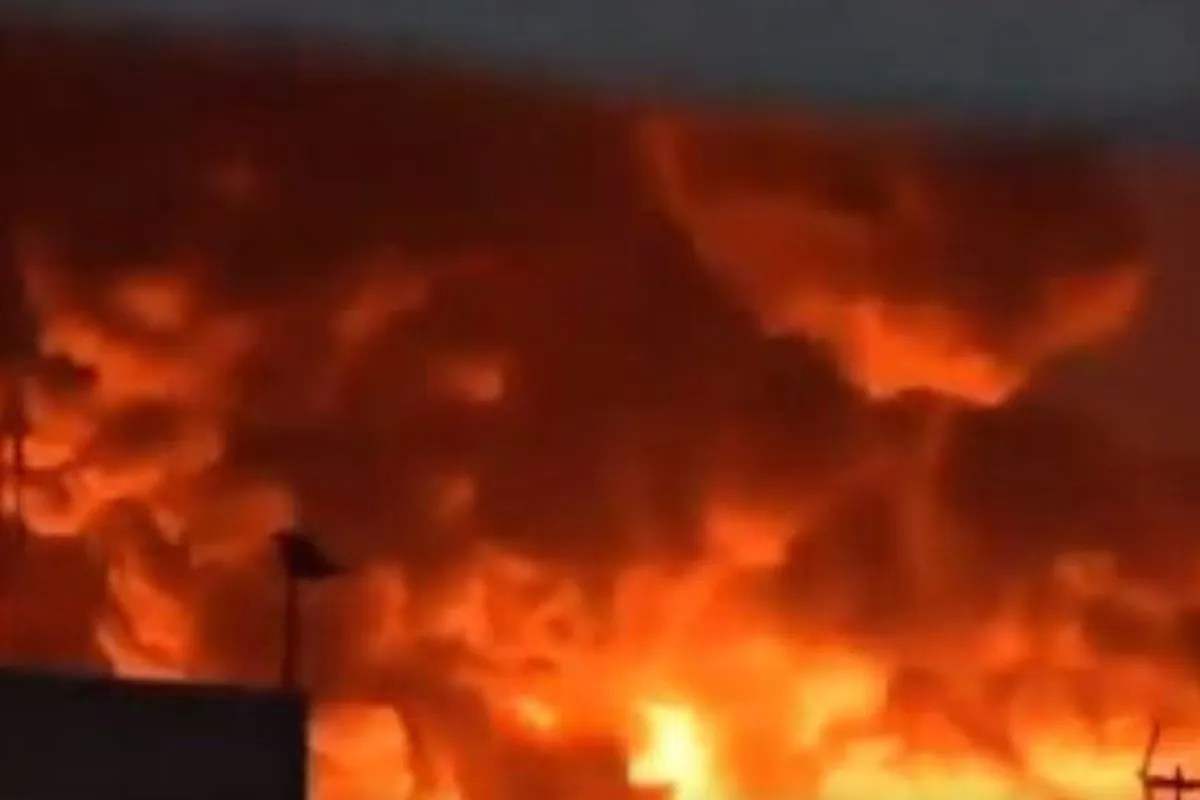
The 2016 Kumamoto earthquake sequence serves as a case study in mechanical fatigue and structural redundancy failure. Between April 14 and April 16, two successive seismic events of magnitude 6.5 and 7.3 struck the Kumamoto Prefecture in Kyushu, Japan. The significance of this event lies not in a single catastrophic rupture, but in the rapid-fire succession of energy release. This sequence effectively bypassed the design assumptions of local building codes, exposing a delta between intended seismic performance and realized structural integrity.
The Mechanics Of Cascading Failure
Tectonically, the Kumamoto event was characterized by strike-slip faulting within the upper crust of the Eurasia Plate. The Futagawa-Hinagu fault zone, a known active shear zone, acted as the primary conduit for the release of accumulated elastic strain. The foreshock (April 14) initiated a rupture on the northern segment of the Hinagu fault, while the main shock (April 16) propagated along the Futagawa fault.
The interval between these events—roughly 28 hours—was insufficient for structural damping or recovery. From a materials science perspective, the first event introduced micro-cracking and deformation in wooden and reinforced concrete structures, stripping them of their residual load-bearing capacity. When the main shock occurred, the baseline structural integrity of the built environment had already been degraded. This created a compounding risk scenario where buildings that would have survived a single event reached their ultimate limit state during the second.
Analyzing The Structural Deficit
The primary driver of damage in the residential sector was the performance of pre-1981 timber structures. Japanese seismic design standards underwent significant revisions in 1981 and 2000. Data from Mashiki Town—the epicenter of the most intense shaking—revealed a clear correlation between construction vintage and failure probability:
- Pre-1981 Stock: High failure rates, primarily due to lack of lateral force-resisting systems and inadequate connection hardware.
- 1981–2000 Stock: Notable reduction in total collapse, yet still prone to significant displacement and permanent drift.
- Post-2000 Stock: Superior resilience, with few instances of total collapse, demonstrating the efficacy of mandatory bracing and shear wall requirements implemented after the 1995 Kobe event.
The vulnerability of the older building stock was exacerbated by a specific regional variable: the seismic coefficient ($Z$). In Japan, the $Z$ factor adjusts the building code requirements based on regional risk. Kumamoto had historically been assigned a coefficient between 0.8 and 0.9, slightly lower than regions considered to be at higher risk. This resulted in construction that, while compliant, was optimized for a lower energy threshold than what the 2016 event ultimately delivered.
Economic Loss As A Function Of Infrastructure Disruption
Direct economic losses were estimated between ¥2.4–4.6 trillion (approximately $22–43 billion USD). While property damage to residential structures formed the bulk of the count, the economic drag was amplified by the collapse of critical linear infrastructure.
The destruction of multiple bridges—specifically the Aso, Oogiribata, and Choyo bridges—severed arterial supply chains within the Aso Caldera. This created a logistical bottleneck. Modern logistics rely on just-in-time delivery; the sudden removal of these nodes rendered the area inaccessible to recovery equipment and essential goods for an extended window. The lesson here is that economic resilience is not solely dependent on individual building performance, but on the redundancy of the network of which they are part.
Cascading Geological Hazards
The earthquake triggered 136 documented instances of sediment-related failure, including landslides and debris flows. These events emphasize the importance of geotechnical context in seismic risk assessment. Structures positioned at the base of slopes or on alluvial deposits were subjected to secondary risks that standard building codes—focused primarily on ground shaking—did not fully mitigate. Lateral spreading along riverbanks further degraded the foundations of public works, demonstrating that seismic impact is a multi-dimensional threat vector involving both vibratory force and soil mass displacement.
Strategic Infrastructure Hardening
To mitigate future exposure in high-seismicity regions, the following operational mandates must be prioritized:
- Dynamic Retrofitting: Transition from static building code compliance to performance-based design, where structural systems are modeled against multiple sequential ground motions rather than a single static load.
- Infrastructure Redundancy: Map the dependency chain of critical transportation nodes. If the failure of one bridge eliminates access to an entire region, that node requires over-engineering regardless of standard probability models.
- Non-Structural Component Mitigation: Shift focus toward internal utility resilience. A building that remains standing but loses water, power, and gas for weeks due to pipe shear is functionally unusable. Hardening the connections between exterior utility lines and interior distribution headers must be a standard requirement.
- Geotechnical Mapping: Integrate real-time soil stability assessments into the local disaster management framework to predict the secondary impacts of landslide and liquefaction in mountainous terrain.
The objective is not to build for the last earthquake, but to build for the statistical impossibility of a cascading failure. Hardening against the sequence is the only way to minimize the divergence between a manageable catastrophe and a total regional shutdown.