Midnight. The fluorescent lights of a county election office hummed a low, persistent buzz that felt heavier than the stale coffee sitting in styrofoam cups on the counter. Outside, rain tapped against glass doors while inside, election workers slid sheets of paper across scanning trays with practiced, quiet rhythm. One more batch. One more tally. Across the country, phones buzzed on kitchen islands, in late-night newsrooms, and on bedside tables as people watched colors shift on maps that had seemed fixed only hours earlier.
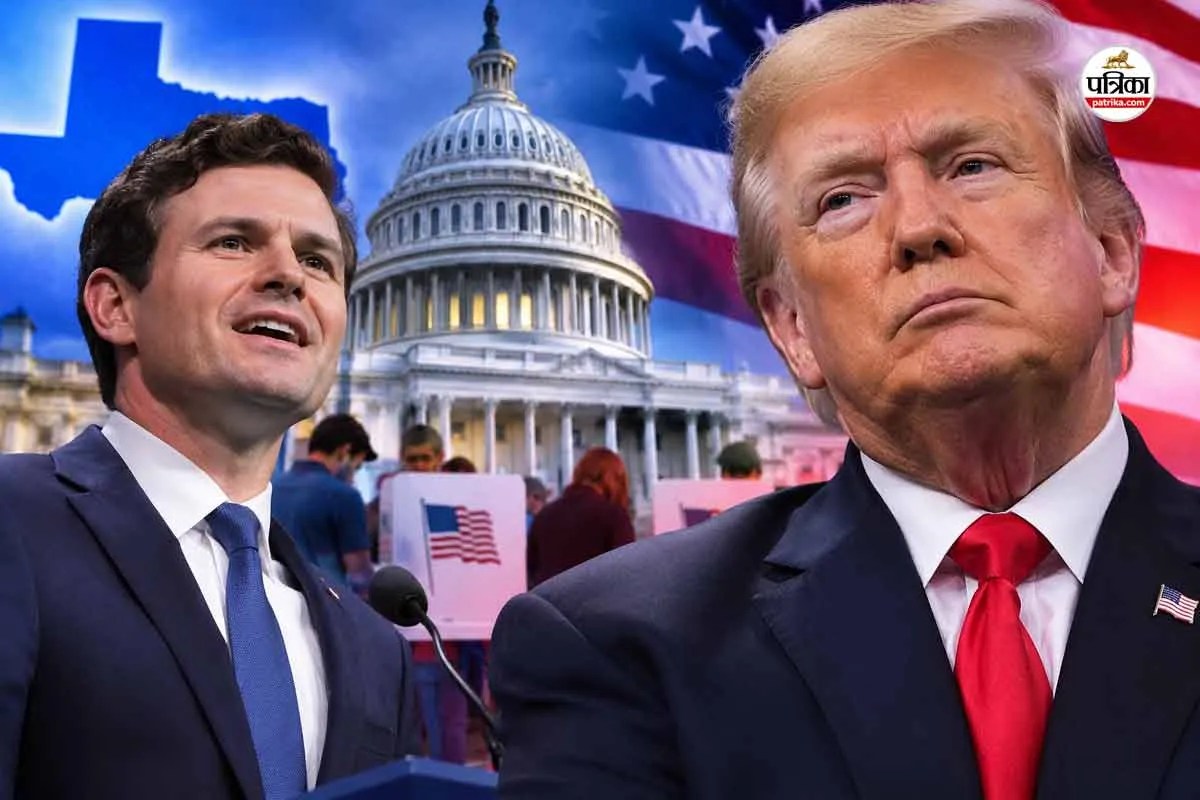
Power rarely breaks with a thunderous crash. More often, it cracks along thin lines—a few thousand votes in a suburban county, a late-arriving mail bag, a razor-thin shift in turnout across four states that turned a comfortable margin into a steep climb. When the Senate tilts toward Democrats and four states flip against Donald Trump's coalition, the headline sounds clean and mechanical: a major blow to his grip on power. Yet numbers on a screen do not capture the knot in a campaign strategist's stomach at 2:14 a.m., nor do they show the quiet calculation happening in kitchens thousands of miles away over grocery bills, mortgage rates, and what happens next in Washington.
Politics can feel dizzying when you are watching from afar, especially when headlines arrive in rapid bursts of victory and shock. I have spent years watching how voters react when promised certainty collides with everyday friction, and I will admit something plain: even seasoned observers get caught off guard by how quickly a seemingly sturdy map can bend. A single senate seat changes committee gavels, judicial confirmations, and legislative leverage. Four flipped states change the math of momentum itself.
Four States Where the Map Turned
To understand what happened, look past the sweeping cable-news graphics and trace the four states where the ground shifted. In political terms, a flip is not merely a change in color; it is a story about persuasion and turnout colliding in the exact same precinct.
To make this concrete, consider a hypothetical scenario rooted in real electoral dynamics. Imagine Maya, a warehouse shift supervisor in a mid-sized industrial town in one of those four states. Two years ago, she voted for a populist promise of disruption and lower costs; this time, she stayed in line past 8 p.m. not out of ideological devotion to either party, but because her property tax bill went up while her overtime hours shrank. Voters like Maya do not move in neat blocs. They move when the gap between what they were promised and what they feel at checkout becomes too wide to ignore.
Across the four states that flipped, small margins carried enormous weight. Think of a Senate majority like a suspension bridge held up by cables over a wide river. Remove even a couple of anchor cables—or watch their tension slacken across key battlegrounds—and the whole deck sways under the weight of every bill, nomination, and subpoena crossing it. With Democrats seizing control of the Senate, Trump's ability to push unilateral priorities through the upper chamber narrows sharply. Judicial picks face stiffer headwinds. Cabinet and agency nominees encounter harder questioning and tougher math. Even executive power feels different when the Senate chamber on the other end of Pennsylvania Avenue is no longer a friendly backstop.
People often ask whether midterm or off-cycle shifts automatically erase a president's influence. No. A shift in the Senate and losses in four key states do not strip away the bully pulpit, executive orders, or loyalty among core supporters. What they do change is friction. Every policy proposal now has to survive a chamber controlled by political rivals who have every incentive to slow, reshape, or block it.
Inside the Reaction Room
Power talks fast, especially when it is cornered. When results harden across four states and the Senate slips away, the reaction from Trump and his inner circle rarely sounds like quiet concession. It sounds like defiance, grievance, and an immediate search for leverage.
Picture a war room at dawn—a hypothetical reconstruction based on well-documented patterns of modern political crisis management. Cold takeout boxes sit stacked near a television muted on one screen and blaring on another. Aides refresh county-by-county spreadsheets while drafting statements that frame every setback as proof of a rigged system, disloyal establishment figures, or temporary turbulence before a larger counterattack.
That reaction serves two purposes at once. First, it rallies a base that hates feeling defeated. By turning a four-state reversal and a Senate loss into a battle cry against perceived unfairness, Trump keeps supporters energized and focused on a shared adversary rather than fractured by disappointment. Second, it signals to lawmakers and donors that he is not fading quietly into the background. Even without a Senate majority, a leader who commands intense grassroots devotion still shapes primary challenges, media narratives, and party discipline.
History offers plenty of reminders of how volatile this moment can be. Divided government in the United States has rarely produced calm consensus over the past three decades; more often, it has produced trench warfare. When the White House and the Senate pull in opposite directions, governing slows to a crawl while political theater speeds up. Investigations multiply. Spending bills turn into high-stakes brinkmanship. Every missed deadline becomes a weapon in the next news cycle.
Why Senate Control Changes Daily Life
It is easy to treat Washington power struggles like a drama played out by distant actors in suits. Yet Senate control reaches into ordinary routines in ways people rarely notice until a rule changes or a program stalls.
Consider the ripple effects of Democrats holding the Senate while four states swing away from Trump's column. Legislation championed by Trump faces steep odds of clearing sixty votes—or even fifty, depending on procedural rules and party unity. Priorities around deregulation, tax policy, border enforcement funding, or federal agency restructuring hit a wall of opposition or demand painful compromises. Meanwhile, Senate Democrats gain control of committee agendas, setting hearings, issuing subpoenas, and shaping which issues command national attention.
What happens next? A prolonged test of wills. Trump can lean harder on executive actions, regulatory shifts, and public rallies to bypass gridlock, while Senate Democrats can use confirmation leverage and oversight to check those moves. Neither side gets a clean sweep. Both sides get a fight.
Even for voters who tune out cable news by 9 p.m., that standoff carries weight. Uncertainty in Washington ripples into business investment, state budget planning, and public confidence. When leaders clash over spending authority or agency rules, families and small business owners feel the static through shifting interest rates, changing compliance rules, and headlines that make long-term planning feel like guesswork.
Sometimes I catch myself wondering how exhausting it is to live inside a permanent campaign where every election is framed as existential. Doubt is honest here: nobody can predict with total certainty how a fractured power structure will resolve itself over the coming months. A narrow Senate majority is fragile. A four-state swing can reverse again if economic conditions shift or candidates stumble. Politics is not physics; it is human behavior under pressure, and human behavior is famously unpredictable.
What Flipping Four States Really Signals
A map turning in four states is more than a tally of ballots. It is a mirror held up to coalition politics.
When a leader loses ground across multiple states simultaneously, analysts immediately look for the fault lines beneath the surface. Did suburban voters recoil from sharp rhetoric? Did independent voters punish incumbents or aligned candidates over cost-of-living pressures? Did turnout surge in cities and college towns while lagging in rural counties that usually carry the load?
Every one of those questions points back to people making trade-offs. Nobody votes in a vacuum. A retiree watching healthcare costs, a young renter eyeing home prices, a small-town hardware store owner watching freight expenses—each one weighs promises against reality. When four states tilt the other way, it usually means enough persuadable voters decided that the current direction was costing them more than they were willing to pay.
Yet political resilience is real, too. Donald Trump has repeatedly shown an ability to absorb blows, reframe setbacks, and turn wounded pride into renewed mobilization. Losing Senate control and watching four states flip is a severe blow to his institutional leverage, no question about it. It makes governing harder and narrows his margin for error. Still, writing off a movement that has reshaped American politics for a decade would be a mistake born of wishful thinking rather than evidence.
Rain still falls on quiet streets long after the cameras pack up and the pundits go home. Somewhere in one of those four flipped states, a voter wakes up to an alarm clock, checks the weather, and steps out the door into a country still arguing over who holds the wheel—and where it ought to go next.