The humidity in Causeway Bay clings to your skin like a wet wool blanket long after the sun goes down. Neon signs bleed magenta and cyan into the evening drizzle, bouncing off the slick asphalt of Victoria Park Road where red-light traffic idles in endless, frustrated hums.
You do not expect to see an apex predator of the tropical swamplands here. Not beside the double-decker trams. Not where the scent of stinky tofu competes with diesel fumes.
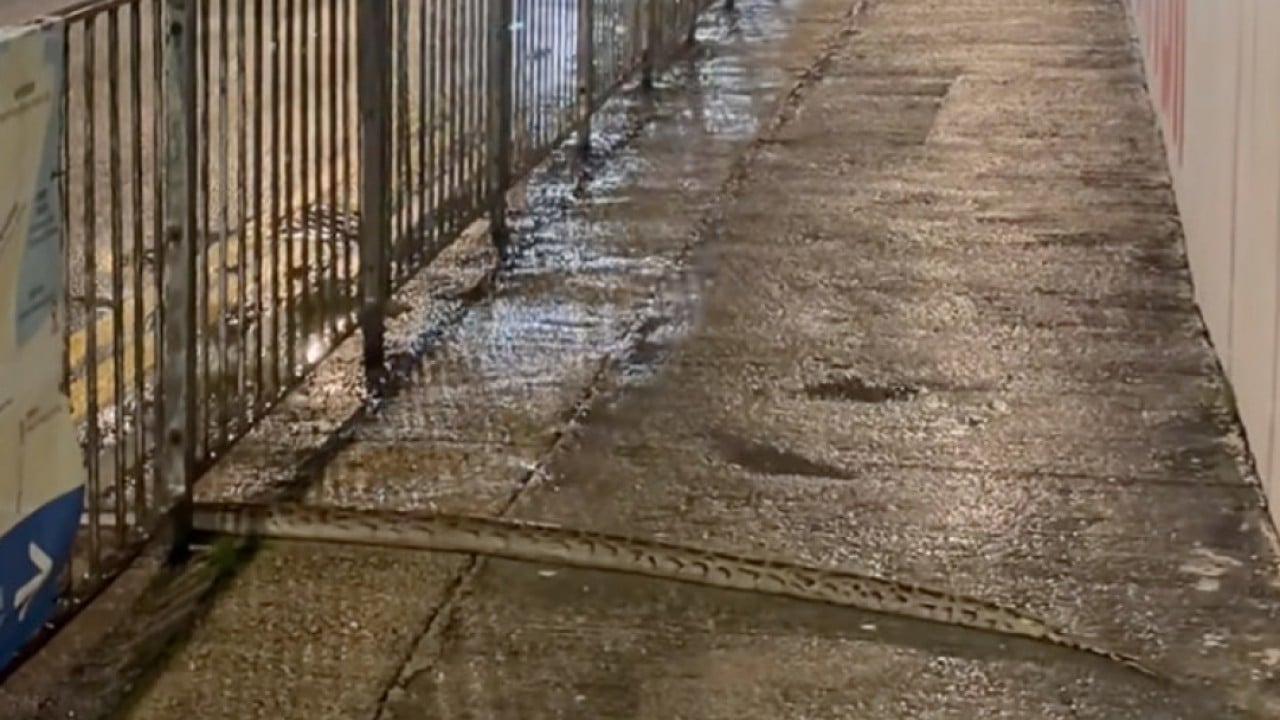
Yet, there it was. Coiled near a drainage grate, a heavy, muscular shadow that did not belong to a stray dog or an alley cat. A Burmese python, nearly three meters of ancient, indifferent muscle, sliding out of the urban plumbing as if the neon-soaked labyrinth of Hong Kong was nothing more than a dense Southeast Asian riverbed.
Panic followed swiftly, as it always does when the wild crosses an invisible line into our manicured domains. Crowds parted. Phones flashed. Sirens wailed through the canyon of high-rises.
Consider what happens next: the experts arrive, the creature is secured, and social media feeds cycle through a week of startled shock. But the real problem lies elsewhere. We stare at the serpent in the concrete and wonder how it got there, completely missing the fact that we built the door it walked through.
The Architecture of an Incursion
To understand why a giant constrictor found itself navigating the storm drains of one of the densest commercial districts on Earth, you have to look down rather than up.
Hong Kong is a masterclass in vertical ambition, but its foundations are an intricate, subterranean web of concrete tunnels, culverts, and drainage networks designed to channel the fury of tropical monsoons away from millions of commuters. When the skies open up over the territory, millions of gallons of water cascade down the slopes of Tai Tam and the hills of Happy Valley.
Water seeks the path of least resistance. So do displaced animals.
Imagine living in a forested hillside that has slowly been choked by retaining walls, highway expansions, and high-density housing blocks. Your hunting grounds shrink. Your migration routes turn into sheer vertical cliffs of sprayed concrete. Then, the summer monsoon hits. A wall of rushing water fills your hillside burrow, washing you into a concrete sluice gate. You tumble through miles of dark, echoing pipes, driven by current and panic, until the drainage system finally expels you into the heart of Causeway Bay.
The python did not choose to invade the city. It was delivered by gravity and infrastructure.
Herpetologists and wildlife officers who examined the animal noted that it was surprisingly healthy, albeit exhausted and slick with urban grime. This was no smuggled pet cast aside by a careless owner looking for an easy escape. This was a wild native resident, an indigenous survivor of the urban fringe that simply got caught in the machinery of our climate engineering.
We forget that long before these neon towers pierced the sky, these hills belonged to predators. We paved over their homes, built our shopping malls on their migration routes, and then act profoundly surprised when the ecosystem demands a recount.
The Weight of the Concrete Shield
There is a strange arrogance in how we view cities. We draw boundaries on maps and pretend that nature respects them. We build walls, seal manholes, and install double-paned glass to keep the messy, unpredictable outside world at bay.
It is a fragile illusion.
Every torrential downpour tests the seal of that illusion. When storm waters rise, the hidden arteries of the city swell, blurring the line between the urban and the wild. The python in Causeway Bay is not an isolated anomaly. It is a symptom. It tells us that our concrete shields are porous, that the natural world presses against our foundations constantly, waiting for a crack, a flood, or an open gate.
Think about the last time you walked through a quiet urban park at dusk. The cicadas hum in the manicured ficus trees. A stray egret hunts for goldfish in a concrete decorative pond. We marvel at these tiny pockets of preserved nature, calling them green lungs, as if nature is a museum exhibit we curate for our weekend strolls.
We treat wildlife as something that exists out there, away from civilization, residing safely in documentaries or distant national parks.
The serpent disrupts that mental comfort. It reminds us that wilderness is not a place you visit; it is a force that surrounds us, containing patience and resilience we struggle to fathom. A Burmese python can go weeks without eating, can squeeze through astonishingly narrow gaps, and can swim silently through murky urban runoff without leaving a ripple. It moves through a world designed for cars and pedestrians as if it were swimming through an ancient marsh.
What the Rain Leaves Behind
Rain changes everything in this city. It washes away the dust, cools the sweltering heat, and temporarily softens the aggressive geometry of the skyscrapers. But it also reveals the stitching of the ecosystem we tried to stitch over.
When the deluge subsides, the streets dry out. The traffic resumes its relentless roar. Shoppers flood back onto Great George Street, oblivious to the drama that unfolded just hours earlier in the dark beneath their feet.
The python was relocated, of course. Taken far from the neon glow, released into a protected country park where the streams run clear and the only lights are the stars piercing through a dark canopy. It will hunt rats, swim in cool freshwater pools, and perhaps forget the roar of the tram lines and the blinding flash of smartphone cameras.
Yet the image remains.
A silent, powerful reminder coiled in the damp corners of our modern world. We can pave the earth, channel the rivers, and build towers that touch the clouds, but we can never truly outrun the wild. It lives just beneath our feet, waiting for the next heavy rain, the next rising tide, to remind us who was here first.
The storm clouds are gathering over the peaks again. The air grows heavy, thick with the scent of impending moisture. Deep inside the dark, echoing veins of the city, something ancient stirs, testing the grates, waiting for the water to rise.