The rain in Greater Manchester does not fall so much as it hangs in the air, a permanent grey mist that coats the brickwork of Victorian terraces and the sleek glass of modern cafes alike. On ordinary mornings, this damp chill is simply the background music to daily life. People hurry past with collars turned up against the wind, clutching umbrellas, lost in the private theater of their own commutes.
Yet beneath the hum of traffic and the clatter of porcelain in neighborhood bakeries, a different current flows. Discover more on a connected subject: this related article.
Picture a quiet street in a residential district where synagogues stand not merely as houses of worship, but as community anchors. Here, doors are fitted with heavy locks and security cameras blink silently in the dusk. For generations, the families who walk these pavements have woven themselves into the fabric of British society. They celebrate weddings in local halls, send their children to nearby schools, and share the common anxieties of rising grocery bills and damp winter heating.
They also carry a weight that most of their neighbors never have to touch. Additional analysis by NPR highlights comparable perspectives on this issue.
That weight is the quiet, persistent knowledge of being watched by forces that wish them harm from thousands of miles away.
Security, in communities like this, is never an abstract policy debate. It is the heavy click of a reinforced gate. It is the brief pause before opening a front door. It is the unblinking gaze of private guards stationed outside schools on Sunday mornings. It is an invisible armor worn every single day.
Recently, that armor was tested.
Two men, citizens of Iran, stood before a British court charged with orchestrating a terrorist plot directed at the Jewish community in Manchester. The charges were not vague suspicions or idle threats whispered in internet chatrooms. They were concrete, chilling allegations of preparation for an act of mass violence.
Consider what that means for a moment.
The theater of international geopolitics, usually confined to distant capitals, diplomatic summits, and evening news bulletins, had reached directly into the damp streets of Northern England. A state-sponsored apparatus or its proxies had allegedly cast a line across continents, searching for local operatives to turn a place of sanctuary into a target.
When the news broke, it did not arrive with the cinematic screech of sirens. It arrived through the quiet channel of community security networks and evening broadcasts. People read the headlines on their phones while sitting on crowded trams or waiting for the kettle to boil.
Fear has a specific texture. It is cold. It is sharp. And then, almost immediately, it hardens into resilience.
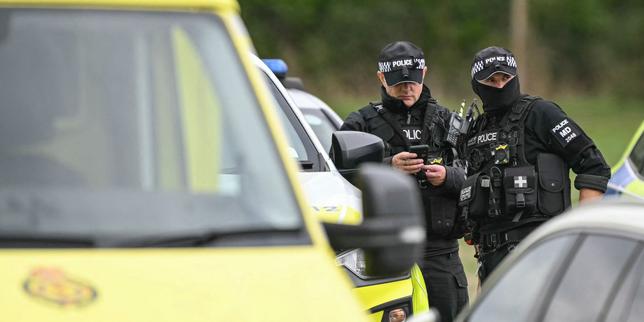
The community did not panic, because panic is a luxury reserved for those who have never had to survive. Instead, conversations shifted in kitchens and community centers. Parents looked at their children with a renewed, piercing tenderness. Leaders conferred with police officers who had already been working behind the scenes in a delicate, high-stakes game of shadows.
This is where the invisible machinery of modern counter-terrorism reveals its true nature.
We often think of security as a wall of steel. In reality, it is a web of human vigilance. It relies on intelligence officers parsing intercepted communications through sleepless nights. It relies on surveillance operatives tracking movements across international borders. It relies on local bobbies patrolling suburban streets with sharp eyes and steady nerves.
Long before a courtroom gavel falls, an entire ecosystem of protection moves in absolute silence.
The investigation into the Manchester plot was not a stroke of sudden luck. It was the culmination of months—perhaps years—of meticulous intelligence gathering. In the hidden rooms where analysts piece together fractured digital trails, every encrypted message, every suspicious financial transaction, and every whisper of intent is weighed against the safety of millions.
We live in an interconnected world where geopolitical rivalries do not respect borders. When tensions flare in the Middle East or diplomatic channels freeze between Western governments and hostile regimes, the shockwaves travel outward. They ripple through cyberspace, through international finance, and occasionally, they manifest on quiet residential streets in European industrial cities.
The Iranian operatives accused in this plot were operating under the illusion that they could export foreign violence into a domestic neighborhood and disappear into the crowd. They underestimated the depth of institutional memory within British law enforcement and the uncompromising vigilance of community-led security organizations like the Community Security Trust.
For decades, these organizations have worked hand-in-hand with British police forces to map threats, harden targets, and educate community members on situational awareness. They bridge the gap between cold intelligence data and real human lives. They know that safety is not a permanent state; it is an active practice.
When the two men were finally charged, it marked both a victory and a stark reminder.
It was a victory because the machinery worked. The plot was intercepted before blood could stain the pavement. Lives were saved before the victims even knew they were in danger.
Yet it was a reminder because the threat has not evaporated. The arrest of two individuals does not dismantle the ideological pipelines and state-backed directives that spawned them. The hostility remains, patient and opportunistic, waiting for a crack in the armor.
This is the reality of living in an open society under siege from closed, authoritarian actors. To remain open—to keep doors welcoming, to let children walk to school without armed escorts on every corner—requires a fierce, unyielding guardianships behind the scenes.
The rain continues to fall over Manchester. The brick terraces still stand in their rows of soot-darkened stone. On the streets, people walk to the shops, greet their neighbors, and carry on with the stubborn, beautiful banality of everyday life.
They do so because men and women in unmarked cars, in quiet command centers, and in community patrols are watching the dark corners of the world so that others can live in the light.
The threat was real. The danger was averted. But the vigilance must never sleep.