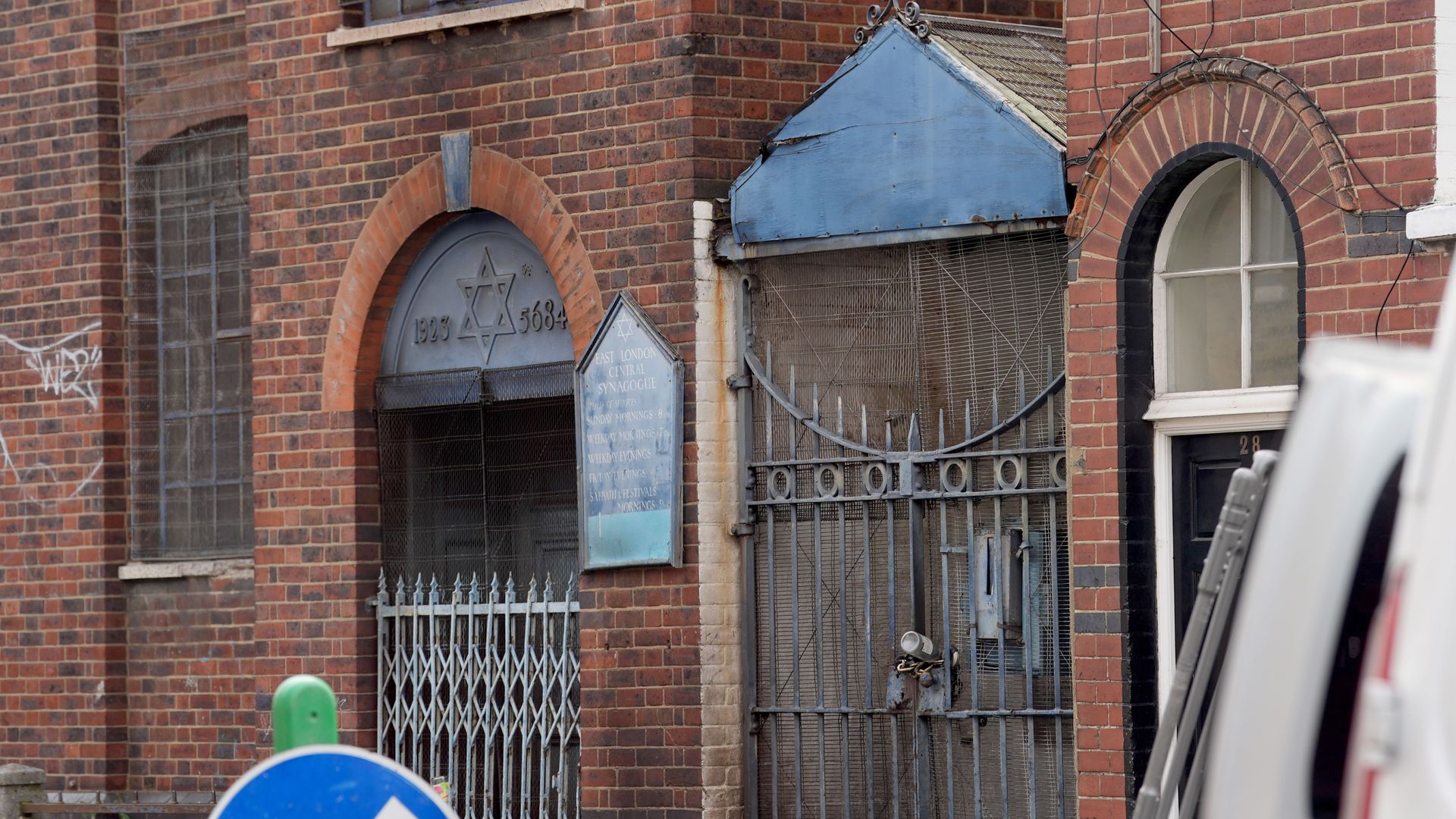
A second man now faces felony charges in connection with the fire that gutted the former Adas Israel Synagogue in Duluth, Minnesota. While local authorities have moved quickly to secure arrests, the incident highlights a growing trend of "urban decay arson" and the precarious status of historic religious sites left in private hands. This was not a functioning house of worship at the time of the blaze, but the destruction of a building that stood for over a century carries a weight that a standard police blotter entry cannot fully capture.
Lee Marvin Widell, 35, has been charged with second-degree arson. He joins Phillip Paulsen, who was previously charged in relation to the September 2019 blaze. According to court records, the investigation relied on a combination of digital forensics and witness statements that placed both men at the scene during the critical window when the structure became an inferno. Also making headlines in this space: Why the BRICS Unity Myth Is Falling Apart in India Right Now.
The fire was more than a local emergency. It was the terminal point for a building that had transitioned from a sanctuary of the Jewish community to a shell caught in the vacuum of real estate speculation.
The Mechanics of Urban Arson
Fires in vacant historic structures are rarely the result of sophisticated planning. Instead, they often stem from a intersection of vagrancy, substance abuse, and a lack of structural oversight. In the case of the Adas Israel building, the synagogue had been sold to a private owner years prior. When religious congregations shrink and move, the physical structures they leave behind often become liabilities. Further details into this topic are covered by The Guardian.
Security is expensive. Maintaining the integrity of a roof or the sealing of windows against the Duluth winters requires capital that many private owners are unwilling to invest in a property that isn't generating immediate revenue. This creates a "soft target" for transients or individuals looking for a place to shelter, which is where many of these fires originate.
Investigators found that the fire started in the early morning hours. In these types of cases, the transition from a warming fire or a discarded cigarette to a structure-wide catastrophe is almost instantaneous. Because the building was constructed in 1902, the wood was dry—seasoned by more than a century of central heating and natural aging. It was, for all intents and purposes, a massive pile of kindling.
Tracking the Suspects
The arrest of a second individual months or years after an event usually points to a break in the silence of a social circle. Police work in these instances is less about high-tech laboratory analysis and more about the slow grind of interviewing people on the margins of society.
Digital breadcrumbs played a role here. Investigators analyzed cell phone tower pings and social media activity to reconstruct the movements of the suspects. It is a common mistake for perpetrators to believe that if they aren't caught while the embers are hot, they are in the clear. Modern investigative journalism and criminal justice both recognize that the "cold" phase of an investigation is often when the most damning evidence surfaces.
Widell’s involvement, as alleged by the prosecution, suggests a collaborative element to the crime. Whether the act was intentional or a case of gross negligence that led to the fire’s spread is a distinction for the courtroom, but the legal reality remains the same. Arson in the second degree carries heavy penalties in Minnesota, reflecting the danger such fires pose to the community and the first responders who have to enter the "kill zone" of a collapsing historic building.
The Cost of Neglect
When a building like the former synagogue burns, the loss isn't just measured in bricks and mortar. There is a cultural tax paid by the city. The Adas Israel congregation was the heart of the Orthodox Jewish community in Duluth for generations. Even though the congregation had moved on, the building served as a visual anchor for the history of the neighborhood.
We see this pattern across the Rust Belt and the upper Midwest. Historic churches, synagogues, and social clubs are vacated as demographics shift. They are bought by developers who "land bank" them—holding the property for years while waiting for the market to turn. During that holding period, the buildings rot.
The Brutal Truth is that the city’s code enforcement often lacks the teeth to force owners to properly secure these sites. A few boards over the windows and a padlock are not enough to stop determined individuals from entering. Once someone is inside with a lighter or a match, the history of the city is at the mercy of a single spark.
Fire as a Symptom of Economic Stagnation
The Duluth fire is a symptom of a larger ailment. When property values stagnate, the incentive to protect a vacant building vanishes. If the building were in a high-demand district, it would have been repurposed into luxury lofts or a tech hub within months of its closing. In Duluth, it sat until it became a liability.
Insurance companies are increasingly wary of these risks. The premiums for vacant historic buildings have skyrocketed, leading some owners to skip insurance altogether or opt for the bare minimum. This complicates the recovery process after a fire. If there is no insurance payout to fund the demolition or the clearing of the lot, the charred remains sit as a blight on the neighborhood for even longer.
A Failed System of Preservation
Preservationists often argue that buildings should be "landmark" status to prevent their destruction. However, a landmark designation without a funding source is a death sentence. It prevents the building from being easily altered or demolished, which can scare off potential buyers, but it doesn't provide the money needed for a new HVAC system or a fire suppression overhaul.
The former synagogue wasn't just a victim of two men with a match. It was a victim of a system that allows cultural heritage to be traded like a commodity without any requirement for its upkeep. The legal proceedings against Widell and Paulsen will provide a sense of closure for the criminal act, but they do nothing to address the thousands of other "Adas Israels" currently sitting vacant across the country.
The Path to Accountability
To stop the cycle of arson in vacant structures, municipalities must move toward a more aggressive stance on vacant property registration. This includes:
- Mandatory Security Standards: Requiring owners to install monitored alarm systems and steel shuttering, rather than plywood.
- Escrow Accounts: Forcing owners of vacant historic sites to maintain an escrow fund that covers the cost of emergency demolition or stabilization.
- Short-Term Adaptive Reuse: Incentivizing the temporary use of buildings to ensure "eyes on the property."
The prosecution of Lee Marvin Widell is a necessary step in upholding the law. It sends a message that the destruction of property—regardless of its current use—will be pursued. But for the residents of Duluth who watched the smoke rise over the hillside in 2019, the arrest is a cold comfort. The building is gone. The stained glass, the hand-carved wood, and the collective memory of a century of prayers are ash.
True justice for the city would have been a policy that prevented the building from becoming a squat in the first place. Until city leaders realize that vacant buildings are not just dormant assets but active hazards, the fire departments of the Northland will continue to be called out to the glowing remains of history in the middle of the night.
The courtroom will handle the arsonists; the city must handle the negligence.