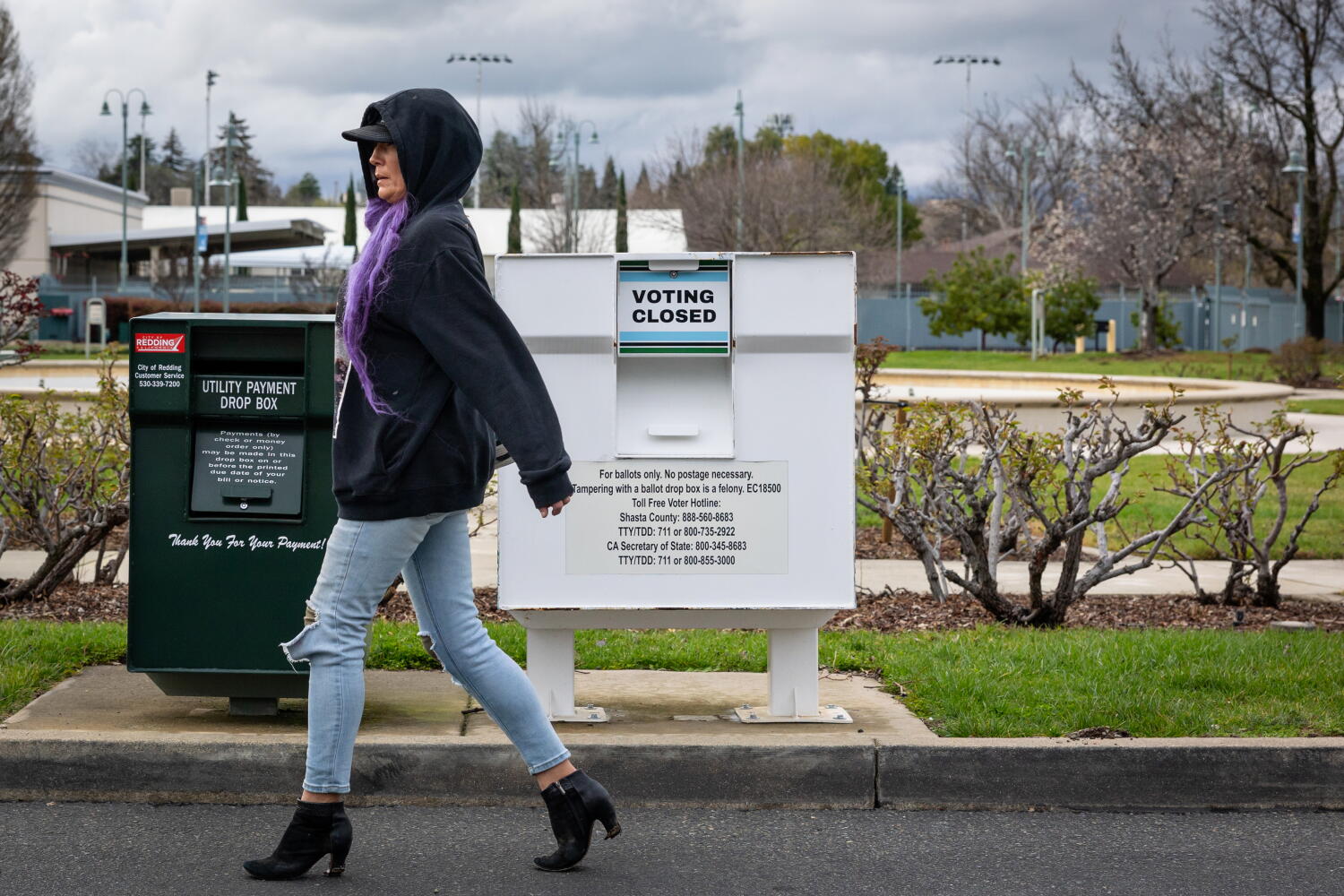
Local ballot measures don't get to rewrite state election law. A California judge made that unmistakably clear when striking down a high-profile Shasta County measure aimed at eliminating most mail-in voting.
For months, local officials and activists in Northern California pushed the idea that a county charter amendment could override California's universal vote-by-mail system. It sounded bold to supporters. Legally, it was a dead end from day one.
If you've been following the ongoing battles over election administration in Shasta County, this ruling isn't just a local procedural hiccup. It's a major legal boundary line for every county across California considering similar restrictions on how residents cast their ballots.
What the Shasta County Measure Actually Tried to Do
In March 2024, Shasta County voters narrowly approved Measure D, a charter amendment designed to reshape how local elections work. The core goal was simple on paper. Supporters wanted to eliminate universal mail-in voting for county residents and require most people to cast their ballots in person on Election Day.
Under Measure D, mail-in ballots would have been restricted to narrow exceptions, similar to older absentee voting rules. Voters would only qualify for a mail ballot if they met specific criteria, such as having a physical disability, traveling out of the county on Election Day, or serving in the military.
There was one glaring problem. California state law explicitly mandates universal vote-by-mail.
Under the California Elections Code—specifically Assembly Bill 37, signed into law in 2021—county elections officials are required to mail a ballot to every active registered voter for every election. Counties don't get to opt out of that requirement just because a local majority wants to run things differently.
Why the Judge Ruled Against the County
When the legal challenge hit the courtroom, the central question wasn't whether mail-in voting is good or bad policy. Courts don't decide policy preferences. They decide preemption—whether state law overrides local law.
In California, the state constitution gives charter counties certain powers over their own internal governance, like how county officers are elected or compensated. What a county charter cannot do is override general state laws that address matters of statewide concern.
Election administration is textbook statewide concern.
According to court rulings in the case, the judge determined that Measure D directly conflicted with the California Elections Code. Because the state legislature established a uniform system requiring every active registered voter to receive a mail ballot, a single county can't carve out its own conflicting rules.
Here's why that distinction matters so much in California law:
- Uniformity across jurisdictions. State lawmakers passed universal vote-by-mail to ensure every Californian has the same baseline access to the ballot regardless of their zip code.
- Preemption over local charters. Even when voters approve a charter amendment, state statutes take precedence whenever a conflict arises on a statewide issue.
- Administrative feasibility. County registrars operate under state certification, state funding streams, and state-mandated timelines that rely on standardized ballot distribution.
The judge's decision essentially confirmed what legal scholars and election attorneys had warned before the measure even reached the ballot. You can't use a local charter amendment to nullify a state statute.
The Bigger Picture in Shasta County Election Battles
To understand how Shasta County ended up in court over Measure D, you have to look at the broader political shift that transformed the region over the past few years.
Shasta County, located in far Northern California with Redding as its largest city, became ground zero for local election skepticism following the 2020 presidential election. In 2023, the Shasta County Board of Supervisors made national headlines when it voted to cancel the county's contract with Dominion Voting Systems, opting instead to pursue a manual hand-count system for ballots.
That move triggered an immediate response from Sacramento. California lawmakers passed Assembly Bill 969, which strictly limited when counties can use manual hand counts for elections with more than a small number of registered voters.
Measure D was the next chapter in that same tug-of-war.
Proponents of the measure argued that returning to primarily in-person voting would increase public confidence in local election results and reduce administrative costs associated with printing and mailing ballots to every registered voter. Critics, including voting rights organizations and state officials, argued that stripping away mail-in ballots would disenfranchise rural, elderly, and working voters who rely on the convenience and accessibility of voting from home.
Both sides knew a lawsuit was inevitable the moment the measure qualified for the ballot.
What Most People Get Wrong About Charter Counties and Election Law
Whenever a local measure gets struck down by a judge, frustration boils over. Voters feel like their voices were ignored. Officials complain about state overreach.
Honestly, most of that frustration comes from a basic misunderstanding of how local government authority actually works in the United States.
Counties are not sovereign entities. Unlike states, which share sovereignty with the federal government under the U.S. Constitution, counties are legal subdivisions created by the state. Even in "home rule" or charter states like California, local authority only exists within the boundaries set by the state constitution and state legislature.
People often assume that if 51% of local voters pass a ballot measure, it automatically becomes enforceable law. That's just not true.
Voters at the county level cannot pass a measure legalizing something state law prohibits, nor can they ban something state law requires. Whether the issue is minimum wage floors, environmental regulations, housing mandates, or election procedures, state preemption applies across the board.
In the case of Shasta County, supporters treated the county charter like a shield against Sacramento. Legally, a county charter is more like an organizational chart. It lets a county decide how to structure its local government, not how to rewrite state voting rights.
How Universal Vote-by-Mail Actually Works in California
Part of why Measure D drew so much attention is that critics often misunderstand how California's mail-in voting system operates behind the scenes.
Sending a ballot to every active registered voter doesn't mean ballots are mailed out randomly or counted without verification. County election offices follow strict statutory procedures before a single mail ballot is tabulated:
- Voter roll maintenance. Ballots are only sent to active registered voters, meaning individuals whose registration records have been verified and who haven't been moved to inactive status due to returned mail or lack of contact.
- Unique barcode tracking. Every return envelope carries a unique identifier tied specifically to that voter's registration record, preventing duplicate submissions.
- Mandatory signature verification. Election workers compare the signature on the outside of every returned ballot envelope against the signature on file in the voter's registration record. If a signature doesn't match or is missing, the county must notify the voter and give them an opportunity to cure the issue before certification.
- Drop box and in-person options. Receiving a mail ballot doesn't force anyone to use the postal service. Voters can drop their sealed ballot at an official secure drop box or surrender it at an in-person vote center and cast a ballot on a machine.
When Measure D sought to dismantle this framework locally, it wasn't just changing a preference. It was attempting to pull Shasta County out of an integrated statewide election infrastructure.
What Happens Next for Shasta County Voters
If you live in Shasta County—or anywhere else in California—your voting process doesn't change because of Measure D.
Because the court invalidated the measure as a violation of state law, Shasta County's Registrar of Voters must continue operating under the California Elections Code. Every active registered voter in the county will continue receiving a vote-by-mail ballot ahead of each statewide and local election.
For local officials and advocacy groups, the ruling leaves very few paths forward if they still want to restrict mail-in voting:
- Appellate review. The county or measure proponents can appeal the ruling to a higher state court, though overcoming clear statutory preemption in California is an uphill battle.
- Statewide ballot initiatives. Changing universal vote-by-mail in California requires either new legislation passed by the state legislature and signed by the governor, or a statewide ballot proposition approved by California voters as a whole.
- Local administrative focus. Rather than attempting to ban mail-in ballots, counties looking to build voter trust have far stronger legal footing when focusing on transparent observation rules, bipartisan poll worker recruitment, and public audits within existing state law.
For voters tracking election rules in their own communities, the takeaway is straightforward. Always check whether a local ballot measure conflicts with state statutes before assuming it will take effect, and verify your registration status directly through your county registrar or the California Secretary of State's website ahead of every election cycle.