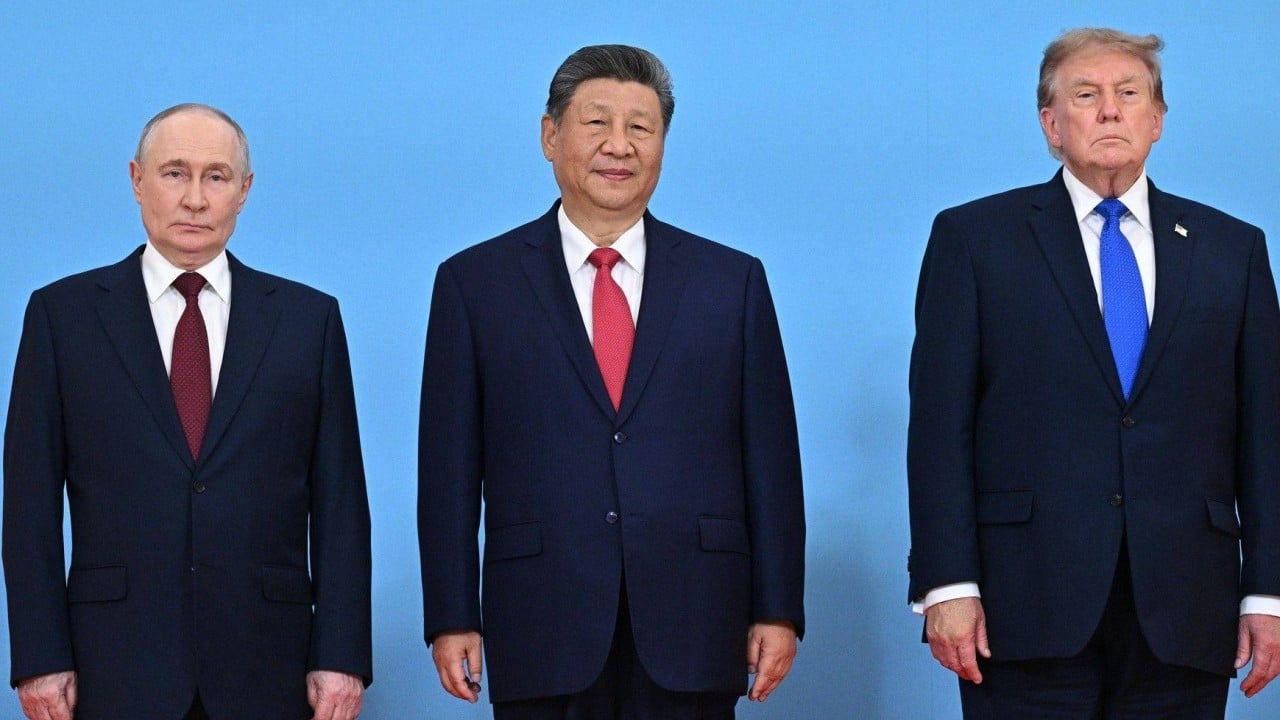
The Shenzhen APEC summit gave us a headline moment that nobody had seen before: Xi Jinping, Donald Trump, and Vladimir Putin sitting down together for a first-ever trilateral leaders' meeting on November 19, 2026. If you blinked, you missed the fireworks—because behind the cameras, the actual policy movement was surprisingly thin.
Look closely at what happened in southern China and you'll see a classic split screen. On stage, leaders traded grand lines about peace, nuclear restraint, and shaking up old-school diplomacy. Behind closed doors, hard trade friction, chip controls, regional wars, and unresolved security disputes kept right on humming.
Why The Shenzhen APEC Summit Caught Everybody Watching
Hosting APEC for the third time—after Shanghai in 2001 and Beijing in 2014—put China squarely in the spotlight as summit convener. Bringing Trump and Putin into Shenzhen for a three-way talk on November 19 gave Beijing a high-wattage stage to project convening power without handing away binding concessions.
For Trump, the trip arrived after a bruising stretch at home that included midterm losses for Republicans, tech outages rattling Americans, and escalating Iranian attacks on U.S. allies. Sitting across from Xi and Putin let the White House frame the moment as a fresh start on big global headaches, even when expectations were kept low.
Putin, meanwhile, walked into a room where his country's full-scale war in Ukraine is grinding into its fifth year. For Moscow, showing up at a major Asia-Pacific gathering alongside both Washington and Beijing signals that Russia still has diplomatic room to maneuver despite Western isolation and an International Criminal Court arrest warrant.
- First-ever trilateral leaders' huddle: Trump, Xi, and Putin met together for roughly 90 minutes in Shenzhen, producing a short, broad peace statement rather than hard treaties.
- Optics over binding deals: Protocol details—who greeted whom at the airport, who stood where in group photos, and how the host framed the meeting—carried heavy symbolic weight.
- Low bar for breakthroughs: Analysts and officials alike treated the gathering more as a political signal and conversation starter than a deal-closing machine.
Power Plays And Verbal Displays Behind The Cameras
Diplomatic theater rarely happens by accident, and Shenzhen offered plenty of it. Every handshake, seating chart choice, and prepared quote was tuned for different audiences at once.
In Chinese protocol, standing to the host leader's right signals higher honor in group photos. Observers noted Trump standing to Xi's right ahead of the gala dinner, while Putin took that spot in the post-summit group shot. Those shifts weren't random; they reflected careful balancing between signaling G2 weight with Washington and keeping trilateral symmetry with Moscow.
Verbal framing did just as much heavy lifting as staging. Trump called the gathering "really making history" and argued that ditching "old school" adversary habits could open doors on tough problems. Xi struck a calmer, long-horizon tone, emphasizing dialogue, "major-country relations," and the idea that seeds planted in talks can eventually grow.
Putin leaned into shared responsibility and "converging interests" on conflict resolution, while the joint peace statement issued via Chinese and Russian state media pushed back against international institutions. Specifically, that statement criticized overreach by bodies like the International Criminal Court—a pointed note given Putin's ICC warrant—and called for United Nations reform. Trump also publicly blasted the ICC as "out of control" during the trip, aligning rhetorically with Moscow and Beijing on that point even without signing on to a single unified legal framework.
What Was Actually Agreed Versus What Was Left Hanging
If you judge a summit by signed binding breakthroughs, Shenzhen was modest. The three leaders did not announce a new nuclear arms control treaty, even with the New START cap of 1,550 deployed strategic warheads having expired in February. Xi called for prohibiting and thoroughly destroying nuclear weapons while Trump pointed to the three powers' unique position to reduce stockpiles, yet no fresh cap or verification regime emerged.
On Ukraine, Putin raised conflict resolution and Trump later dialed into a Berlin gathering with Ukrainian President Volodymyr Zelenskyy and European leaders to say he had discussed ending the war with Xi and Putin. Still, there was no breakthrough on the ground, and Ukraine wasn't named in the joint peace declaration. Nor did Trump walk away with a firm commitment from Beijing or Moscow to rein in Iran or immediately clear shipping bottlenecks around the Strait of Hormuz.
Taiwan stayed off the joint text altogether, since Beijing treats it as a domestic matter rather than a subject for trilateral negotiation. Chinese scholars, including Fudan University's Wu Xinbo, had already pushed back against "Yalta 2.0" talk ahead of the summit, stressing that the leaders weren't carving up spheres of influence. Honestly, that's a crucial reality check: big speeches don't erase deep structural disagreements.
Trade Truces, Chip Curbs, And The Business Reality
For anyone running a supply chain or investing in the Asia-Pacific, the real story wasn't the three-way photo op. It was what stayed frozen—and what's ticking toward a deadline.
Despite years of friction, U.S.-China goods trade still reached RMB 3.18 trillion (about US$473.7 billion) across the first three quarters of 2026, with U.S. investment in China rising 7.7% year on year. That resilience is why companies keep showing up even when diplomatic headlines turn prickly.
Still, plenty of friction points remained intact during and after Shenzhen:
- January 10, 2027 truce clock: China's suspension of its additional 24% tariff on U.S. goods, its October 2025 rare earth export controls, and its port fees on U.S.-linked vessels—alongside the U.S. suspension of its export control Affiliates Rule—run through January 10, 2027.
- Tariffs that stayed active: China's 10% tariff remained in place, and the U.S. Section 301 forced-labour tariff of 12.5% on Chinese goods has been in force since July 24, 2026, after the U.S. Supreme Court struck down IEEPA tariffs in February 2026.
- Tech controls on a separate track: U.S. chip export restrictions and rules targeting remote computing access via third-country data centers weren't traded away at APEC, and reports pointed to China holding back big Boeing orders amid those tensions.
On the broader APEC track, leaders adopted the 2026 APEC Economic Leaders' Declaration (the Shenzhen Outlook / Shenzhen Vision), covering digital trade digitalization for 2027–2030, connectivity, cross-border data flows, and small-business tools, while economies also signed separate bilateral deals on the sidelines. For businesses, though, bilateral tariff truces and tech rules matter far more day to day than broad communiqués.
Common Misconceptions About The Summit
A lot of commentary around the meeting swung to extremes—either calling it a world-altering realignment or dismissing it as pure noise. Both miss how great-power diplomacy actually works.
First, a trilateral meeting isn't a secret pact to divide the globe. Washington, Beijing, and Moscow have competing interests that don't magically align just because their leaders share a table for 90 minutes. Second, "no treaty signed" doesn't mean "nothing happened." Keeping communication channels open—especially when nuclear limits have lapsed and regional conflicts are flaring—has real risk-management value, even if expectations should stay grounded.
If you're tracking this fallout for work or policy research, don't stop at the summit speeches. Audit your exposure to the January 10, 2027 tariff and export-control truce expiration date, map where your cloud or AI compute is hosted in case third-country data center rules tighten, and watch how Washington and Beijing handle upcoming diplomatic touchpoints like next month's G20 calendar.