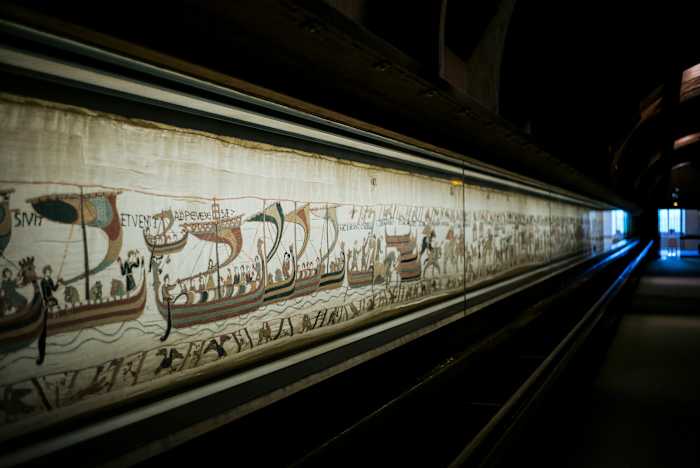
Diplomacy loves a prop. Whenever a head of state needs a distraction from domestic stagnation, they reach for ancient cloth. The impending loan of the Bayeux Tapestry to Britain is being sold as a masterclass in cross-channel cultural harmony. King Charles, the French president, and the prime minister standing shoulder-to-shoulder admiring an eleventh-century strip of embroidered linen makes for great evening news. It looks like progress. It smells like partnership.
It is also an expensive, high-risk administrative circus that treats a fragile historical artifact like a political pawn.
I have spent decades watching governments treat cultural heritage as a convenient backdrop for photo-ops, and the logic underpinning this cross-border transfer falls apart the second you look past the press release. We are told this monumental loan builds bridges and heals historical divides. We are not told about the micro-climates, insurance premiums, or the sheer absurdity of moving an eleventh-century wool-on-linen document that has survived invasions, revolutions, and world wars just so politicians can exchange handshakes beneath it.
The Conservation Myth We Refuse To Question
The lazy consensus among cultural bureaucrats is that ancient objects belong to the world, which means they should travel the world. This is nonsense. Objects belong to their preservation requirements.
Museum directors nod along with political mandates because their funding depends on state largesse. But behind closed doors, conservators know the truth. The Bayeux Tapestry is nearly seventy meters of dyed wool stitched onto unbleached linen in the eleventh century. It is organic, brittle, and intensely sensitive to humidity, light, and vibration. Every time you roll it, unroll it, or subject it to the barometric fluctuations of an international transport corridor, you introduce microscopic stress.
We accept this risk because of an emotional attachment to physical presence. We believe that looking at the original object holds some sort of mystical superiority over high-resolution digital analysis or stable museum display. That is romanticism, not science. When fragile artifacts become frequent flyers for the sake of geopolitical theater, we prioritize short-term political posturing over multi-century preservation.
If the French government genuinely cared about the longevity of the artifact, it would keep it anchored in its custom-built, climate-controlled facility in Normandy, where vibration is monitored down to the micron. Instead, it becomes a bargaining chip in bilateral summits.
The Real Cost Of Diplomatic Stunts
Let us talk about resources. Moving an irreplaceable piece of medieval history requires a security operation that mimics a state funeral. Armored transport, convoy logistics, bespoke environmental containers, armed escorts, and an army of insurance underwriters demanding premiums that could fund regional restoration projects for a decade.
Who pays for this? The taxpayer, obviously.
Imagine a scenario where a corporate CEO blew a multi-million-dollar logistics budget on transporting a single, highly delicate piece of legacy equipment halfway across the continent just to impress a client at a ribbon-cutting ceremony. They would be ousted by the board before lunch. Yet when governments do it with cultural heritage, pundits call it visionary leadership.
The justification is always soft power. Cultural diplomacy matters, supposedly. It fosters goodwill. It reminds populations of shared roots. But does an eleventh-century depiction of the Norman Conquest really convince modern citizens of cross-border solidarity? Or does it just give politicians a three-day news cycle where they look cultured while ignoring pressing economic realities?
History suggests the latter. Cultural diplomacy rarely shifts foreign policy outcomes. Trade agreements, security pacts, and intelligence sharing dictate international relations. Embroidered propaganda from 1066 does not stop trade tariffs or shift geopolitical alignment. It is expensive wallpaper for summit meetings.
What We Should Be Doing Instead
If we want to honor our heritage while dragging museum curation into the twenty-first century, we need to stop moving physical antiques.
First, we need to fund ultra-high-definition digital preservation models. Not the clunky virtual reality headsets gathering dust in dusty provincial museums, but hyper-detailed, open-source digital archives that let researchers, students, and enthusiasts examine every single stitch of the Bayeux Tapestry down to the individual fiber twist from anywhere on earth. Digital replication allows millions to study the work without a single wool thread experiencing a shift in relative humidity.
Second, if physical exhibitions must happen, we should rely on master craftsmanship recreations. The skills required to replicate historical textiles still exist. Commissioning a faithful, contemporary recreation for international display protects the original while satisfying public curiosity. It also supports living artisans rather than locking down national budgets for armored transport vans.
Third, we need to introduce strict legislative thresholds for artifact loans. If an object is older than five hundred years and composed of organic materials, the burden of proof for transport should be impossibly high. It should require unanimous consent from independent conservation bodies, not a handshake between a prime minister and a visiting president looking for a positive headline.
The political class treats the past as a prop because they lack the imagination to build a compelling future. They want you looking backward at medieval conquest because looking forward at modern policy is too difficult.
Stop cheering for the movement of fragile relics. Leave the tapestry in Normandy. Let the politicians pose in front of a blank wall.


