The air inside the United Nations General Assembly hall always smells faintly of old paper, polished mahogany, and the quiet panic of men who have spent their entire lives writing speeches they hope they will never actually have to defend.
Picture the floor on a crisp autumn afternoon. Row upon row of delegates tilt their heads toward the podium. Translators murmur through microphones behind glass panes, turning passion into bureaucracy. Every nation has its fifteen minutes on the clock—fifteen minutes to look into the cameras, address the flickering red light, and tell the world that everything is under control back home. Learn more on a connected subject: this related article.
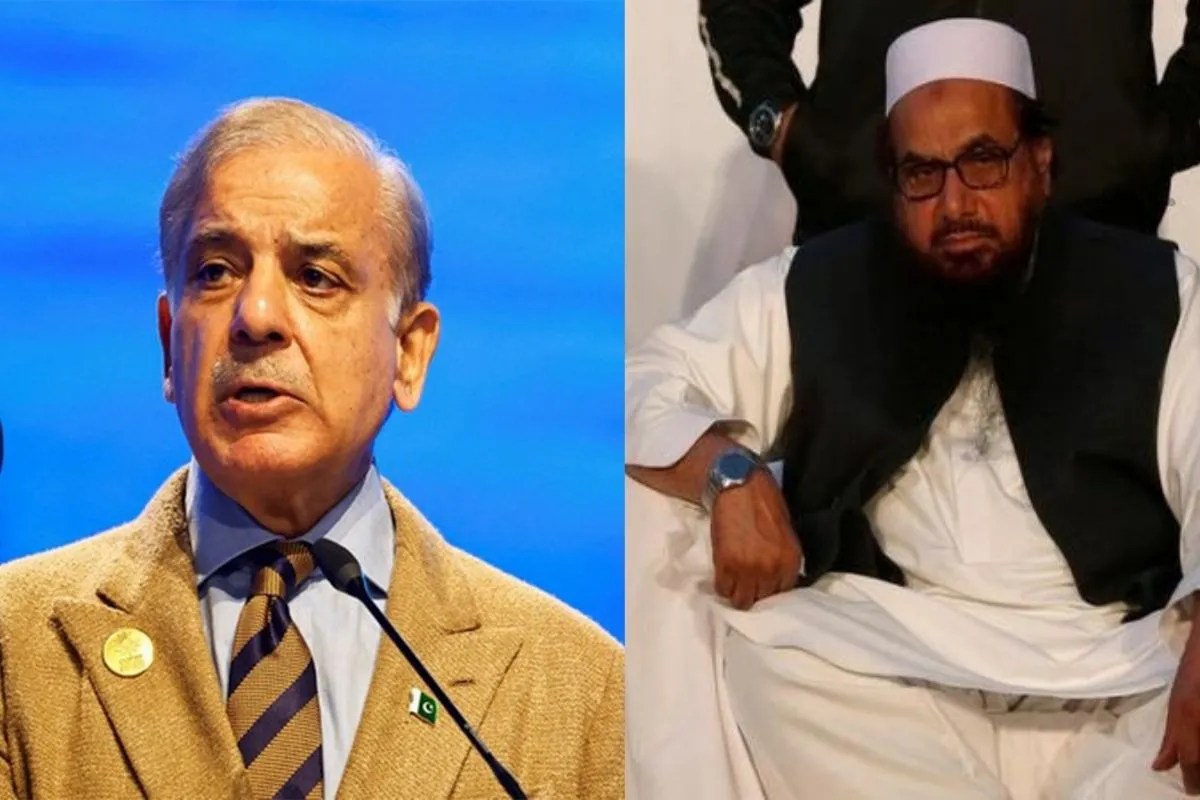
Prime Minister Shehbaz Sharif stepped up to that microphone with the practiced cadence of a seasoned politician. His notes were neatly ordered. His suit was immaculate. He came armed with the traditional rhetoric designed for international consumption—grand statements, historical grievances, and the well-worn script of geopolitical posturing. For a moment, the room hummed with the familiar, dull white noise of diplomatic routine.
Then came the turn for questions and answers. Further reporting by Associated Press highlights similar perspectives on the subject.
Silence descended. Not the comfortable silence of a cathedral, but the heavy, charged quiet that precedes a storm. Someone in the back asked a very simple, very direct question. It was not wrapped in diplomatic euphemisms. It did not offer a graceful exit ramp. It targeted the exact contradiction at the heart of Pakistan’s current domestic and international standing—a stark reality that no amount of oratorical flourish could disguise.
Sharif paused.
In diplomacy, a pause is usually a tactical weapon used to project gravity. But this pause stretched too long. The rustle of paper stopped. The translators waited. Across the floor, delegates leaned forward, suddenly wide awake. The question hung in the air like an unexploded shell. There were no statistics left to deploy, no neighboring adversary to blame, and no clever deflection that could bridge the chasm between the polished narrative on the podium and the chaotic truth unfolding on the streets of Islamabad, Lahore, and Karachi.
He had no answer.
The Anatomy of a Diplomatic Collision
To understand why that single moment matters, we have to step away from the polished glass of the UN building and walk through the dusty, choked alleys of South Asian political reality.
Imagine sitting in a modest apartment in Rawalpindi. The ceiling fan rattles, struggling against a power grid on the brink of collapse. On the kitchen table sits an electricity bill that swallows half a month's salary, accompanied by news reports of soaring inflation, crumbling infrastructure, and a currency gasping for air. The citizen looking at that bill does not care about geopolitical maneuverings at Turtle Bay. They care about survival. They care about why the state apparatus—built with so much hope decades ago—feels increasingly like an elaborate machine designed to extract resources from the powerless and protect the shielded.
For decades, the standard playbook for Islamabad’s leadership on the global stage has relied on deflection. Whenever domestic pressure mounts, whenever the economy teeters on the edge of a sovereign default, the gaze is deliberately redirected outward. Kashmir is invoked. Regional rivalries are stoked. The microphone becomes a shield.
But at the UNGA, the world has grown weary of the shell game. International financial institutions, foreign creditors, and global partners are no longer willing to write blank checks financed by strategic posturing. When you ask a leader for a comprehensive roadmap on structural economic reform, human rights accountability, and internal security, reciting grievances from the previous century simply does not cut it anymore.
The emperor, as the old parable goes, had no clothes. But in this case, the more damning realization was that the tailors had packed up and left years ago.
When Rhetoric Collides with Reality
Let us be entirely honest about the mechanics of modern statecraft. Governance is not a speech contest. It is an excruciating, unglamorous grind of tax collection, judicial reform, institutional independence, and economic rationalization.
When a nation's leadership stands before the global community, they are essentially presenting a balance sheet. They are asking investors to trust them, allies to support them, and creditors to restructure their debts. To earn that trust, credibility is the single currency that matters.
Consider what happens when that currency is spent.
Inside the UN hall, the inability to field a coherent, credible answer to a pointed question sent immediate ripples through diplomatic channels. Behind closed doors, ambassadors do not care about theatrical flourishes; they care about risk assessment. If a prime minister cannot defend national policy against a straightforward journalistic or diplomatic inquiry on a global stage, how can foreign investors trust that nation's contracts? How can international monetary bodies trust that emergency bailout funds will not vanish into the bottomless pit of elite privilege and military expenditures?
The exposure at the UN was not merely a momentary diplomatic embarrassment. It was a symptom of a deeper, systemic failure. It revealed a governing class trapped in a time warp, trying to solve twenty-first-century digital-age crises with twentieth-century propaganda tools.
The Cost of Looking Away
We often treat international summits as theater—grand spectacles where politicians perform for domestic audiences back home, cutting clips for evening news broadcasts to prove how fiercely they defended national honor.
Yet, the audience has changed.
The youth of Pakistan—who make up the vast majority of the population—are not watching these speeches with blind patriotic fervor. They are watching on smartphones while standing in visa lines outside foreign embassies, desperate for a way out. They are scrolling through social media, mocking the hollow rhetoric of leaders who lecture the world on global justice while their own citizens grapple with basic safety, hyperinflation, and a shrinking civic space.
When a leader stammers at the podium because the script ran out, the young software engineer in Lahore feels a bitter sting of recognition. They know that silence. They live it every time they try to start a business under suffocating bureaucratic tape. They live it every time an internet blackout cripples their freelance work. They live it every time the rule of law bends to accommodate the powerful while breaking the backs of the vulnerable.
The Unforgiving Mirror
History is littered with empires and nations that fell not because of external invasions, but because they lost the capacity to look at themselves in the mirror. They mistook propaganda for policy and volume for strength.
The episode at the United Nations General Assembly should serve as an uncomfortable awakening. It proved that the international community is no longer buying the old distractions. The world has grown too interconnected, the economic margins too narrow, and the stakes far too high for diplomatic theater to substitute for genuine reform.
There comes a point in the life of every struggling nation when the excuses run dry. The podium lights stay on, the cameras keep rolling, and the questions become impossible to dodge.
What happens next depends entirely on whether those in power continue to search for clever ways to hide the truth, or finally summon the courage to face it. The silence in that grand hall was deafening. But the real question is whether anyone back home is finally listening to the echo.