Summer in Huffman, Texas, arrives like a heavy wool blanket. The air thickens, the humidity clings to skin, and the sun beats down on the flat, sprawling neighborhoods northeast of Houston. On Lago Trace Drive, life usually moved to the rhythm of neighborhood routines, idling cars, and the distant hum of traffic.
Then came June 28. If you liked this article, you might want to check out: this related article.
In a matter of seconds, the world shifted on its axis. First responders rushed to a residential home following a frantic call. A two-year-old boy, Ed Oliver III, had been found unresponsive in the family swimming pool.
He was rushed by ambulance to a nearby hospital. For another perspective on this development, check out the recent coverage from Bleacher Report.
Doctors tried. They fought. But it was too late. At 7:18 p.m., just shy of his second birthday, the boy was pronounced dead.
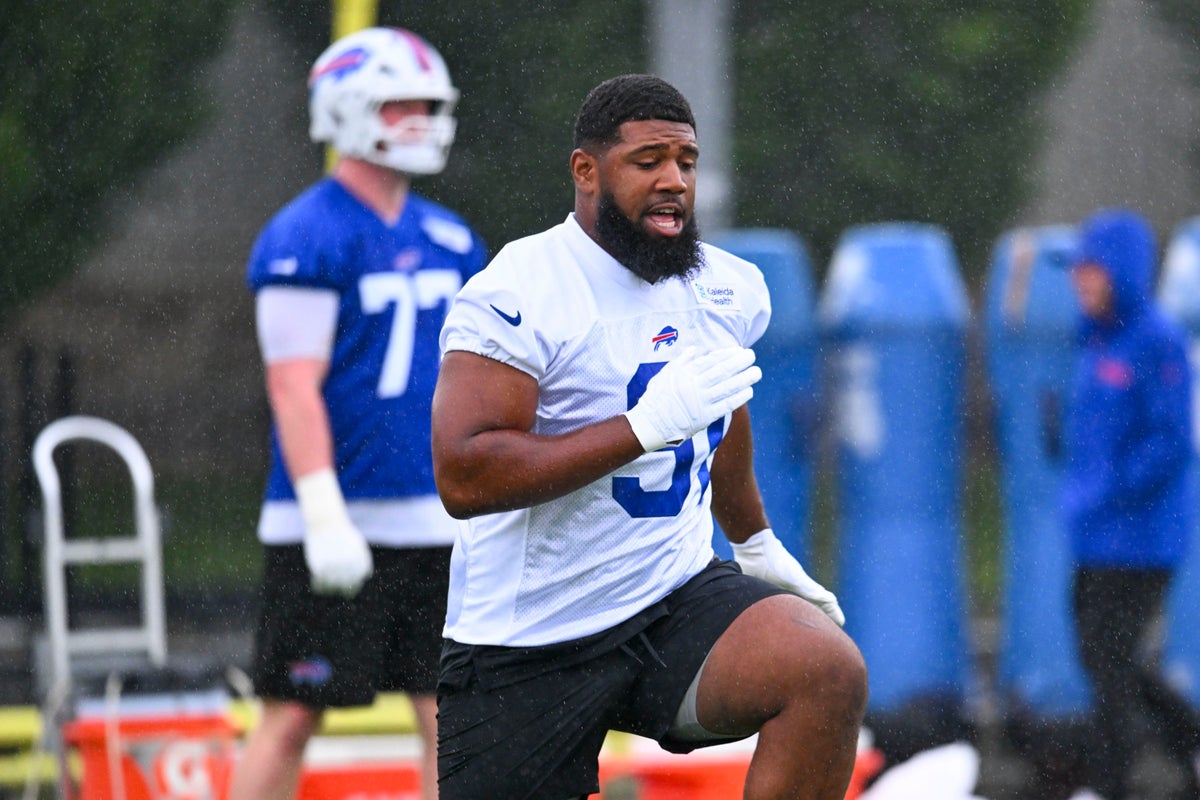
Outside the home, grainy digital footage later captured a heartbreaking scene. A man built like a monolith—six-feet-one-inch, 287 pounds of professional athlete—sat slumped on a concrete curb, talking in hushed, shattered tones with a Harris County sheriff's deputy. This was Ed Oliver, the fierce Buffalo Bills defensive tackle known for terrorizing NFL offensive coordinators, reduced entirely to a grieving father who had just lost his namesake.
Grief is a private ghost. Public figures are rarely allowed to harbor it in peace.
For nearly two months, the horror of that June evening remained away from the blazing lights of sports media. Oliver reported to training camp. He put on his jersey. He locked arms with his teammates. He tried to anchor himself in the familiar, violent geometry of football, all while carrying an invisible anvil in his chest. Behind closed doors, away from the cameras, he was navigating a nightmare that no playbook can solve.
Silence cannot last forever in the digital age. As training camp progressed, absences from practice and missed preseason trips sparked online whispers. Speculation grew. Prying eyes began looking for answers where none should have been demanded.
The truth finally broke through the quiet barrier on a Saturday in late August.
The Buffalo Bills organization released a statement that stopped the football world in its tracks. General Manager Brandon Beane stepped before the media, his voice heavy with empathy.
"On behalf of the entire Buffalo Bills organization, we want to publicly express our condolences to Ed Oliver and his family on the devastating loss of his son," Beane said. "It's an unthinkable tragedy for any parent. We will continue to support Ed and his family as we all grieve this tragic loss."
Instantly, the sports landscape transformed. Helmets, depth charts, preseason scores, and roster battles evaporated into irrelevance. The narrative shifted from yards gained and tactical schemes to the raw, fragile fragility of human existence.
Across the league, players, coaches, and fans reached out. The noise of competition faded into a collective, solemn wave of support. No one cared about blitz packages. No one cared about injury reports.
Consider what happens when the armor falls away. An NFL player is packaged for public consumption as an invincible force of nature, a modern gladiator immune to ordinary pain. We cheer for the sacks, the tackles, and the forced fumbles. We forget that beneath the pads lies a human being who bleeds, breaks, and breaks down.
Drowning remains a silent, terrifying predator, claiming young lives with devastating frequency. Statistics from public health agencies note it as a leading hazard for toddlers, a stark reminder of how quickly joy can turn to sorrow in the blink of an eye. Yet numbers do nothing to comfort a father sitting on a curb in Huffman.
The investigation by local authorities remains open, wrapped in administrative requests and legal holds, but the bureaucratic details pale beside the human cost. Oliver and his family asked for privacy and prayers. They asked to mourn a little boy who loved running around their Texas home in peace.
The football season will march forward. The stadium lights will ignite under crisp autumn skies. But on the sideline, or deep in the trenches of the defensive line, a vacant space will carry a story far heavier than the game itself.
Ed Oliver III is gone. The silence left behind echoes louder than any crowd.