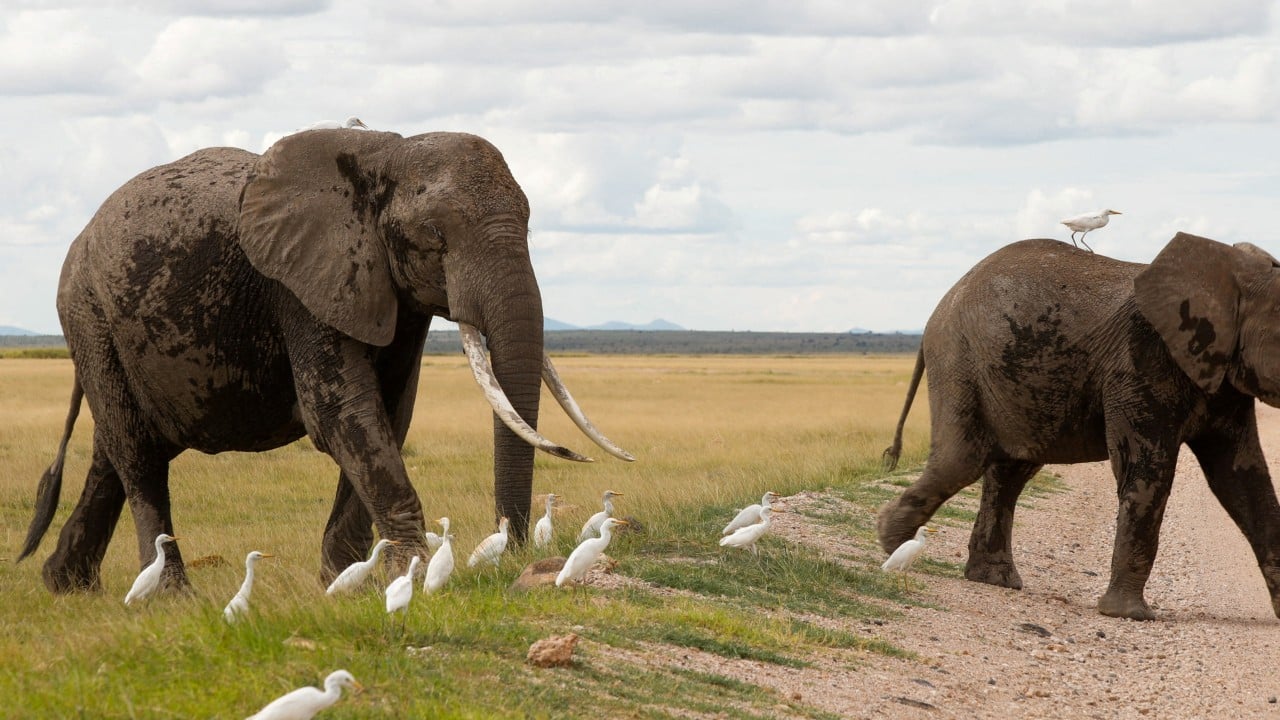
Dust settles over the savanna differently when the weight of an elder is missing.
I remember the sound of them moving through the brush before I ever saw them. A low, vibrating rumble that travels through the soles of your feet long before the gray silhouettes emerge from the acacia trees. That sound is a promise of permanence. It is the audio signature of a landscape that has spent millennia figuring out how to survive. Recently making headlines in related news: Why The Outrage Over Repatriation Delays Misses The Broken System Causing Them.
Then came the silence.
Fifteen bodies lay still in a Kenyan park, felled not by the old age of broken teeth and dry waterholes, but by a sudden, invisible cruelty. Poison. More insights on this are detailed by BBC News.
To understand what happened, you have to look past the cold numbers of a wildlife report. Statistics are a shield against grief. They let us process tragedy without feeling the sharp edges of it. But behind every lifeless form lies a social network as complex as our own, ruptured in an instant.
Imagine a matriarch. She is the library of her herd. She holds the memory of where the water was hidden during the great drought of her youth, and which paths are safe when the rains fail. When she drinks tainted water, she does not die alone. The tragedy cascades through family lines. Calves lose their protectors. Young bulls lose their guides.
Poisoning is rarely an accident of nature. It is a calculated, brutal shortcut.
Local conservationists and wildlife veterinarians face a grueling battle on the ground. When reports of sudden wildlife deaths reach headquarters, the race begins. Time is the enemy. Every hour delayed means the toxin spreads further into the ecosystem, threatening vultures, hyenas, and scavengers that feed on the remains. The air smells of dry earth and impending rain, thick with tension as teams move in with decontamination gear and blood collection vials.
Why does this happen?
The friction between growing human settlements and ancient migratory corridors creates a pressure cooker. As farms expand, fences block traditional pathways. Crops press against park boundaries. When a hungry giant steps across an invisible line to taste a farmer's livelihood, the confrontation turns deadly. It is a human tragedy meeting an ecological disaster. The farmer loses his year of labor in a single night of trampled maize. The park loses a piece of its soul.
We look for villains in stories like this, but we usually find only a collision of desperate needs.
Consider what happens next. The investigation moves from the scorched grass to the laboratory. Toxins are identified. Fingers point. Patrols increase. Yet, the underlying fracture remains unhealed. Guards walk the perimeter with worn boots and heavy hearts, listening for the crack of a twig that might signal another poisoned bait left in the dark.
We cannot patrol our way out of a conflict born of scarcity.
Protection requires reimagining how human communities and wildlife share a horizon. It means turning neighbors into stakeholders rather than adversaries. When local populations benefit directly from the breath and life of the savanna, the calculus of survival shifts. A living giant becomes worth infinitely more than a quiet carcass.
The dust rises again. A new day burns hot over the plains.
Out near the waterhole, a solitary youngster tests the wind, waiting for a rumble that will never come again.


