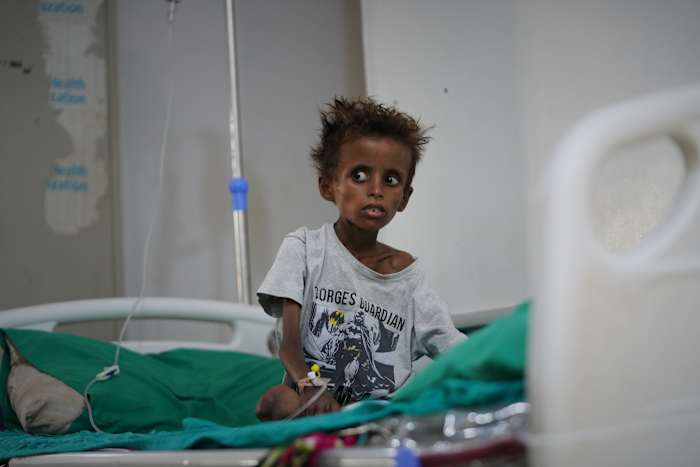
Silence does not arrive quietly. It drops with the heavy, sickening weight of an iron gate.
Consider the kitchen of a small apartment in Kyiv. Outside, the winter air bites at the glass, smelling faintly of coal smoke and wet asphalt. Inside, a woman named Kateryna stares at a glowing rectangular screen. The blue light casts long, skeletal shadows across her cheekbones. Thirty days have passed since the border crossings blurred and the phone lines snapped. Thirty days since her husband, deployed near the eastern front, vanished into a statistical fog of missing persons reports and administrative delay.
Now, shift your gaze thousands of miles east, past the jagged teeth of the Himalayas, where the swollen waters of the Bhote Koshi river recently tore through concrete and earth during catastrophic flash floods triggered by cloudbursts along the Nepal-China border. In a village perched precariously on a muddy slope, a father named Dorje stands where his home used to be. The river took his kitchen, his livestock, and the paper records birth certificates, land deeds, insurance claims that anchor a family to existence.
Distance separates them by geography, language, and culture. Yet, Kateryna and Dorje inhabit the exact same psychological dimension. They live in the purgatory of the unverified.
Disaster reporting thrives on the immediate. We consume the shockwaves in real time. We watch the grainy drone footage of brown torrents sweeping away suspension bridges in the high mountains. We flinch at the orange flash of artillery lighting up a midnight sky over European plains. We measure the catastrophe in cubic meters of water, in megatons of force, in the casualty counts flashed across our screens before the morning coffee cools.
Then the cameras pack up. The satellite trucks drive away. The anchor pivots to sports or financial markets.
And the people are left behind.
What happens after the ink dries on the initial press release? What does survival look like when the adrenaline fades and turns into the grinding, gray exhaustion of bureaucracy?
To understand the modern crisis of missing persons and delayed answers, we must look beyond the macro-level maps. We must look at the kitchen table.
In the weeks following the sudden cross-border floods that devastated infrastructure along the Nepal-China frontier, rescue crews faced an impossible terrain. Torrents fueled by glacial lake outbursts had wiped out roads, severed fiber-optic cables, and turned mountain passes into impassable mazes of silt and boulder. For families searching for relatives working near the trade corridors, the initial barrier was physical. You cannot cross a river that no longer has a bridge. You cannot call a phone tower that lies smashed at the bottom of a ravine.
Days bled into weeks. The physical barrier morphed into something far more insidious: institutional silence.
Jurisdictional boundaries became concrete walls. When a disaster spans rugged international borders, who holds the registry? Is it the local district office in Sindhupalchowk? Is it the provincial disaster management authority in Kathmandu? Is it the consular office across the border? Each agency points upward, outward, or inward. Each form requires a stamp that cannot be issued because the office that stamps it is buried under six feet of gray silt.
Kateryna knows this paperwork labyrinth intimately. In Ukraine, the fog of war creates a different kind of silt. When a soldier goes missing, the military classification system operates with cold, methodical slowness. Was he captured? Was he killed in an artillery barrage whose shockwave left no identifiable remains? Is he in a hospital in an occupied zone, unconscious and stripped of his papers?
The state issues a designation: MIA. Missing in action.
Three letters. Three syllables that sound clinical, neutral, even hopeful to the uninitiated. To a spouse, those three letters are a vacuum. They mean no pension, no closure, no gravesite to visit, and above all, no definitive truth. They mean every ring of the telephone sounds like a hammer blow against the ribs.
Every morning at 6:00 AM, Kateryna checks her phone. She checks it before she touches her tea. She checks it before she opens the blackout curtains. The screen remains dark. No new messages. No encrypted chats from unknown numbers. Just the battery percentage ticking downward, hour by hour, mirroring her fading reservoirs of patience.
We like to think of information as a commodity that flows freely in the twenty-first century. We carry devices in our pockets capable of accessing the sum total of human knowledge in milliseconds. We track packages across oceans with the precision of a surgeon's scalpel.
Yet, when human lives are shattered by geopolitical conflict or environmental collapse, our global communication architecture suffers a catastrophic short circuit.
Why? Because transparency requires infrastructure, and infrastructure is the first casualty of crisis.
When flash floods wash away mountain settlements, they do not just destroy homes; they destroy the physical mechanisms of record-keeping. Paper ledgers dissolve in rushing water. Digital servers melt in power surges. Local officials, themselves victims of the disaster, are forced to choose between searching for their own children and compiling casualty lists for central authorities.
Similarly, in active combat zones, data is treated as a strategic asset. What the enemy does not know, they cannot exploit. But the collateral damage of operational security is familial opacity. Units move quickly. Positions are overrun. Communications gear is destroyed by counter-battery fire. A soldier is simply gone, and the bureaucratic machinery designed to track his movements grinds to a halt under the sheer volume of daily losses.
The result is a cruel paradox. In an era of unprecedented connectivity, thousands of families are subjected to medieval levels of isolation. They are left to guess, to extrapolate, to read tea leaves out of shifting rumors on social media channels run by volunteers.
Consider the psychological toll of this ambiguity. Psychologists have a term for it: ambiguous loss. Coined by Pauline Boss, the concept describes a grief that lacks resolution and closure. When a loved one dies, the mind, however reluctantly, begins the grueling process of acceptance. Rituals help. Funerals, memorials, and graves provide a geographical anchor for sorrow.
Ambiguous loss offers no anchor.
Dorje cannot mourn his missing brother because every time the wind howls down the gorge, he wonders if his brother managed to climb out of the riverbed and is waiting in a makeshift medical tent on the other side of the ridge. Kateryna cannot grieve her husband because every unidentified body recovered from the front lines carries the phantom possibility that it might be someone else, while her husband sits in a damp basement somewhere waiting for a prisoner exchange.
Hope, in these circumstances, is not a comfort. It is a form of torture. It keeps the nervous system pegged at maximum overdrive. Cortisol floods the bloodstream day after day, week after week. Sleep becomes a distant memory, replaced by hyper-vigilant dozing punctuated by phantom noises—a car door slamming outside, a footstep on the stairs, the sudden buzz of an emergency alert on a neighbor's phone.
The media cycle moves on because trauma fatigue is real. Audiences grow numb to headlines about floods and front lines. The human brain, evolved to prioritize immediate, local threats, cannot maintain a state of acute global empathy for months on end. We scroll past the tenth story about missing persons with a dull ache behind our eyes, seeking distraction, seeking normalcy.
We want stories with tidy arcs. Problem identified. Heroes mobilize. Solution achieved. Credits roll.
Real life refuses to cooperate.
A month after the waters recede in the high mountains of Asia, the mud dries into a stubborn, alkaline crust that requires pickaxes to break. The international aid pledges shrink as the next disaster strikes somewhere else on the globe. And Dorje is still walking the riverbanks twice a day, looking for a scrap of fabric, a boot, anything that might tilt the scale from agonizing uncertainty to sorrowful certainty.
A month after the snow turns to gray slush in Eastern Europe, Kateryna sits at her kitchen table, listening to the hum of the refrigerator. The humanitarian organizations are overwhelmed. The lists are backlogged. The official responses remain boilerplate templates of bureaucratic sympathy.
They are still desperate for answers. And the rest of the world has already turned the page.
We must confront the uncomfortable reality of what we choose to look away from.
When we read about disasters—whether born of melting glaciers or grinding geopolitical ambitions—we tend to treat them as weather events. We analyze them through the lens of meteorology, military strategy, or economic loss ratios. We tally the gross domestic product shaved off a nation's ledger. We debate policy frameworks in air-conditioned conference rooms thousands of miles away.
We forget that every single statistic is a person staring at a dark screen. We forget that behind every vague press release about "ongoing rescue and verification operations" is a kitchen where the tea is getting cold and a chair that remains empty.
The true measure of a crisis is not found in the initial violence of its arrival. It is found in the quiet, agonizing duration of its aftermath. It is measured in the weeks and months when the lights go out, the reporters leave, and the families are left alone in the dark, trying to piece together a reality that has been shattered beyond recognition.
Kateryna does not care about geopolitical strategy tables. Dorje does not care about municipal budget allocations for disaster response.
They want to know if they should keep setting an extra plate at the table.
Until our global systems—our humanitarian networks, our diplomatic channels, our digital record-keeping infrastructures—learn to answer that simple, fundamental question with speed, transparency, and compassion, the water will never truly recede, and the sirens will never truly stop wailing, no matter how many miles away they seem to be.