A quiet room in Beijing does not look like a battlefield. There are no sirens, no muddy boots, no smell of gunpowder. Instead, there is the hum of a server rack, the glare of an LED monitor, and a bureaucrat holding a newly printed government decree. With a single stroke of a pen, the lines of global trade distort.
For months, the headlines have hummed with a predictable rhythm. Washington cuts off supply. Beijing retaliates. The United States restricts the export of advanced microprocessors, hoping to freeze its rival’s artificial intelligence capabilities in place. But look closer at the gears turning inside China’s regulatory machinery, and you will see a much deeper, more psychological shift. It is no longer just about enduring a blockade. It is about deciding who gets to pass through the castle gates.
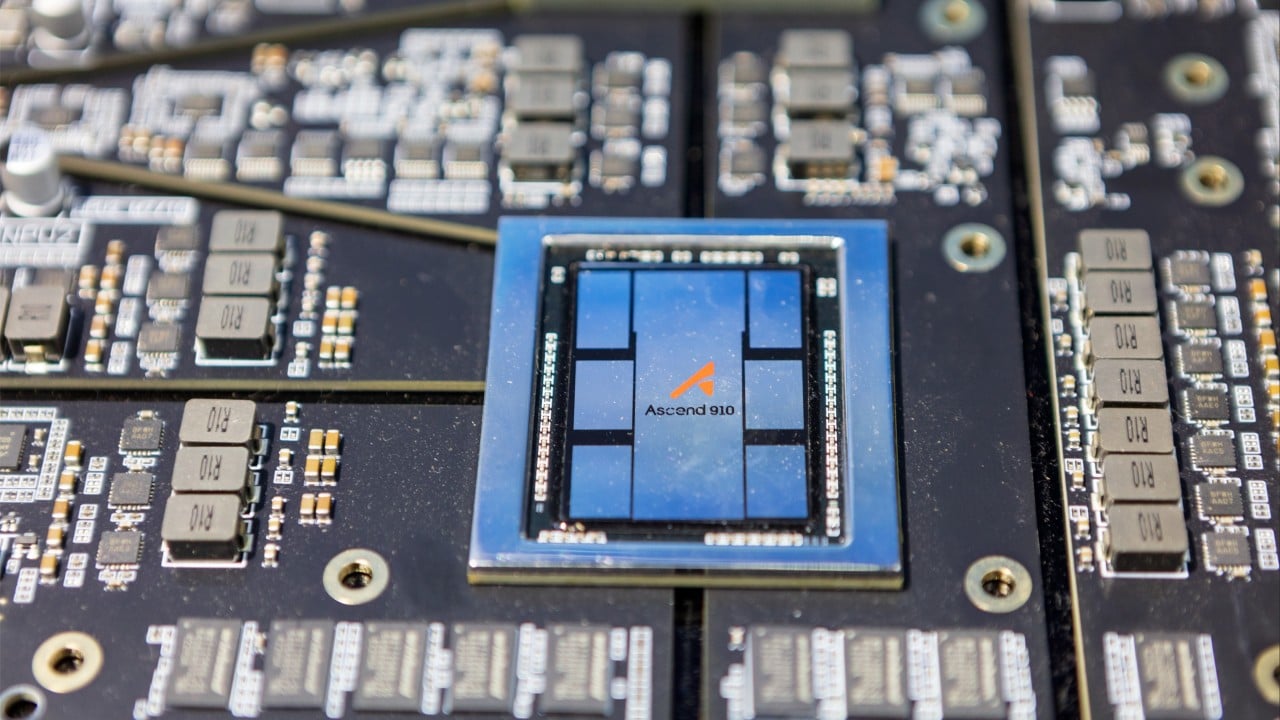
China’s Ministry of Industry and Information Technology recently expanded its secure technology assessment list. This list is a bureaucratic filter that evaluates whether hardware and software are safe for state use. The newest additions? Artificial intelligence chips.
To the casual observer, it sounds like standard administrative housekeeping. It is anything but. This is the moment a nation stops playing defense and begins constructing an entirely parallel technological ecosystem.
Consider a hypothetical engineer named Chen. For a decade, Chen’s routine was simple. When his tech firm needed to train a new machine learning model, he opened a procurement catalog and ordered the best silicon available on the global market. Usually, that meant American design. It meant chips that could crunch trillions of data points in the blink of an eye. The supply chain was a river that flowed effortlessly from Western design firms to Taiwanese foundries, right into Chen’s server rooms.
Then, the river dried up.
Washington placed strict caps on the processing power of chips allowed to ship to China. The intent was clear: slow down the development of AI that could power tomorrow’s military and economic infrastructure. For Chen, the impact was immediate. The hardware he relied on became a black-market luxury or vanished entirely.
But the real problem lies elsewhere. The true crisis for a company under blockade isn’t just that the old tools are gone. It is the crushing uncertainty of what comes next. If you build your entire software architecture around a specific domestic alternative, how do you know it won't fail? How do you guarantee that a homegrown processor, rushed to market to fill a geopolitical vacuum, won't harbor vulnerabilities or stall under pressure?
That is where the secure technology assessment list comes in. It acts as a stamp of state-sanctioned trust.
By placing AI chips on this list, Beijing is telling its domestic tech sector exactly which local alternatives have passed the gauntlet. It is a massive, institutional safety net. For engineers like Chen, the list removes the terrifying gamble of domestic migration. If the state says a chip is secure and compliant, the risk of adopting it evaporates.
The move transforms a chaotic scramble for survival into an organized, state-directed march.
The stakes stretch far beyond the borders of Zhongguancun, Beijing’s technology hub. We often treat the semiconductor rivalry as a corporate balance-sheet war. We look at stock prices, quarterly earnings, and shipment volumes. But this conflict is fundamentally about the splintering of human knowledge.
For half a century, the global tech industry operated on a shared language. An engineer in Silicon Valley, a developer in Bengaluru, and a researcher in Shanghai all used similar foundations. They optimized for the same architectures. They spoke the same digital dialect.
Now, we are watching the birth of a bilingual world.
On one side stands the Western ecosystem, anchored by established giants and guarded by export controls. On the other, a rapidly hardening Chinese ecosystem, forced into self-reliance, validated by government assessments, and fueled by massive state capital.
This isn't just about who builds the fastest computer. It is about who controls the invisible architecture of daily life. The algorithms that will soon diagnose diseases, manage power grids, optimize traffic flows, and automate factories will run on these chips. If the hardware is split in two, the software will split too. The solutions found by one half of humanity may no longer work on the machines of the other.
It is a terrifyingly expensive duplication of human effort. Millions of hours are spent reinventing the wheel, designing new chip architectures simply because the existing ones are caught behind a political wall.
The transition is brutal. Local chip design firms face immense pressure to match the performance of restricted Western components. They must iterate at a frantic pace, working through design flaws, heat dissipation issues, and software compatibility bottlenecks.
Yet, history shows that pressure can be a potent catalyst. When you deny a highly capable, well-funded adversary access to a vital resource, you do not destroy their desire for that resource. You merely eliminate their alternatives. You force them to build it themselves.
The secure technology list is the blueprint for that construction. It signals to local investors that domestic chipmakers have a guaranteed, state-protected market. It tells the entire supply chain that the old dependencies are dead, and there is no turning back.
The room in Beijing remains quiet. The server racks continue to hum, cooling the silicon that fights to keep pace with a changing world. Outside, the global market fractures a little further, splitting along lines drawn by bureaucrats and enforced by code. The gatekeepers have made their choice, and the silence of the silicon world has never been louder.