Strategic posture shifts happen in silence. When the United States Air Force quietly pulled its heavy bomber fleet from British soil following heightened security threats, the defense establishment treated the maneuver as a routine repositioning. It was nothing of the sort. This relocation laid bare an uncomfortable reality about modern global power projection. Forward operating locations that once served as unassailable staging grounds are increasingly exposed in an era of asymmetric threats and persistent intelligence probing.
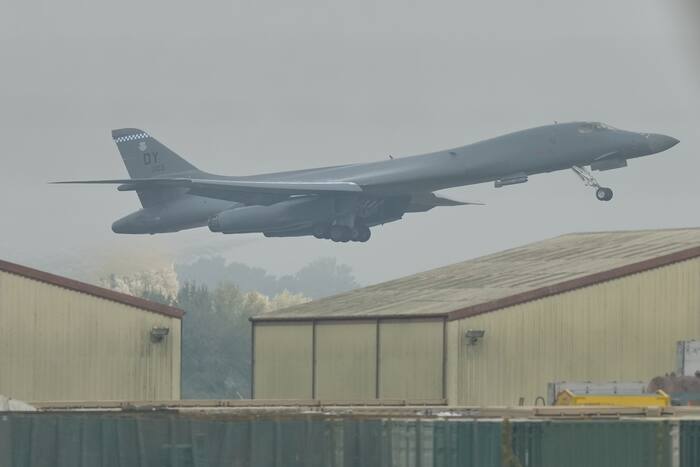
Security at Royal Air Force Fairford in Gloucestershire underwent an abrupt recalibration after authorities intercepted chatter pointing toward potential targeting of American strategic assets stationed abroad. Strategic bombers like the B-15 or B-2 require immense logistical footprints, vast secure perimeters, and specialized maintenance infrastructure. Moving them back to continental United States bases or alternative dispersed locations disrupts operational readiness schedules that take months to synchronize. Yet the risk calculus shifted. When an installation faces credible disruption, the cost of inaction outweighs the friction of relocation. For a different view, read: this related article.
The Geography of Vulnerability
For decades, British installations functioned as the ultimate transatlantic bridge. During the Cold War, these runways hosted nuclear-armed aircraft designed to reach Eastern European airspace within hours. The post-Cold War era brought a shift toward expeditionary warfare, transforming these fields into hubs for Middle Eastern and North African operations. But the strategic environment has mutated once again. The primary adversaries today do not just operate massive conventional armies; they employ multi-layered intelligence gathering, cyber intrusion against base infrastructure, and localized sabotage cells capable of exploiting seams in perimeter security.
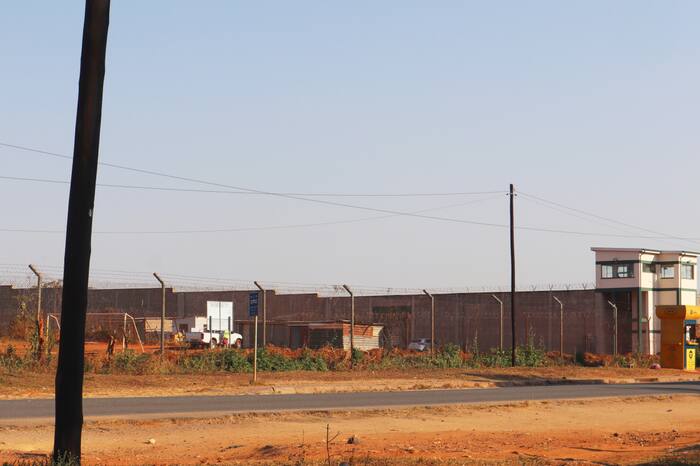
A heavy bomber parked on a tarmac is a high-value, stationary target. While concrete hush houses and hardened aircraft shelters offer protection against blast effects, they do not stop a determined infiltration team or a coordinated drone swarm. The incident that triggered the recent withdrawal underscored how traditional perimeter fences mean little when modern threats cross boundaries via cyberspace or covert insertion. Military planners found themselves confronting a scenario where keeping multi-billion-dollar assets overseas posed an unacceptable strategic liability. Related reporting on the subject has been published by Al Jazeera.
Logistical Shockwaves Across the Atlantic
Pulling aircraft out of a primary forward theater is not as simple as flipping a switch and lighting the afterburners. Ground crews, spare parts inventories, secure communications nodes, and intelligence analysts must either pack up or adapt to a severed operational chain. When bombers redeploy to domestic facilities like Whiteman or Barksdale, they absorb ramp space normally reserved for domestic training cycles. Maintenance pipelines experience immediate bottlenecks.
Furthermore, the diplomatic messaging cannot be ignored. Allies view the sudden departure of American strategic hardware through a lens of reliability. Even if the operational pause is entirely tactical and temporary, regional partners immediately question whether their airspace remains a secure umbrella or a liability zone. This tension highlights the delicate dance of modern alliance management. Deterrence relies on visibility. If the bombers vanish from European skies, the immediate deterrent signal to potential aggressors dims, forcing defense ministries to rely more heavily on electronic signaling and naval patrols.
The Evolution of Expeditionary Airpower
The era of massive, permanent air bases hosting consolidated fleets of strategic aircraft is drawing to a close. Doctrine is pivoting toward Agile Combat Employment, a concept that scatters assets across smaller, austere airstrips rather than concentrating them at premier hubs like Fairford. By spreading aircraft across multiple locations, air forces complicate an adversary's targeting calculus. If a hostile actor cannot predict where a bomber will land, refuel, and launch from tomorrow, the value of targeting a single fixed base drops significantly.
Yet implementing agile operations in Western Europe presents severe logistical hurdles. Space is limited, civilian air traffic dominates the skies, and host-nation agreements regulate what weapons can be stored where. The recent withdrawal served as a stark wake-up call for NATO planners who had grown comfortable relying on static infrastructure built during the last century.
Security at military installations must now encompass every domain, from the outer perimeter fence to the fiber-optic cables running beneath the runway. As threats continue to evolve, the ability to pack up an entire air wing and disappear into the global network will define which military forces retain strategic initiative and which ones get caught flat-footed on a vulnerable tarmac.