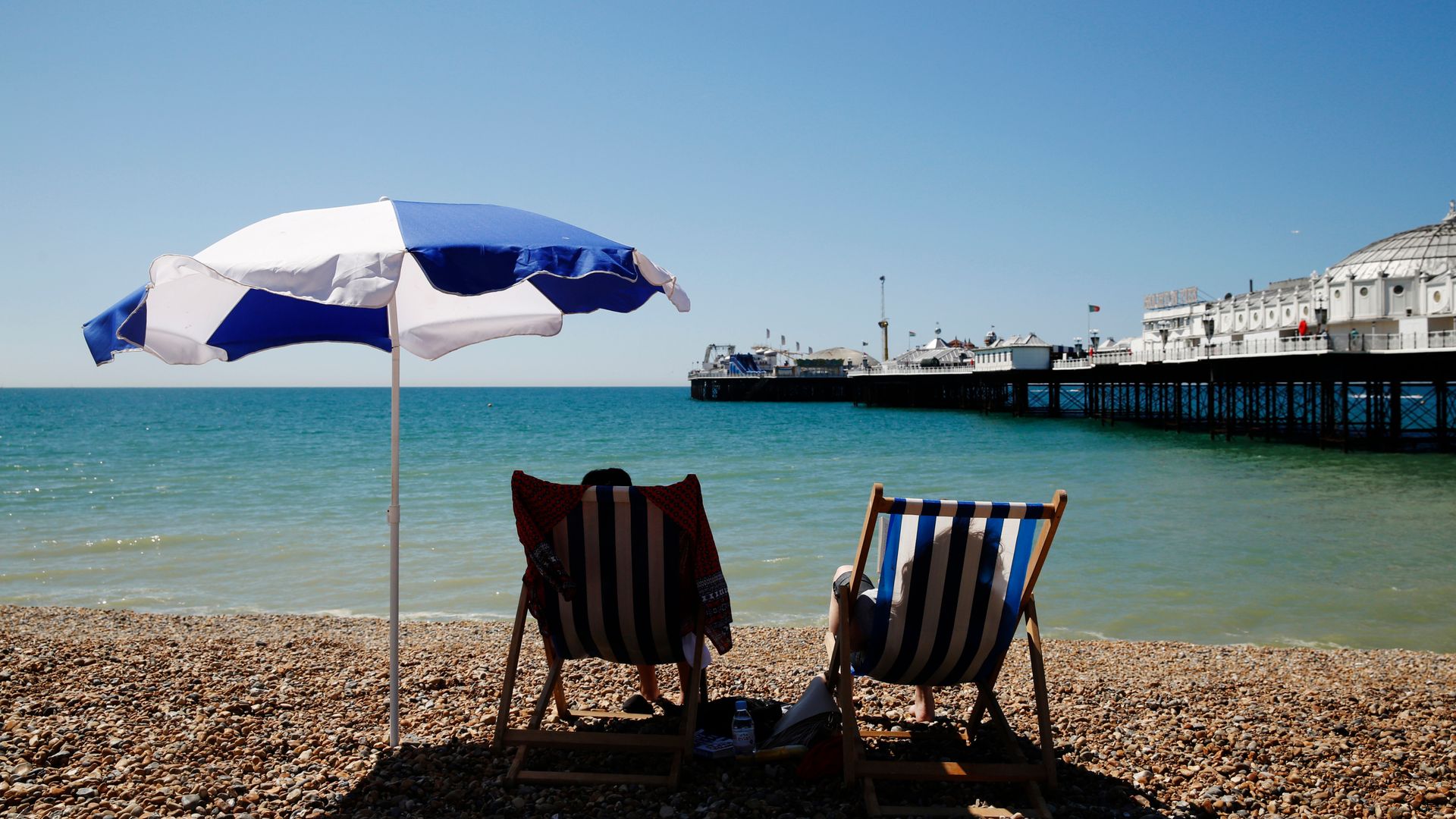
The air inside the third-floor apartment did not circulate. It sat heavy, thick with the scent of baked dust and old wood. Arthur sat in his favorite armchair, the fabric sticking slightly to the back of his shirt. He was eighty-two, a man who had survived factory layoffs, decades of bitter winters, and the slow quiet of retirement. He always prided himself on weathering storms. But this was not a storm. It was a ceiling of heat that seemed to press down on his chest, making each breath feel like trying to inhale wool.
He didn't turn on the air conditioner. It was old, loud, and electricity was expensive this year. Besides, he figured, it was just summer. Summer passes.
Arthur is a composite, a representation of thousands of real people whose names we rarely read in the morning news. But his story is exactly how a crisis plays out behind closed doors. When the temperature spikes, we look at thermometers, tarmac, and empty public fountains. We rarely look through the windows of ordinary homes where the air simply stops moving.
Between May and June, a quiet disaster unfolded across the region. The data arrived later, stripped of human texture, filed away in public health ledgers. More than 2,700 people died.
They did not die in a sudden flash or a dramatic natural event. They died quietly, in chairs just like Arthur’s, as their bodies slowly ran out of ways to fight the air around them.
The Anatomy of an Invisible Crisis
A flood leaves a high-water mark on the drywall. A hurricane snaps branches and scatters roof tiles across the lawn. Heat leaves nothing but silence. It is a ghost of a disaster, invisible to the naked eye but devastatingly precise in its execution.
To understand why thousands of people succumb to a few weeks of high temperatures, you have to look at the human body as a beautifully complex, highly sensitive engine. When the external temperature rises above thirty-five degrees Celsius, the engine begins to struggle. The body's primary cooling mechanism is sweat. As moisture evaporates from the skin, it pulls heat away with it.
But evaporation requires the air to have room for that moisture. When the humidity rises alongside the temperature, the air is already full. The sweat pools, but it does not evaporate. The cooling stops.
Consider what happens next. The brain signals the heart to pump harder, pushing blood toward the skin's surface to radiate heat away from the core. The heart rate accelerates. Blood vessels dilate. For a young, healthy athlete, this system works efficiently for hours. For an elderly person, or someone managing chronic heart disease, this sudden, relentless demand on the cardiovascular system is the equivalent of forcing an old, unserviced car to run at redline speed up a mountain pass. Eventually, something breaks.
It is rarely listed on a death certificate as "heat." Instead, the documents read: myocardial infarction, acute kidney injury, stroke. The heat is the instigator, but it leaves others to take the blame.
The Mirage of the Statistical Average
When the official reports were published, the headline number—2,700—was treated by many as a shocking anomaly, a sudden spike in an otherwise normal season. But viewing this as an isolated event misses the broader pattern of how our environment is shifting.
Statisticians use a concept known as excess mortality to measure the true impact of these events. They look at the average number of people who pass away during a normal May and June, established over years of baseline data. Then, they compare it to the current year. The difference between those two numbers represents the true cost of the event.
During these two months, the graph did not show a gentle slope. It showed a sharp, jagged peak.
The trap lies in how we perceive risk. We tend to think of dangerous heat as something reserved for distant deserts or tropical latitudes. We watch news broadcasts showing melting asphalt in foreign cities and feel a sense of detachment. Yet, the data proves that vulnerability is relative. A community unaccustomed to prolonged spikes in temperature is far more fragile than one built around it.
Our infrastructure is designed for the past. Brick homes built to trap warmth during damp winters become ovens when the sun refuses to set. Concrete streets absorb the afternoon rays and radiate them back into the night, creating what urban planners call the heat island effect. The city never cools down, depriving the body of the nighttime recovery period it desperately needs.
The Human Geography of Vulnerability
The impact of a heatwave is not distributed evenly. It seeks out the fault lines in our society, exploiting isolation, poverty, and age with cruel efficiency.
Imagine a map of a city shaded by risk. The darkest zones would not necessarily be the hottest sectors on a satellite thermometer; they would be the neighborhoods with the fewest trees, the oldest housing stock, and the highest concentration of people living alone.
Isolation is perhaps the most dangerous underlying condition. When a person lives alone, there is no one to notice the subtle signs of heat exhaustion: the confusion, the slight unsteadiness on the feet, the sudden lethargy. A person might decide to lie down for a nap to escape the discomfort, unaware that their internal thermostat is failing.
There is also the economic reality of survival. The cost of running a cooling unit for a month can be the difference between buying groceries or skipping a prescription refill. For many, the choice is made out of immediate financial necessity, without realizing that the true cost is being paid in physical strain.
Rereading the Landscape
We are entering an era where the definition of a natural disaster must change. We can no longer wait for the dramatic footage of crumbling buildings to recognize that a crisis is underway. The 2,700 lives lost in the early summer were a warning signal, a quiet siren muffled by the walls of homes, apartments, and care facilities.
Addressing this requires more than just advising people to drink more water or stay indoors. It demands a fundamental shift in how we design our living spaces, how we check on our neighbors, and how we value the hidden vulnerabilities within our communities.
The afternoon sun eventually dipped below the horizon of the city, leaving behind a sky the color of bruised plums. The brick walls of the apartment building remained warm to the touch, holding onto the daytime heat like an old stove reluctant to go cold. Inside, the air stayed still. The silence of the room was absolute, broken only by the faint, distant hum of traffic down below, carrying on as if nothing had changed at all.


