Apple has reclaimed its dominant position at the pinnacle of global market capitalization, crossing milestones near the five trillion dollar threshold, while commercial aerospace heavyweights like SpaceX continue to redefine orbital logistics despite high-profile anomalies during recent heavy booster recovery tests. Financial markets love a clean narrative. Headlines suggest a straightforward pendulum swing back to consumer tech safety and routine spaceflight wins.
Reality is far messier.
Underneath the daily ticker tape, both Apple and the broader commercial space apparatus are wrestling with structural constraints that dictate whether these valuations represent enduring economic value or fragile peaks.
The Valuation Paradox at Cupertino
Apple's return to the top tier of public equities is less about a sudden hardware revolution and more about defensive cash generation. When growth equity indexes stutter, institutional capital defaults to entities with massive free cash flow reserves and unassailable balance sheets. Apple fits that description precisely. Yet, treating this valuation as a pure referendum on future device sales misses the underlying shifts in services revenue and hardware replacement cycles.
Consumer upgrade cadences have elongated permanently. The days of two-year phone replacement loops are ancient history. Users hold onto their devices longer because incremental hardware improvements no longer justify annual outlays. To compensate, the corporate strategy pivots heavily toward the services ecosystem, squeezing margins from app store fees, cloud storage, and financial products.
This model introduces regulatory friction. Antitrust scrutiny across multiple jurisdictions targets the very toll-booth economics keeping Apple's services revenue expanding at double-digit rates.
Orbital Logistics and the Physics of Re-entry
While Wall Street obsesses over tech valuations, private aerospace faces a completely different kind of stress test against the laws of thermodynamics. The recent flight iterations of heavy-lift rocket architectures highlight the brutal margins of error inherent in rapid re-entry and vertical landing systems.
When a multi-story booster attempts a supersonic retro-propulsion landing sequence, a single miscalculated valve actuation or partial engine ignition failure turns a billion-dollar vehicle into scrap metal. Telemetry data from these flight tests show that surviving peak heating and maximum dynamic pressure is only half the battle. The terminal descent phase requires split-second fluid dynamics calculations that leave zero room for mechanical drift.
Every failed booster recovery is an expensive tuition payment for an industry attempting to industrialize orbit. Traditional aerospace relied on clean-sheet, single-use hardware built over decades. The modern approach trades manufacturing perfection for rapid iteration, accepting vehicle loss as an acceptable variable in a statistical optimization equation.
Supply Chain Realities and Macroeconomic Pressures
Neither consumer electronics nor heavy rocketry operates in a vacuum. Both sectors rely on complex, highly concentrated supply chains spanning semiconductor fabrication foundries, specialized alloy foundries, and rare-earth element processing plants.
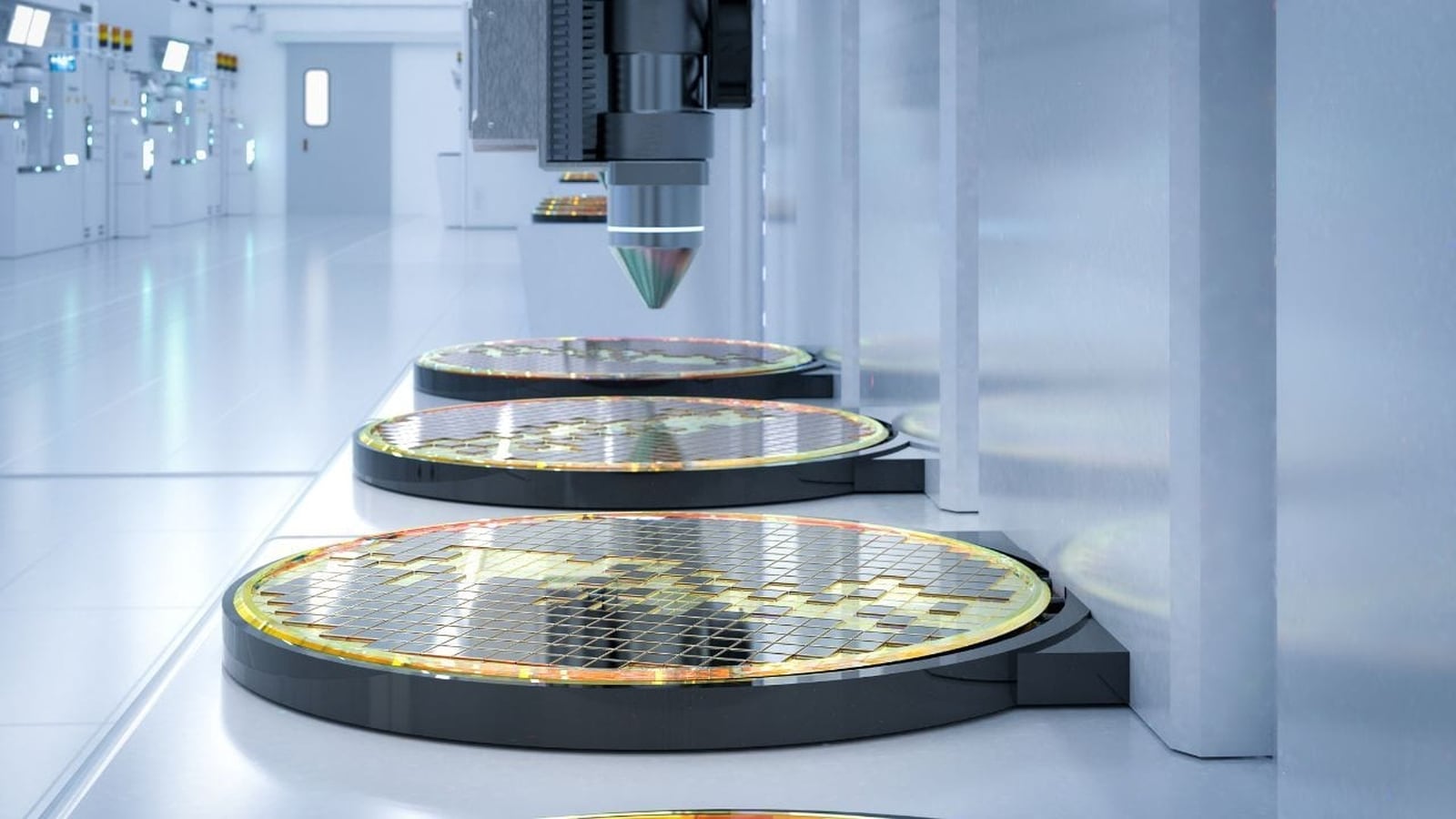
Consider the semiconductor dependency. Apple's ability to maintain high gross margins rests on securing early access to advanced node manufacturing capacity. Any geopolitical disruption in East Asian manufacturing hubs ripples instantly through consumer hardware availability and margin profiles.
In aerospace, the bottleneck shifts to high-temperature superalloys and carbon composite manufacturing. Building reusable orbital-class vehicles demands materials capable of withstanding atmospheric friction cycles that degrade structural integrity over time. NDT, or non-destructive testing, protocols must evolve to catch micro-fractures before a vehicle returns to the launch pad.
Institutional Capital Allocation Shifts
The convergence of tech giant dominance and commercial space maturation reveals a broader truth about contemporary capital markets. Investors are increasingly bifurcating their portfolios between immediate, cash-generative monopolies and high-risk, capital-intensive infrastructure plays.
Apple represents the ultimate expression of the former. It extracts rent from a mature global consumer base with unmatched efficiency. SpaceX and its private-sector peers represent the latter, burning through capital to build the baseline infrastructure of the next century, from global broadband constellations to heavy-payload interplanetary transport.
Neither path is immune to gravity. Market crowns are temporary, forged in specific macroeconomic climates that favor stability over speculation. Aerospace engineering humbles even the most well-funded visionaries with a fiery reminder that suborbital flight obeys no quarterly earnings calendar.
The numbers on the screen look pristine. The physical reality behind them demands relentless, unforgiving execution.