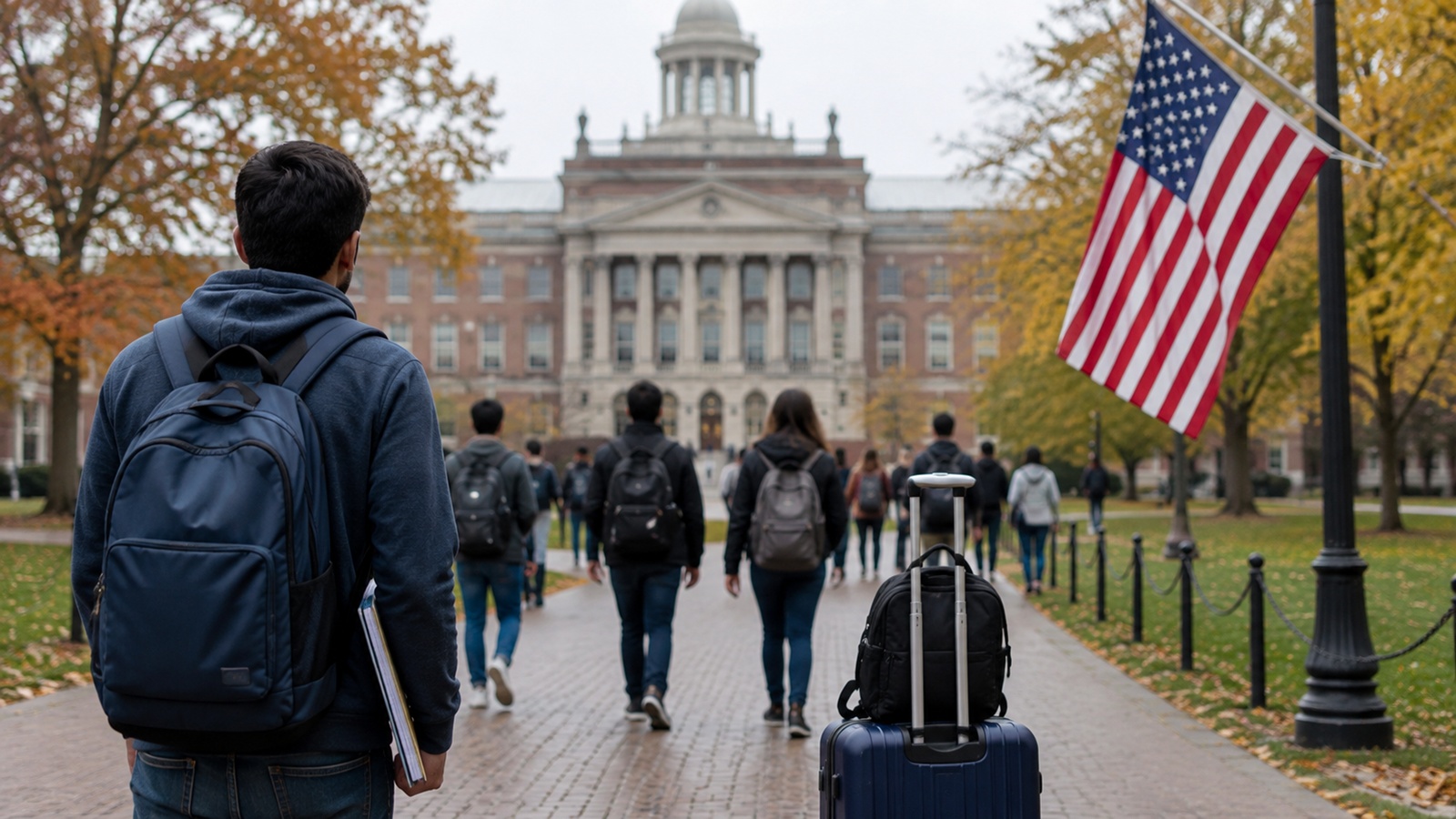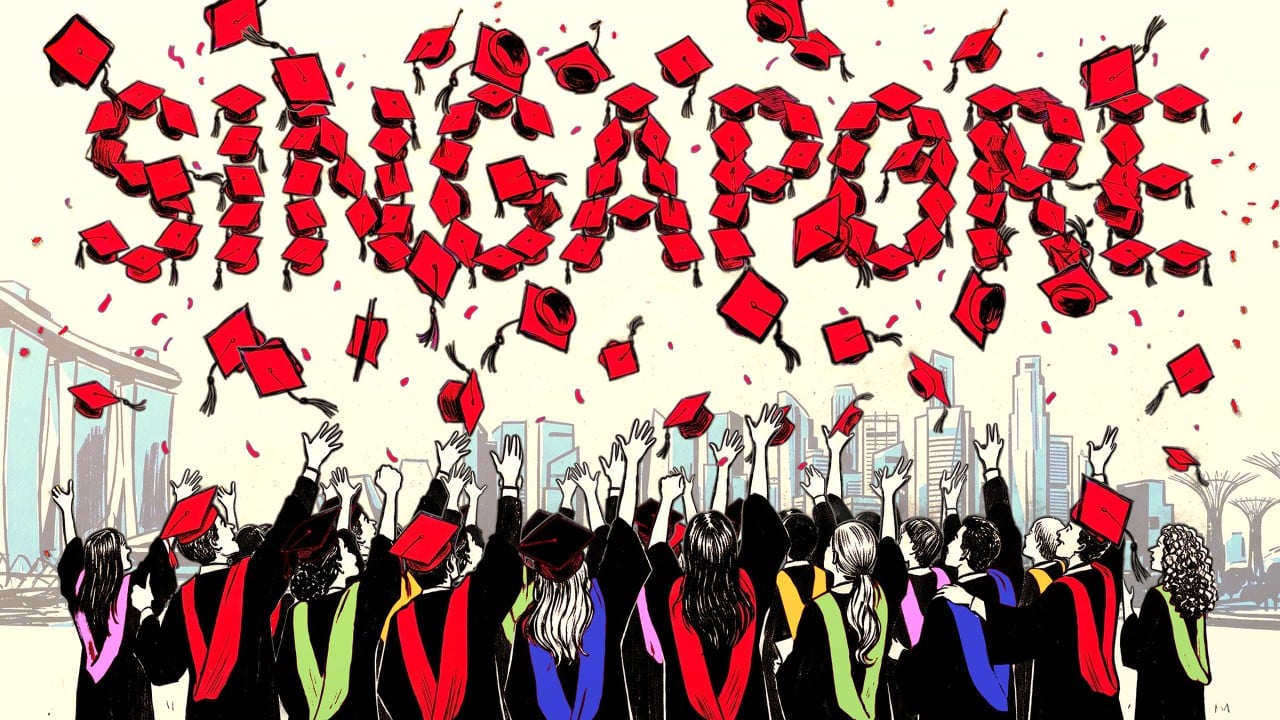
The media narrative writes itself with lazy predictability. Western visa doors slam shut, geopolitical frostbite sets in, and Chinese science and engineering talent floods toward Singapore like water finding a drain. Observers point to the Lion City as the neat, sterile beneficiary of a fractured global order. They call it a natural pivot. They call it a win-win.
They are dead wrong.
I have watched companies burn millions trying to parachute top-tier academic talent out of Beijing and Shanghai straight into the pristine corporate boardrooms of Marina Bay, assuming high test scores translate to regional dominance. It is a catastrophic misread of how cross-border human capital actually functions. Singapore is not a safety valve for the Western exodus. It is a pressure cooker designed for a very specific type of operator, and most mainland prodigies are about to hit a wall that has nothing to do with technical competence.
Stop looking at the migration statistics as a simple reallocation of bodies. Look at the structural mismatch.
The Myth of the Plug-And-Play Prodigy
The foundational error in the standard commentary is the belief that STEM capability is universally liquid. You take a machine learning researcher who spent five years optimizing neural networks at Tsinghua, drop them into a Southeast Asian regional hub, and expect exponential innovation.
Reality disagrees.
Academic pedigree does not equal operational velocity. Mainland technical education optimizes for a specific environment: massive scale, state-backed priority projects, brutal exam-driven filtering, and top-down problem solving. Singapore demands something entirely different. It requires navigating hyper-bureaucratic multinational compliance, subtle cross-cultural nuance across ASEAN markets, and an ecosystem where a coder who cannot write a concise email or lead a stakeholder alignment meeting is functionally useless, regardless of their GitHub commit history.
I have sat across the table from hiring managers who treat a resume from a top-five Chinese university like a golden ticket. Six months later, those same managers are wondering why their prized hire is paralyzed by ambiguity. Singaporean corporate culture is deeply rooted in British administrative traditions hybridized with local pragmatism. It values consensus, compliance, and procedural hygiene. Chinese tech culture, at its peak, values speed, brute-force iteration, and the kind of 996 endurance that would cause a Singaporean labor lawyer to faint.
When these two forces collide, the result is not synergy. It is organizational gridlock.
Why the Island Economy Cannot Absorb the Volume
Let us talk about math that the pundits ignore. Singapore has a total resident population of under six million people. Its infrastructure, housing market, and wage inflation are already buckling under the weight of an unprecedented influx of global wealth and corporate regional headquarters.
When people talk about the massive wave of Chinese STEM graduates heading south, they talk as if Singapore is an infinite sponge. It is not. It is a tiny island with strict immigration quotas, soaring rental costs, and a local workforce that is increasingly vocal about wage suppression and competition for professional tracks.
Imagine a scenario where the current geopolitical friction softens even slightly, or where Western immigration policies pivot back to pragmatism. The migration pipeline to Singapore will stall overnight, leaving behind a bloated market of overqualified engineers competing for a finite number of middle-management slots in regional tech hubs that are already rightsizing.
The island does not need ten thousand more junior algorithm developers. It needs product architects who understand how to sell software to a bank in Jakarta, a telco in Manila, and a retailer in Kuala Lumpur. If you cannot bridge that commercial gap, your PhD from a prestigious institution is just an expensive piece of paper taking up space in a cramped 500-square-foot condominium.
The Cultural Friction Nobody Mentions
Let us address the elephant in the room that polite society sweeps under the rug: assimilation friction.
The standard view assumes that because Singapore has a Chinese-majority demographic, mainland professionals will experience a frictionless landing. This is a profound misunderstanding of identity. Singaporean Chinese and mainland Chinese are separated by a vast cultural and historical gulf. Language may overlap, but political socialization, worldview, and behavioral norms are miles apart.
Mainland technologists often arrive with a subtle, unarticulated assumption of cultural centrality. They expect the local ecosystem to bend to their momentum. Instead, they encounter a fiercely independent society that takes great pride in its distinct legal system, its multiracial social contract, and its strict adherence to the rule of law.
When a high-flying engineer from Shenzhen tries to bypass local compliance protocols with the aggressive, move-fast-and-break-things ethos that built modern mainland tech, they do not get praised for disruption. They get sidelined by compliance officers who view their methods as an existential threat to corporate license.
I have seen brilliant minds self-destruct in Singaporean firms simply because they refused to understand that relationship-building here requires patience, subtlety, and an acute awareness of regional sensitivities. They treat local colleagues with condescension, mistake politeness for agreement, and wonder why their career stalls out while local peers who understand the political landscape quietly ascend the ladder.
The Real Winner of This Migration
If the individual graduates are walking into a trap of inflated expectations and cultural friction, who actually wins?
Follow the money. The beneficiaries are not the students, and they are not the local startups struggling to compete with tech giant salaries. The winners are the global consultancies, the high-end relocation firms, the private wealth managers, and the landlords of prime real estate districts who are monetizing the anxiety of displaced talent.
Singapore is playing a brilliant macroeconomic game. It is importing elite intellectual capital to pad its balance sheets and maintain its status as the undisputed command center of Southeast Asia. But it is doing so on its own strict terms. It will take the cream of the crop, extract their immediate utility, and discard the rest into a hyper-competitive local labor market where the cost of living ensures that only the truly resilient survive.
If you are a student or a parent looking at the Western clampdown and thinking Singapore is the easy sanctuary, wake up. The easy path is an illusion. The real game requires unlearning everything that made you successful in your home market, shedding the arrogance of elite credentials, and learning how to operate in a system that rewards discretion over volume and compliance over chaos.
The migration wave is real. The collision is coming. And the survivors will not be the ones with the highest grades.