The ink on a draft treaty does not smell like peace. It smells like cheap hotel coffee, laser printers running at three in the morning, and the distinct, sharp tang of ozone from overtaxed air purifiers.
For months, diplomats from Washington and Tehran have sat in windowless European conference rooms, staring across polished mahogany tables at people they are officially forbidden to trust. They watch each other’s eyes. They note the fraying edges of shirt cuffs. They listen to the micro-expressions in translations that take three seconds too long to travel through a headset. For a different view, consider: this related article.
Now, a piece of paper exists. It is a fragile, sixty-day blueprint designed to halt a slide toward catastrophic regional war and restart the frozen gears of nuclear diplomacy.
But the most important pen in the world remains capped. Similar coverage on this matter has been published by NPR.
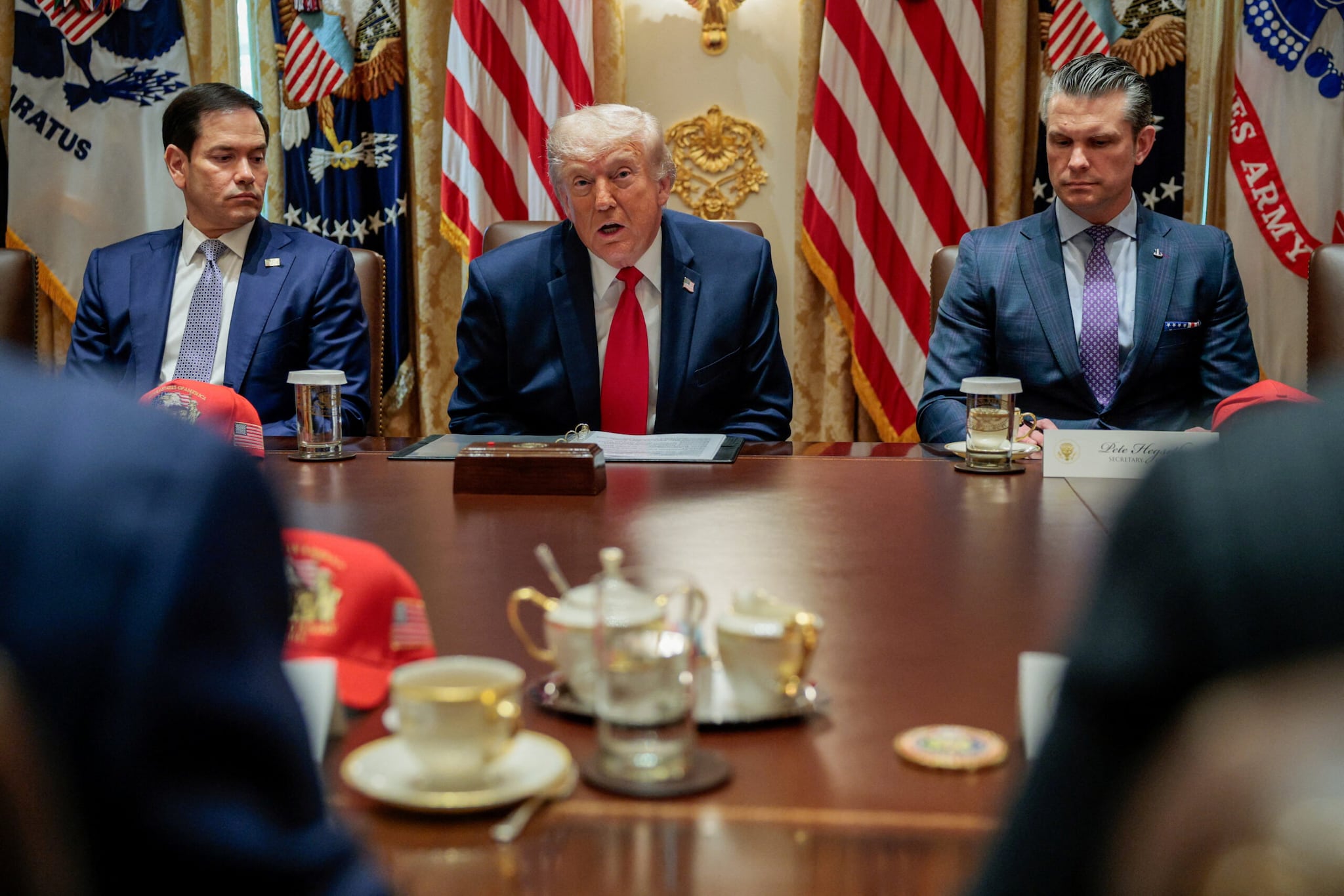
Two thousand miles away from those quiet European suites, the document sits on a desk in Mar-a-Lago, awaiting the single signature that can turn a bureaucratic hope into global reality. Donald Trump has not yet signed. Until he does, the sixty days do not exist. The centrifuges keep spinning. The drones keep flying. The world holds its breath, suspended in the agonizing gap between a deal made and a deal done.
The Human Cost of a Stalled Clock
To understand what sixty days means, look away from the oval offices and the high-security bunkers. Look instead at a small, dimly lit apartment in central Tehran.
Consider a hypothetical citizen, let us call her Shirin. She is twenty-four, an architectural draftsman with a degree that promises a future her country’s economy cannot deliver. For Shirin, news of a draft agreement is not an abstract geopolitical development. It is a sudden, sharp intake of breath.
When the rumors of the draft leaked, the Iranian rial ticked upward on the open market. For twenty-four hours, the cost of her mother’s imported heart medication stopped climbing. That is what diplomacy looks like at the kitchen table. It is the temporary freezing of anxiety. It is the brief, agonizing permission to hope that next month will not be poorer, darker, and more dangerous than the last.
Now consider her counterpart in an American suburb. Let us call him Marcus. He is a twenty-two-year-old lance corporal in the U.S. Marine Corps, currently deployed to a small logistics base in western Iraq. He sleeps under a reinforced roof designed to deflect fragmentation from explosive-laden drones. For Marcus, those sixty days represent sixty nights where the sky might stay quiet. It means sixty days where his mother back in Ohio does not jump every time an unfamiliar car pulls into the driveway.
Geopolitics is often discussed as a chess match played by grandmasters. That is a comforting lie. Chess pieces do not bleed. They do not watch their life savings evaporate through inflation, and they do not write letters home hoping it will not be their last. The draft agreement negotiated by American and Iranian envoys is an attempt to buy time for Marcus, for Shirin, and for millions like them who live in the impact zone of statecraft.
The Machinery of the Sixty Days
The core of the proposed deal is deceptively simple, balancing immediate de-escalation against long-term verification.
During the sixty-day window, Iran would commit to a verifiable pause in its highest-level uranium enrichment. The highly advanced IR-6 centrifuges, humming inside fortified underground facilities like Fordow, would not be dismantled, but their outputs would be capped. In return, the United States would signal a temporary freeze on the implementation of specific energy sanctions, allowing billions of dollars in frozen Iranian assets to move into restricted accounts earmarked strictly for humanitarian goods.
Think of it as a temporary tourniquet. It does not heal the wound. It merely stops the bleeding long enough to get the patient into an operating room.
The underlying mechanics rely on a delicate sequence of reciprocal choreography:
- Day 1 to 10: Public acknowledgment of the framework and the formal establishment of a direct communication hotline between military commanders to prevent accidental escalation in the Persian Gulf.
- Day 11 to 30: International Atomic Energy Agency (IAEA) inspectors receive unhindered, continuous access to enrichment sites to verify compliance with the enrichment caps.
- Day 31 to 60: Senior diplomats convene at a neutral location to hammer out the framework for a permanent successor to the defunct 2015 nuclear accord.
The logic is sound on paper. But paper possesses no gravity.
The true challenge of any ceasefire is the problem of the first rogue actor. In a landscape primed for conflict, a single misunderstanding can destroy months of diplomatic labor. A stray rocket from an unaligned militia, a technical malfunction on a naval radar screen, or an over-eager commander on the ground can ignite a conflagration that renders the draft obsolete before the ink dries.
The View from Mar-a-Lago
The entire apparatus hinges on a single variable: the political calculation of the American president.
Donald Trump’s relationship with Iranian diplomacy is long, complex, and defined by a preference for maximalist leverage. In 2018, he walked away from the Joint Comprehensive Plan of Action (JCPOA), labeling it the worst deal ever negotiated. His administration instituted the "Maximum Pressure" campaign, a relentless economic siege designed to force Tehran to the negotiating table on American terms.
Years later, that table has finally materialized. The draft agreement represents the strange, cyclical nature of Washington foreign policy. The very administration that dismantled the old framework now holds the keys to a new one.
For the president, the decision is a balance of immense risk and historic reward. Signing the deal means accepting a compromise with an adversary that has spent decades chanting defiance. It means facing criticism from domestic hawks who view any negotiation with Tehran as a form of appeasement.
Yet, the alternative is a trajectory toward an inevitable choice: allow Iran to cross the nuclear threshold, or launch a preventative military strike that would inevitably trigger a regional war with global economic consequences.
The draft offers a third way. It allows the administration to claim a victory of deterrence, proving that maximum pressure ultimately forced the Islamic Republic to blink. By holding his signature, Trump maintains his ultimate leverage. He ensures that both Tehran and his domestic audience know that peace happens entirely on his timeline, under his terms.
The Invisible Stakeholders
While the world watches Washington, other capitals are operating with frantic, quiet intensity.
In Jerusalem, intelligence officials are dissecting every line of the leaked draft. For Israel, an Iranian nuclear capability is not a political talking point; it is an existential threat. The Israeli security establishment views any temporary pause with deep skepticism, worried that sixty days will simply allow Tehran to reorganize its economy, hide its most sensitive research, and emerge stronger when the clock runs out.
Simultaneously, in the capitals of the Gulf States, the perspective is shifting. Riyadh and Abu Dhabi, once the loudest cheerleaders for maximum pressure, have spent recent years pursuing a quiet détente with Tehran. They have learned that when missiles fly across the Gulf, their oil processing facilities and glass skyscrapers are the first targets. For them, a sixty-day pause is an opportunity to solidify economic diversification plans that require absolute regional stability to succeed.
This is the hidden friction of international relations. A deal between two nations is never just between two nations. It is a stone thrown into a crowded pond, and the ripples wash over borders, economies, and military doctrines thousands of miles away.
The Architecture of Trust between Enemies
How do you negotiate with an adversary you believe wishes for your destruction?
You do not use trust. Trust is a luxury of friendships. In diplomacy between rivals, you use verification. You use physics. You use the cold, unblinking eyes of satellite imagery and the data feeds of radiation monitors.
The tragedy of the current moment is that the infrastructure of verification has been systematically dismantled over the last decade. When the previous agreement collapsed, Iran responded by turning off IAEA cameras, sealing off storage facilities, and reducing the access of international monitors to a fraction of what was required.
The sixty-day window is, more than anything else, an exercise in rebuilding the eyes of the international community. It is an attempt to re-establish a baseline of facts. Without that baseline, every rumor becomes a potential casus belli. Every movement of a truck near a military base becomes a potential covert enrichment laboratory.
The negotiators who drew up this draft understand the terrifying fragility of the situation. They know that sixty days is an absurdly short amount of time to resolve grievances that date back to the 1979 revolution. It is barely enough time to agree on an agenda, let alone a treaty.
But time is a relative commodity in international crises. When you are standing on the edge of a cliff, a single step backward is a massive victory.
The Longest Shadow
The sun is setting over the Potomac River in Washington, and it is rising over the Alborz mountains in Tehran.
In both places, people are waiting. They are waiting for a statement, a tweet, a press conference, or a signed document that will signal what happens next. The draft treaty remains a ghost, a possibility of a different future that has not yet been permitted to happen.
If the signature comes, the machinery of diplomacy will stutter into motion. Inspectors will pack their bags for Tehran. Economists will adjust their projections for global oil markets. Soldiers will look at the sky with a fraction less dread.
If the signature never comes, the draft will be quietly filed away in the archives of history, another forgotten footnote in a long, generational march toward a conflict that everyone sees coming but no one seems able to prevent.
The papers are stacked on the desk. The terms are fixed. The world remains suspended in the quiet, terrible stillness that always precedes the choosing of a path.