The rain did not arrive with the theatrical fury of a cinematic disaster. There was no thunderous crescendo, no sudden tearing of metal from stone. Instead, it began as a heavy, persistent sigh over the East China Sea, a creeping gray dampness that blurred the edges of the horizon long before the first true drops struck the pavement.
By Tuesday, that sigh had turned into a roar.
A tropical storm, churning fiercely off the coast, collided headfirst with the densely populated lowlands of eastern China. For millions of residents across provinces like Zhejiang and Fujian, the morning routine did not involve checking the weather app; it involved watching the water line at the bottom of the front step.
Water is patient. Water remembers every natural basin, every low-lying alley, every drainage ditch choked with silt.
Consider the hypothetical morning of Lin Wei, a retired clockmaker living in a modest alleyway in coastal Zhejiang. Lin has lived through three decades of typhoons and seasonal tempests. He knows the sound of rain drumming on terra-cotta tiles. But this storm brought something different. By dawn, the water had crept over the cobblestones, licking at the threshold of his small workshop where brass gears and pendulum clocks have ticked in steady rhythm for forty years.
He did not panic. Panic is a luxury for the unprepared. Instead, he hoisted his most precious, irreplaceable tools onto the top wooden shelves, moving with the practiced, mechanical grace of a man who has negotiated with the elements before. Yet, as he watched a stray plastic sandal float lazily past his doorway, a cold realization settled into his chest. The dikes held, the emergency broadcasts blared with calm authority, but the sheer volume of the sky had simply outmatched the earth.
This is the hidden reality of modern weather events. We measure storms in wind speeds and meteorological categories, numbers that look neat on a morning news broadcast. Category one. Tropical depression. Sustained winds of fifty miles per hour.
Numbers comfort us. Numbers suggest order.
The reality on the ground is messier. It smells of damp earth, stagnant canal water, and the sharp tang of fried electrical wiring. It looks like bicycles abandoned mid-commute, tires half-submerged in turbid brown water that mirrors the leaden sky. It sounds like the rhythmic thrum of industrial pumps working through the night, trying desperately to push the sea back where it belongs.
Government agencies mobilized swiftly. Emergency response teams deployed thousands of personnel to low-lying agricultural hubs and coastal fishing villages. Evacuations were ordered. Traffic rerouted. High-speed rail lines, marvels of modern engineering that usually slice through the countryside with frictionless precision, slowed to a cautious crawl or paused entirely as tracks dipped too close to swollen riverbanks.
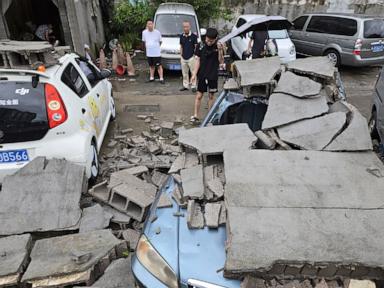
These are the verified facts of the event. Eastern China experienced localized, stubborn flooding. Hundreds of hectares of farmland found themselves standing in reflective, unwanted lakes. Commuters waded through knee-deep water near transit hubs, holding shoes aloft like modern-day trophies of survival.
But facts alone miss the human pulse.
Why do we stay? This is the question outsiders always ask when footage of flooded streets flashes across global screens. Why build in the floodplains? Why return to the same coastline year after year, knowing the ocean will eventually reach out and reclaim its territory?
The answer is deceptively simple. Home is gravity.
Lin Wei did not want to leave his clocks. Not because they were valuable in monetary terms, though some were, but because they were time made tangible. They were his history. To abandon the workshop at the first sign of rising water would be to surrender his place in the world.
Across the region, that same stubborn attachment played out in a million quiet ways. Shopkeepers swept water backward out of their doorways with wide plastic paddles, a Sisyphean chore executed with grim determination. Delivery drivers navigated submerged alleyways on electric scooters, water churning around their wheels like miniature white-water rapids, determined to get hot meals to apartment dwellers sheltering in place.
The storm tested the infrastructure, yes. But more than that, it tested the social fabric. Neighborhood committees organized food distribution points in elevated community centers. Neighbors who had lived side-by-side for decades without exchanging more than a polite nod in the elevator suddenly found themselves hauling sandbags together in the humid dark, sharing thermoses of hot tea, and checking on elderly residents whose children lived hours away in Shanghai or Beijing.
By Wednesday afternoon, the eye of the storm began its slow drift inland, weakening as it starved of its warm oceanic fuel. The rain transitioned from a deluge to a steady, rhythmic drizzle, and finally, mercifully, to a damp mist.
The water began to recede, leaving behind a thick layer of fine silt that coated the streets like a coat of wet gray paint.
People stepped out of their doorways. They looked up at the sky, checking for patches of blue. They assessed the damage with rolled-up sleeves and brooms.
Lin Wei opened his workshop door wide to let the damp air out. The brass gears on his upper shelves were safe. The water had stopped just an inch shy of disaster. He picked up his broom, stepped out onto the damp cobblestone, and began to push the mud away from his threshold, joining a chorus of sweeping across the awakening city.
The storm is gone. The statistics will be logged, archived, and filed away in government databases as another seasonal anomaly managed by modern preparedness.
Yet, the silt remains on the stones, and the dampness clings to the walls, a quiet reminder of how thin the line is between our dry, paved routines and the wild, unyielding breath of the sea.
:max_bytes(150000):strip_icc()/ar-American-Cheese-taste-test-horizon-4x3-54cc339550cd44b9a818c17bdfd5428d.jpg)