Buzz.
That is the sound Olena listens for before she even opens her eyes. Not the gentle hum of a refrigerator or the distant groan of a morning bus, but a thin, metallic vibration high above the rooftops that makes the windowpanes shiver in their frames. She has learned to tell them apart in the dark. A single drone sounds like a lawnmower caught in high grass. A swarm of hundreds sounds like a hive of angry hornets descending through wet wool.
When headlines report a "massive" attack involving hundreds of drones, most people read a number and move on. Three hundred. Four hundred. A barrage across multiple regions. Numbers are clean. Numbers keep us at arm's length from the grease, the smoke, the splintered glass, and the cold sweat that pools at the base of a spine at 3:00 a.m.
I have sat in basements where the air tasted of damp concrete and wet wool coats while sirens wailed outside like animals caught in traps. I have seen what happens when a war stops looking like front-line trenches and starts looking like an industrial assembly line aimed at a city's pulse. It is exhausting, disorienting, and terrifying—and I will be honest with you: even after watching how people adapt, there is no neat formula that makes it make sense. A swarm of cheap, long-range strike drones isn't just a military tactic. It is psychological attrition turned into geometry.
To understand why a wave of hundreds of drones matters so much—and why it is so hard to stop—it helps to use a metaphor. (The following comparison is a metaphor designed to explain air-defense math.) Picture a castle guard standing on a wall with a finite number of arrows. Each arrow costs a small fortune and takes months to fletch. Down in the dark, the attacker sends hundreds of wooden decoys and lighter darts, all buzzing toward different gates at once. Even if the guard shoots down eighty or ninety percent of what comes through the night, the ten percent that slips past still hits stone, timber, or flesh. Worse still, every arrow fired leaves one fewer in the quiver for the next night.
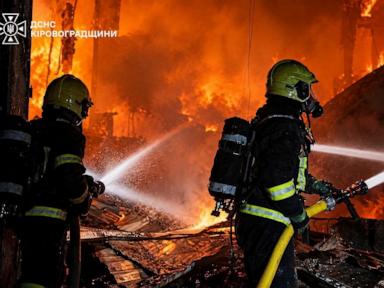
That is the quiet math behind every large-scale drone assault on Ukraine. Air defense crews work through exhaustion that most of us can barely picture. A mobile fire team—often just a pickup truck, a spotlight, a heavy machine gun or thermal sight, and a crew of exhausted volunteers and soldiers—races down dark highways chasing blips on a tablet. Their ears ring. Their coffee goes cold in thermoses. One minute they are scanning a pitch-black field where a low-flying drone hugs the tree line to stay below radar; the next, a flash lights up the horizon and the concussion rattles their teeth.
Why use hundreds of drones at once instead of a handful of expensive missiles?
Cost and saturation. Long-range attack drones—many modeled on low-cost loitering munitions—are built to overwhelm defenses through sheer volume. Some carry heavy warheads meant to wreck power substations, heating plants, rail hubs, or buildings. Others fly ahead as decoys or follow staggered routes so air defenses have to light up their radars, revealing their positions or burning through expensive interceptors. When hundreds launch in a coordinated wave, defenders aren't solving one puzzle. They are solving a hundred puzzles in the dark while the clock ticks down.
Let's bring this down to street level with a hypothetical family. (To protect real civilians and illustrate everyday trade-offs, the following scene is a hypothetical composite based on documented wartime routines in Ukrainian cities.)
Call the father Taras, a heating engineer in a mid-sized city far from the front line, and his nine-year-old daughter Sofia. Taras knows every pipe and boiler in his district the way a doctor knows veins. When a massive drone wave hits energy infrastructure, he doesn't think about geopolitics. He thinks about water freezing inside cast-iron radiators if power stays out too long in sub-zero weather. A burst pipe in January turns an apartment block into an icebox within hours.
Sofia has a backpack by the hallway door. Inside are a flashlight, a power bank, two wool socks, a small plush bear with one ear stitched back on, and a laminated card with emergency numbers. When the air-raid alert pings on her mother's phone, Sofia doesn't cry. She sits on the bottom step of the stairs—away from windows, behind two load-bearing walls—and counts to ten, then ten again. That is what childhood looks like when the sky becomes a hazard zone: rehearsed calm, practiced silence, and a little girl learning the difference between outgoing interceptor fire and incoming explosions.
People outside the war zone often ask why cities keep functioning after so many strikes. How do bakeries open? How do trains run on time? How do people go to work after four hours of broken sleep?
Resilience isn't magic. It is stubbornness organized into habit.
When a transformer station takes a hit and sparks turn the night sky neon blue, repair crews are already staging gear nearby. Generators hum outside pharmacies and clinics. Neighbors share hot water from gas stoves. School lessons shift to basements or resume online the moment a connection blinks back to life. Over years of full-scale war, Ukrainians have built a second layer of survival out of muscle memory and mutual aid. Every time infrastructure is battered, crews patch it, reroute it, and keep the lights flickering where they can.
Yet there is a limit to how much human nervous systems can absorb.
You can patch a transformer. You can weld a cracked pipe. You can clear rubble from a courtyard by noon. What takes much longer to fix is the quiet dread that settles into a person's chest at dusk. Sleep debt compounds like interest on a bad loan. After months and years of interrupted nights, concentration frays, tempers shorten, and grief sits right beneath the skin, waiting for a single bad news alert to break the dam.
Consider what happens next when a massive attack hits not just one town, but a chain of regions across the country.
Air-raid sirens sound in the west while explosions echo in the center and drones drone overhead in the east or south. A family in Lviv wakes up at 4:00 a.m. to check on cousins in Kharkiv or Dnipro. Even if a drone is intercepted miles away, falling debris can start fires or shatter windows. Every night brings a new map of danger. Nobody knows for sure whether the wave is heading for a power grid, a warehouse, a railway junction, or an apartment building whose only crime was standing in the flight path.
There is another layer to this story that gets lost in quick news summaries: the global shift in how modern wars are fought.
For decades, military doctrine leaned heavily on gleaming, multi-million-dollar systems—fighter jets, stealth bombers, precision cruise missiles—fired in relatively small numbers. Massive drone barrages flip that script on its head. Cheap mass meets high-tech defense. Electronic warfare jammers try to blind navigation signals; acoustic sensors listen for engines; interceptor drones and missiles race to meet incoming threats mid-air. It is a cat-and-mouse race measured in weeks and software updates, not decades.
And here is where we have to look honestly at what happens when outside support lags or air-defense stocks run thin.
When a defender has plenty of interceptors, a swarm of hundreds of drones is still dangerous, still exhausting, and still capable of causing damage—but the shield holds firm over vital targets. When interceptors are rationed, every decision becomes agonizing. Do you fire a scarce missile at a drone heading toward an empty field, or save it for one aimed at a hospital or a power plant? Those split-second choices are made by tired humans staring at glowing screens in the dark.
I don't pretend to have easy answers to the geopolitics driving this conflict. Wars of aggression don't end because essays are eloquent or because headlines grow weary. They end through power, resolve, exhaustion, costs, and political choices made in capitals far from the sirens. What I know for certain is that distance makes it far too easy to treat a massive drone attack as background noise.
Think about the last time you felt truly rested. Think about walking into a warm room, flipping a switch, and trusting that the ceiling wouldn't shake and the glass wouldn't blow inward. Now picture trying to hold onto ordinary life—baking bread, helping a child with homework, calling an aging parent—while hundreds of unmanned aircraft cut through the dark above your roof.
Look closely at what "hundreds of drones" really means.
It means hundreds of moments of split-second calculation by air-defense operators. It means hundreds of families nudging children awake in the dark. It means another morning of sweepers brushing glass off sidewalks, another shift for overworked linemen, another test of endurance for a nation that refuses to surrender its ordinary mornings to fear.
Night falls again. Somewhere in Ukraine, a dog barks at nothing, a phone screen lights up a quiet room, and a listener tilts their head toward the ceiling—waiting to hear if the sky is quiet, or if something is coming through the dark.