The air in Ryazan usually smells of heavy sulfur and wet earth, a familiar chokehold that generations of refinery workers have accepted as the scent of a paycheck. But when the drones came, the smell changed. It became the sweet, sickening scent of pure, unrefined octane burning uncontrolled under an open sky.
Smoke does not care about borders. It rises, forms a gray canopy over the birch forests, and drifts west.
For decades, the global energy market viewed oil through a lens of pure math. Barrels per day. Refining capacity. Export tariffs. Brent crude benchmarks. We treated the massive distillation columns of Western Russia like permanent geographical features—as immutable as the Ural Mountains. They were the iron lungs of a superpower, breathing in crude and exhaling the lifeblood of a war machine and a domestic economy.
Then, the lungs began to puncture.
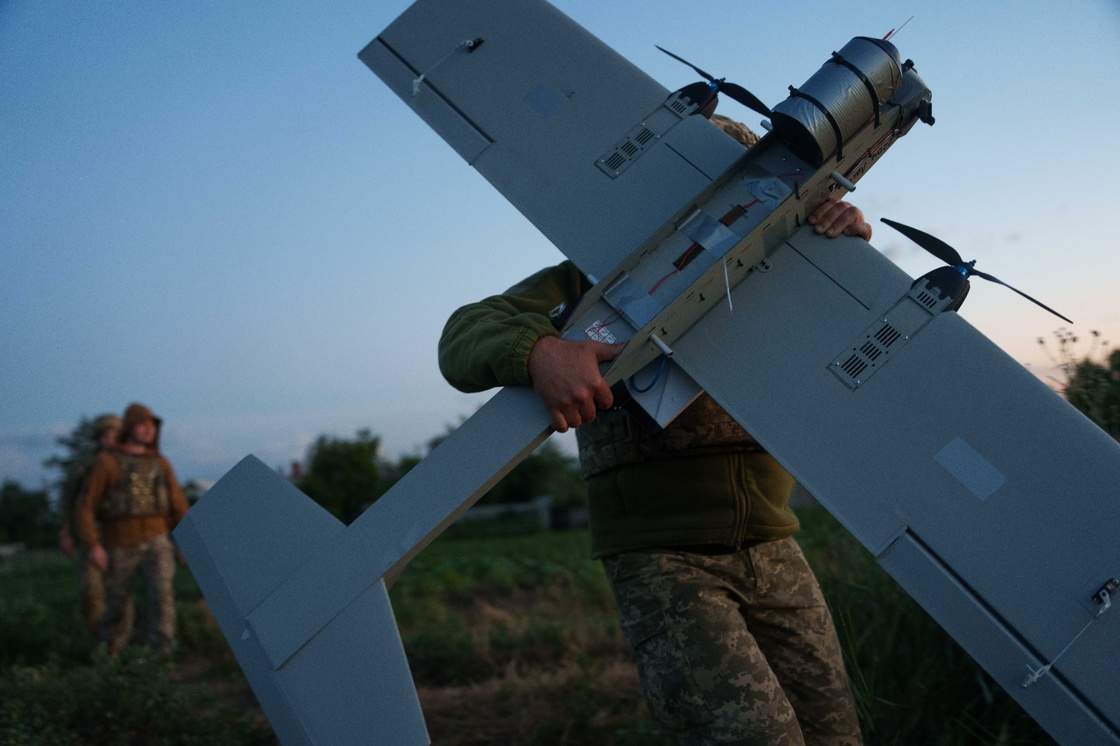
According to industry sources, Russia’s gasoline output plummeted to just 65 percent of its normal capacity following a relentless, highly targeted campaign of Ukrainian drone strikes. Think about that number. Nearly one-third of a nation's fuel-making capability, vanished. Not evaporated by sanctions or choked by blockades, but physically torn apart by exploding wings of carbon fiber and guided optics.
To understand what this actually means, you have to look past the spreadsheets. You have to look at the fractionating tower.
The Vulnerable Giants
Imagine a structure as tall as a fifteen-story building, made of specialized, high-grade steel, packed with intricate internal trays. This is the AVT-6 unit, the beating heart of a modern refinery. It takes crude oil, heats it to blistering temperatures, and separates it into the fluids that keep the modern world moving.
It is a masterpiece of chemical engineering. It is also an incredibly fragile target.
You cannot build an AVT-6 unit in a backyard workshop. You cannot order its replacement parts from a catalog. These systems require highly specific, often Western-engineered components—compressors, catalysts, and computerized control systems that are currently locked behind a wall of international sanctions. When a drone weighing less than a compact car hits the distillation column of a facility like the Norsi or Ryazan refinery, it does not just cause a fire. It inflicts a structural stroke.
The flames are extinguished in days. The paralysis lasts for months.
Consider a hypothetical site manager—let's call him Mikhail—standing in the shadow of a twisted, blackened cooling tower. He isn't thinking about geopolitics. He is looking at a shattered control room, wondering how to tell his crew that the specialized valves needed to rebuild the cracking unit are sitting in a warehouse in Rotterdam, entirely inaccessible. He is looking at a multi-billion-dollar asset reduced to a smoking monument of vulnerability.
This is the invisible leverage of modern asymmetric warfare. A drone costing a few thousand dollars can dismantle an industrial infrastructure worth hundreds of millions. The math is brutal. It is unsustainable.
The Mirage at the Pump
When a country’s refining capacity drops by 35 percent, the immediate assumption is that gas stations will run dry tomorrow. But the mechanics of a state-managed economy are more complicated, and far more desperate, than that.
The Kremlin’s first move was predictable: a sweeping ban on gasoline exports. The logic is simple enough on the surface. If you cannot make enough fuel for everyone, you stop feeding your neighbors and keep it all for yourself. You protect the home front. You ensure that the tractors in Rostov can harvest the wheat, and the military logistics trucks can keep rolling toward the Donbas.
But this creates a secondary, creeping crisis.
When you stop exporting refined products, you cut off the vital arteries of hard currency pouring into the state treasury. The oil still comes out of the ground in Siberia. It still flows through the pipelines. But if the refineries cannot accept it because their distillation towers are fractured, that crude has nowhere to go. You cannot simply turn off an oil well like a kitchen faucet; doing so risks damaging the underground reservoirs permanently.
So, the crude backs up. It fills the storage tanks. It gluts the system.
For the average citizen in Moscow or St. Petersburg, the crisis is currently an abstraction. The lights are on. The local Lukoil station still has fuel, even if the price tickers are nudging upward despite government price caps. But this stability is a brittle illusion maintained by burning through reserves and cannibalizing the future. It is the economic equivalent of burning your living room furniture to keep the house warm during a blizzard. It works for a night.
The Shifting Ground
What we are witnessing is the dematerialization of front lines.
Historically, crippling an enemy’s industrial capacity required massive bomber formations, hundreds of tons of ordnance, and a willingness to accept immense casualties. Today, the sky is filled with the quiet hum of electric motors. The strikes are precise, repetitive, and deeply personal. They target the very specific joints and seams of the Russian energy sector, exploiting the reality that while Russia is vast, its refining infrastructure is highly concentrated.
The emotional core of this conflict isn't found in the grand statements issued from capitals. It is found in the slow, agonizing realization that no depth of rear territory is truly safe anymore. The sense of security that distance once provided has dissolved.
The true cost of these strikes will not be measured in the immediate shortfall of gallons or liters. It will be measured in the long, grinding friction of a system forced to operate at two-thirds capacity while trying to sustain a total war footprint. Every broken pipe, every scorched control panel, and every diverted trainload of fuel adds to a compounding debt that eventually must be paid.
The smoke over the refineries eventually clears, leaving behind a stark, unaltered reality of twisted metal. The machines that once defined a nation's strength now serve as a stark reminder of how quickly the foundations of power can be chipped away, one fractionating tower at a time.