A standard military briefing room is intentionally devoid of emotion. The walls are a neutral grey. The lighting is fluorescent, hummed at a frequency that mimics daylight but fools no one. On the screens, the Persian Gulf is reduced to a series of vector lines, coordinates, and blinking green icons. To the analysts watching from thousands of miles away, the multi-million-dollar surveillance drone is just a data stream. It is a ghost in the machine, charting a course through international airspace, or what the operators believe to be international airspace.
Then, the data stream stops.
The blinking green icon vanishes. In its place, a cold silence fills the room.
The headlines that followed across global tickers were predictable in their rigidity. Iran Shoots Down Another US Drone Amid Peace Talks. The words are clinical. They describe a geopolitical transaction: one piece of hardware destroyed, one diplomatic hurdle raised. But the cold text of a news flash strips away the terrifying reality of what happens when steel meets fire in the upper atmosphere. It ignores the invisible thread pulling at the nerves of real people—from the operators in Nevada with sweat pooling on their palms, to the fishing crews in the Strait of Hormuz looking up at a sudden streak of white smoke, to the diplomats whose months of delicate midnight negotiations just dissolved into ash.
This is not a story about robotics. It is a story about the fragile illusions of peace, and how quickly they shatter.
The Ghost in the Machine
To understand why a missing piece of aluminum and fiber-optics matters, you have to understand the nature of modern friction. We no longer live in an era where wars begin exclusively with the marching of boots. Today, they begin with whispers and radio frequencies.
Consider the drone itself. It is not a weapon in the traditional sense. It carries no bombs. Instead, its payload is information. It hovers at altitudes where the air is thin and freezing, peering downward with lenses so sharp they can read the registration numbers on a shipping container from miles away. It is an apex predator of data.
For the United States, these flights are routine, a necessary eyesore to keep tabs on a volatile chokepoint through which twenty percent of the world’s petroleum passes. For Iran, however, that same silent circle in the sky is an intolerable violation. It is a digital eye staring directly into their living room.
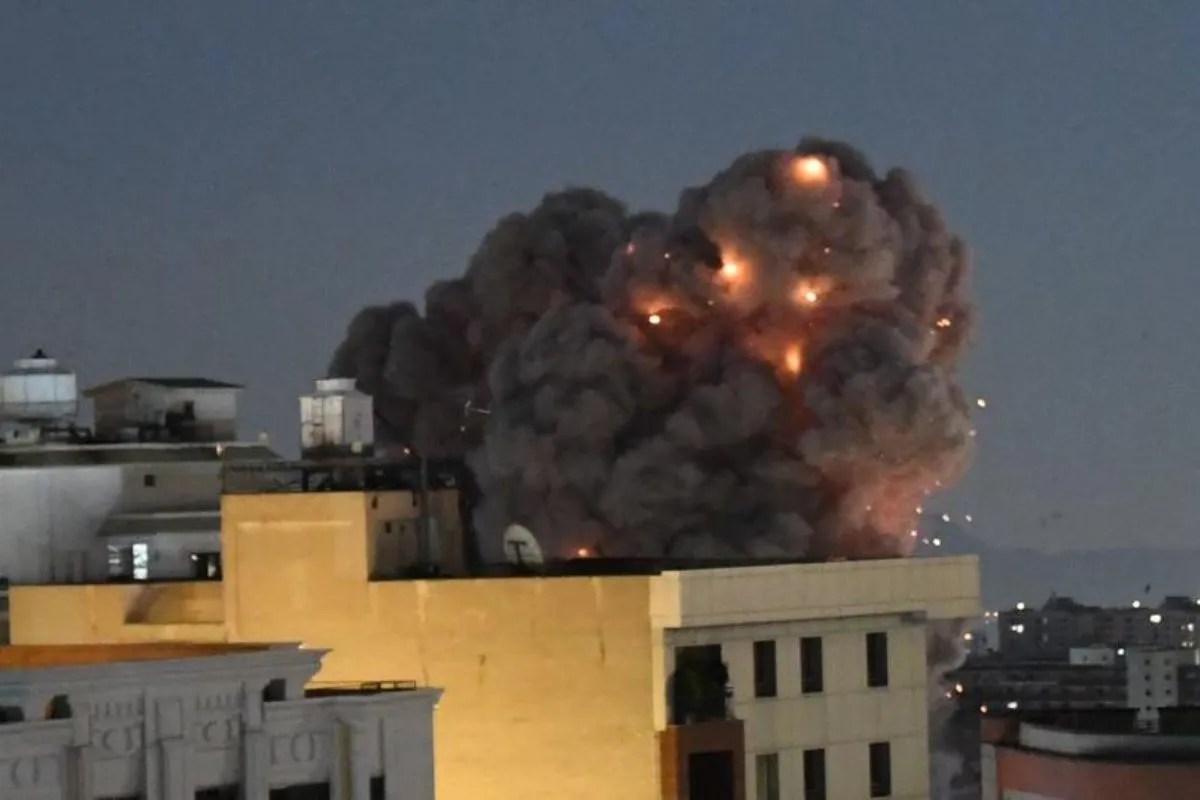
When a surface-to-air missile ignites from a hidden battery along the Iranian coastline, it isn't just targeting an aircraft. It is testing a boundary. The missile tracks the heat signature of the drone's engine, climbing rapidly through the clouds. The impact is instantaneous. A hundred million dollars of engineering becomes a cloud of falling debris, scattering across the dark waters of the Gulf.
The immediate reaction is always a chorus of denials and accusations. Washington claims the drone was over international waters, a lawful flight in shared airspace. Tehran insists the machine crossed the invisible line into their sovereign territory, a provocateur caught red-handed.
But the precise coordinates matter less than the psychological weight of the explosion.
The Glass Table of Diplomacy
The timing of the shoot-down contains a cruel irony. For weeks, behind closed doors in neutral European hotels, diplomats had been whispering about a thaw. Backchannel communications were active. Draft agreements were being edited with yellow highlighters. There was a cautious, unspoken hope that perhaps, this time, the rhetoric could be turned down.
Negotiating peace with an adversary is like building a house of cards on a vibrating table. You move with agonizing slowness. You hold your breath.
Then, the missile launches.
The tragedy of modern geopolitics is that the actors on the ground—the tactical commanders, the radar operators, the regional militia leaders—often operate on a different clock than the politicians in capitals. A local commander sees a target on a radar screen. He has seconds to decide. He does not call the foreign minister to ask if a peace treaty is close. He pushes the button.
Instantly, the leverage shifts. The diplomats back in Vienna or Geneva wake up to urgent notifications on their phones. The atmosphere in the meeting rooms turns from cautious optimism to ice. How do you sit across a table from someone whose military just vaporized your equipment? How do you defend talks to a furious domestic public demanding retaliation?
The cards fall. The table resets to zero.
The Human Cost of Unmanned Warfare
There is a dangerous myth surrounding drone warfare: the idea that because no pilot is in the cockpit, these incidents are bloodless. We tell ourselves that it is just a loss of property, an expensive insurance claim for the taxpayer, but nothing more.
This is a lie.
The trauma of these encounters is real, it is just displaced. The men and women who fly these drones sit in dark trailers on airbases half a world away. They spend twelve-hour shifts staring at the high-definition feeds of distant landscapes. They become intimately familiar with the geography, the movement of the waves, the patterns of life below. When their aircraft is targeted, they experience the adrenaline spike of combat without the physical danger. They watch the missile approach on their screens. They feel the sudden, jarring loss of control. Then, the screen goes black.
They walk out of the trailer into the bright desert sun of western America, expected to drive home, have dinner with their families, and forget that they just participated in an act of war.
On the other side, the Iranian air defense crews operate under the perpetual shadow of annihilation. They know that pulling the trigger on a US asset invites the potential of a devastating counter-strike. The tension in those radar bunkers is thick enough to choke on. Every blip on the screen could be a routine flight, or it could be the vanguard of an invasion force.
When we look at the conflict through the lens of cold geopolitical strategy, we miss these human heartbeats. We miss the fear that drives the trigger finger, and the pride that prevents the apology.
The Chokepoint of the World
To truly grasp the stakes, one must look at the water below the drone's flight path. The Strait of Hormuz is a narrow, treacherous stretch of sea. At its narrowest point, the shipping lanes are only a few miles wide. Through this bottleneck lanes move the lifeblood of the global economy.
Imagine a massive container ship, the length of three football fields, navigating these waters. The captain is looking at radar reports, aware that a single miscalculation by a regional military could shut down the strait entirely. If the strait closes, the ripple effect is felt not just in the Middle East, but in the gas stations of Ohio, the factories of Germany, and the markets of Tokyo.
The drone crash is a stone thrown into a still pond. The ripples expand outward, touching lives thousands of miles away from the splash zone. Insurance rates for commercial shipping spike overnight. Oil futures tick upward. Corporate boardrooms in New York adjust their risk models.
This is the invisible reality of modern conflict. A localized incident between two bitter rivals is never truly local. We are all connected to the fate of that falling debris by the invisible web of global commerce and energy.
The Trap of Escalation
The real danger now lies in the arithmetic of pride.
Every time an incident like this occurs, both sides find themselves trapped by their own rhetoric. The United States cannot allow its assets to be destroyed with impunity without looking weak to its allies and its enemies. Iran cannot allow foreign surveillance on its borders without appearing defenseless to its own population.
So, the rhetoric escalates. The troop movements begin. The rhetoric grows sharper.
But deterrence is a fickle science. What one side views as a defensive measure to prevent war, the other side views as a preparation for attack. The margin for error grows smaller with every downed aircraft.
We comfort ourselves with the belief that the leaders of these nations are rational actors who will avoid the abyss at all costs. History, however, is littered with the wreckage of wars that no one actually wanted, started by people who believed they could control the situation right up until the moment they couldn't.
The smoke from the latest crash has cleared from the sky over the Gulf. The wreckage has settled into the silt of the ocean floor, joined by the remains of previous drones, previous ships, and old, forgotten conflicts. The diplomats will eventually return to the table, their faces tight, their words carefully measured.
But the radar screens are still humming. Another drone is already rolling down a runway somewhere, preparing to take the place of the one that was lost. The sky remains open, the invisible lines remain drawn in the air, and the fingers remain hovering just inches above the buttons.


