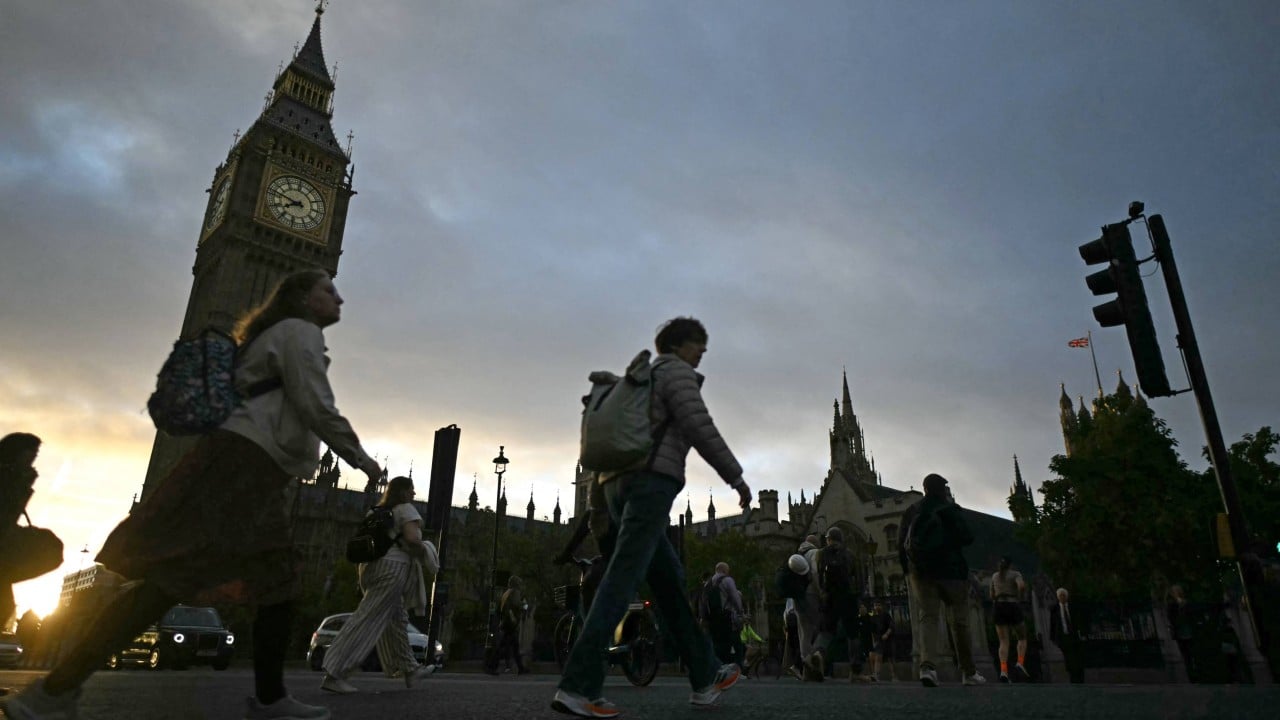
Drip.
A single bead of rainwater forms on the vaulted oak ceiling of Westminster Hall, swells until gravity wins, and splashes onto a stone floor worn smooth by eight hundred years of footsteps. Nobody looks up. The tourists keep snapping photos of the hammer-beam roof, and the lawmakers hurrying toward the division lobbies keep staring at their phones, entirely numb to the sound of a national monument dissolving from the inside out.
I spent three winters reporting from the press gallery in London, and you learn quickly that the Palace of Westminster operates on two distinct timelines. Above the floorboards, everything moves at the frantic, breathless pace of modern politics—breaking alerts, shouted point-scoring during Prime Minister’s Questions, and legislation drafted at midnight. Beneath the floorboards, time is measured in rot, rust, and Victorian cast iron slowly surrendering to the damp breath of the River Thames.
We like to think of grand buildings as permanent. They are made of stone, after all, and stone outlives us. Yet anyone who has ever owned an old house knows that stone is merely a facade; a building actually lives or dies by its arteries. And right now, the arteries of the United Kingdom’s Parliament are clogged, corroded, and dangerously close to bursting.
The Anatomy of a Slow-Motion Collapse
To understand why engineers are openly warning of a "catastrophic failure," you have to forget the postcard image of Big Ben gleaming in the golden hour. Instead, picture a hypothetical night shift worker—let’s call him Arthur—walking the labyrinthine basement tunnels at 3:00 AM.
Arthur isn't carrying a briefcase; he’s carrying a thermal imaging camera and a clipboard. He walks past miles of tangled electrical wiring installed in the 1940s, insulated with crumbling rubber and cloth that turns to dust if you brush against it too hard. Directly above those sparking, overloaded cables run pressurized steam pipes from the Victorian era, leaking scalding water onto the conduits below. Every step Arthur takes is a silent negotiation with disaster. He is part of a dedicated, exhausted brigade of round-the-clock fire wardens whose sole job is to patrol the building constantly because the fire detection systems cannot be trusted to catch a blaze before it consumes the timber-lined chambers.
Fire. That is the word nobody in power wants to say out loud, even though history screams it at them.
In October 1834, an overheated stove used to burn old wooden tally sticks set the original Palace of Westminster ablaze. Within hours, centuries of architectural heritage turned into a roaring furnace visible from Windsor Castle twenty miles away. The building we see today—Charles Barry and Augustus Pugin’s Gothic Revival masterpiece—rose from those ashes in the mid-nineteenth century. It was cutting-edge for 1850. It is a death trap in the twenty-first century.
When people hear about the delayed restoration of the UK Parliament, they often picture cosmetic upgrades: fresh gold leaf on the spires, plush new green leather benches in the House of Commons, or upgraded catering facilities for politicians. That misconception is precisely why the project has stalled for over a decade. Explaining the true nature of the crisis requires a simple analogy: imagine trying to rewire a nineteenth-century ocean liner while it is actively crossing the Atlantic in a storm, with six hundred passengers refusing to leave their cabins because they are arguing over who gets the best view of the deck.
You cannot fix a crumbling foundation while hosting a daily circus on top of it.
The Invisible Poison Behind the Woodwork
Step inside the corridors of the House of Lords, and the air smells faintly of damp wool, floor polish, and old paper. What you cannot smell is the asbestos.
During the post-war reconstruction of the 1950s, builders packed miles of asbestos insulation around pipes, inside wall cavities, and beneath floorboards. At the time, it was considered a miracle fireproofing material. Today, it is an invisible minefield. Whenever a plumber needs to fix a burst pipe—and pipes burst in Westminster with alarming regularity, sometimes showering MPs’ offices in raw sewage—maintenance crews have to suit up in full hazardous-materials gear just to reach the leak.
Let’s trace what happens when a single pipe fails on a Tuesday afternoon. First, the water shorts out an antique junction box, plunging an entire wing of offices into darkness. Next, a structural engineer arrives, peers behind the soaked wood paneling, and spots disturbed asbestos fibers floating in the beam of his flashlight. Instantly, the corridor is sealed off. Specialists are called in at exorbitant emergency rates to erect airlocks and scrub the air, while staffers relocate to cramped, temporary desks down the hall. A repair that would take two hours in a modern office building stretches into three weeks and costs taxpayers tens of thousands of pounds.
Multiply that incident by dozens of times a year, and you begin to see the financial madness of delay. Taxpayers are currently spending roughly £2 million every single week just to keep the building from falling down or burning up. That money buys zero permanent improvements. It is pure triage—putting duct tape over a ruptured dam while debating whether we can afford concrete.
Why Politicians Keep Kicking the Can
If the engineering reality is so stark, why hasn't the work begun? Why has the Restoration and Renewal programme become a byword for institutional paralysis?
To answer that, you have to understand the psychology of political survival. No Member of Parliament wants to go back to their constituents during a cost-of-living crisis and explain why they voted to spend somewhere between £7 billion and £13 billion—and potentially much more—on fixing their own workplace. The optics are toxic. Tabloid headlines practically write themselves: Lawmakers Spend Billions on Palace Luxury While Families Freeze.
I remember sitting in a cramped tearoom near Westminster during a particularly heated debate over the restoration timeline, listening to a veteran backbencher confess his genuine terror over the vote. He admitted that the basement looked like a horror movie set and that he worried about the staff working down there every day. Yet in the same breath, he explained why he would vote to delay the full decant of the building. "If I vote to move Parliament out for ten years," he told me quietly, stirring his tea, "my opponent will put that number on a billboard in my constituency next spring, and I’ll lose my seat."
There is also a deep, superstitious fear among many lawmakers about leaving the building at all. Politics is theater, and the Palace of Westminster is the ultimate stage. The layout of the House of Commons—two opposing sides separated by the width of two drawn swords—shapes the very nature of British democracy. Many MPs genuinely believe that if they relocate to a modern conference center across London for a decade, their political influence will evaporate, or worse, that a temporary home will quietly become permanent.
So, they choose the coward’s compromise. They opt for a "continued presence" model—trying to repair the building piecemeal while Parliament remains in session. Engineers have repeatedly warned that this approach is vastly more expensive, takes decades longer, and leaves workers and lawmakers exposed to catastrophic risks. Yet every few years, a new committee is formed, a new report is commissioned, and the start date slides further into the late 2020s or early 2030s.
The Human Cost of Institutional Neglect
It is easy to feel cynical about politicians reaping the consequences of their own indecision. It is much harder to feel cynical when you remember that lawmakers make up a tiny fraction of the people inside that building.
On any given sitting day, more than ten thousand people pass through the gates of Westminster. They are researchers, librarians, chefs, cleaners, police officers, archivists, and tour guides. They don't have the luxury of safe constituencies or television appearances. They work in windowless basement offices directly beneath leaking roofs and beside unshielded electrical risers.
Consider the archivists tending to the Parliamentary Archives inside the Victoria Tower—a magnificent stone spire holding millions of irreplaceable historical records, including the original parchment scrolls of Acts of Parliament dating back to 1497. For years, falling masonry from the tower’s exterior forced workers to wear hard hats just to walk across the courtyard below. Inside, outdated climate controls struggle to protect centuries-old vellum from moisture and temperature swings. If a fire breaks out in the central lobby and races up the hollow stone shafts of the towers—acting like giant chimneys—we don't just lose a building. We lose the physical memory of the British state.
Even the river itself is turning against the palace. The Palace of Westminster sits on marshy ground reclaimed from the Thames, supported by a massive raft of concrete laid down in the 1840s. Over the decades, shifting groundwater levels, nearby Underground tunnel construction, and rising river tides caused by climate change have caused the building to settle unevenly. Big Ben—officially the Elizabeth Tower—already leans noticeably to the northwest, a tilt that became painfully obvious during its recent multi-year scaffolding restoration, which uncovered far worse structural decay than anyone had budgeted for.
When workers stripped away the grime from Big Ben’s stonework, they found World War II bomb damage that had simply been patched over and forgotten, rusted iron cramps splitting the stone from within, and toxic lead paint flaking into the wind. That single tower restoration ballooned in cost and took years longer than planned. Now imagine scaling that unpleasant surprise across an entire eight-acre complex containing over a thousand rooms, three miles of corridors, and one hundred staircases.
The Reckoning Ahead
History rarely announces the exact moment a crisis turns irreversible. Usually, there is just a long period of warning signs that everyone agrees are alarming, right up until the afternoon a ceiling collapses or a spark catches dry timber in an unmonitored void.
The tragedy of the Palace of Westminster isn't that the building is old; old buildings survive all over Europe when treated with respect and honesty. The tragedy is the gap between how Britain talks about its heritage and how it actually cares for it. Lawmakers stand beneath those soaring Gothic arches every week to deliver speeches about long-term vision, fiscal responsibility, and national pride, while literally standing over a ticking clock they refuse to disarm.
Eventually, the building will force their hand. Whether that happens through a planned, courageous decision to pack up the dispatch boxes and let the engineers save the structure, or through an emergency evacuation after a burst main floods the Commons chamber, remains entirely up to the people currently sitting on those green benches.
Late at night, after the debates end and the cries of "Who goes home?" echo through the stone lobbies, the palace grows quiet. The tourists are gone. The cameras are switched off. Inside the dark, cramped service tunnels beneath the floor, Arthur shines his flashlight onto a rusted pipe joint wrapped in soggy fiberglass. A single drop of water gathers on the underside of the iron, hangs trembling in the beam of light, and falls into the dark.


