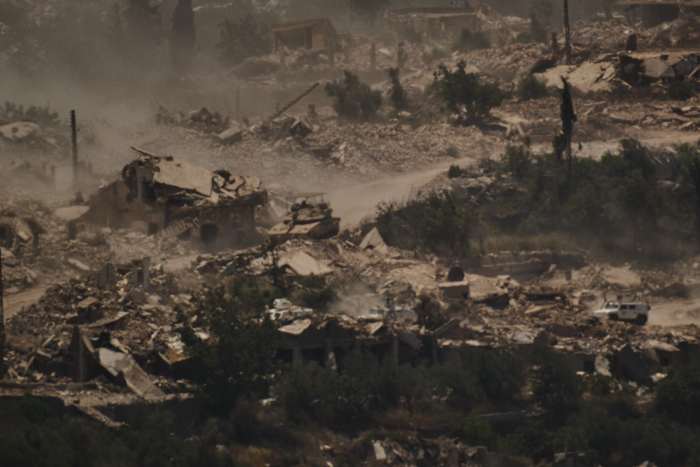
The morning air in the Andean highlands is usually sharp enough to taste. At high altitudes, the cold bites at your fingers before the sun even breaches the ridge, turning every breath into a pale plume of fog. But on that particular day, the fog over the military base was not made of ice.
It was dark. It was heavy. And it smelled of sulfur and sheared metal.
We rarely think about the quiet infrastructure that holds a nation's defense together until it breaks. From a distance, military installations are monolithic blocks on a map—sterile coordinates, guarded gates, and administrative acronyms. Inside, however, they are living, breathing ecosystems of young recruits, weary quartermasters, and families waiting anxiously for evening leave. They are places where routines are worn down to the bone through endless repetition.
Then, an explosion shatters the routine.
At least ten lives extinguished in a single, violent heartbeat.
Silence. Then chaos.
The Anatomy of a Flashpoint
To understand what happened, you have to look past the cold casualty reports that populate evening broadcasts. Numbers are safe. Ten dead. Dozens injured. Official statements deployed with careful, bureaucratic distance. They tell you the what, but they starve you of the how and the why.
Imagine standing in a munitions depot. The light is dim, filtered through high, dusty windows. Rows of heavy crates line the concrete floor, holding the physical weight of deterrence: ordnance, propellant, and the volatile chemistry of modern warfare. It is an environment governed by strict protocols. Every movement is calculated. Every spark is an enemy.
Yet, machinery fails. Human fatigue creeps in during the graveyard shifts. Safety margins, squeezed by tight budgets or aging stockpiles, begin to fray.
When an accidental detonation occurs in such a space, it does not negotiate. It consumes. The blast wave moves faster than thought, tearing through concrete structures and rewriting the landscape in fractions of a second. Families miles away heard the rumble, thinking it was just another seismic shudder of the restless earth. It was not the earth. It was a man-made sun, burning out far too fast.
The Human Toll Behind the Uniform
Behind every statistic in this tragedy is a domestic reality that policy papers never quite capture.
Consider a recruit who arrived at the gates six months ago with a duffel bag and a mother’s warning ringing in his ears. He learned how to polish boots until they mirrored the sky. He learned how to stand at attention while the mountain wind whipped across the parade ground. He was learning how to survive a career of service, unaware that the greatest danger would not come from an external border dispute, but from the very walls meant to protect him.
When a blast like this tears through a base, the shockwaves ripple outward through communities. Barracks empty out, leaving behind unmade bunks that smell faintly of laundry detergent and cheap tobacco. Phones in distant villages start ringing with calls that commanders dread making.
We are left to grapple with a stark, uncomfortable truth. Safety is an illusion we construct out of checklists and concrete. When those fail, the cost is paid exclusively by the people on the ground.
The Unspoken Questions
Officials will launch investigations. Committees will convene behind closed doors. Reports will be filed, heavy with technical jargon about structural integrity, volatile compounds, and protocol adherence. They will look for a scapegoat, a single point of failure to pin the blame upon, because admitting systemic vulnerability is terrifying.
But let us be honest with ourselves.
Accidents in high-risk environments are rarely born of a single careless mistake. They are the cumulative product of neglected infrastructure, deferred maintenance, and the silent pressure placed on military personnel to do more with less. When military bases age and resources run thin, the margin for error shrinks to zero.
And when the margin is zero, catastrophe becomes only a matter of time.
The smoke eventually cleared over the highlands. The rescue teams packed up their gear. The official press releases tapered off as the news cycle dragged the public's attention elsewhere.
Yet, in the quiet valleys surrounding the base, the smoke never truly left. It lingers in the empty chairs at dinner tables. It echoes in the questions asked by parents who sent their children away to serve, only to receive back a folded flag and a standardized expression of regret.
The mountains remain tall, indifferent, and cold. Below them, the earth remembers every spark.