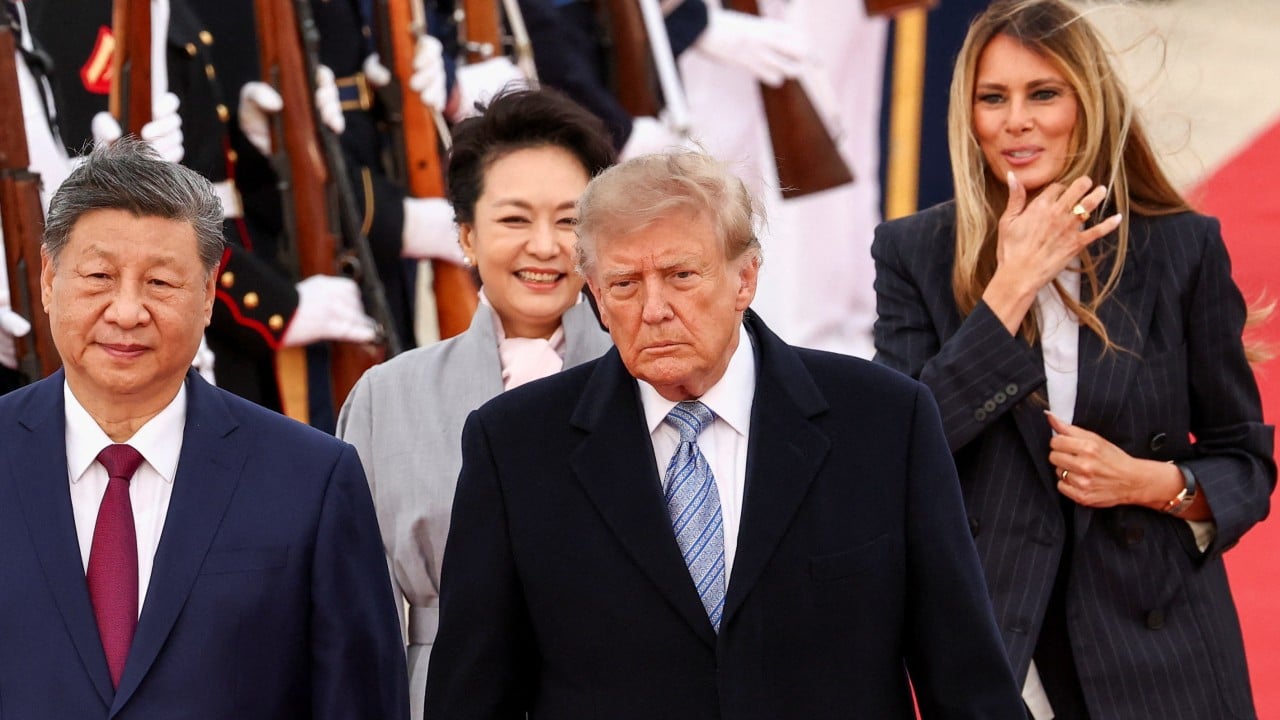
Language has never been merely a vehicle for communication in the upper echelons of statecraft. It is a calculated instrument of deterrence, prestige, and quiet intimidation. When high-profile figures step onto the global stage, every syllable is weighed against the geopolitical ambitions of the state they represent.
Consider the media frenzy that periodically erupts around linguistic exchanges between political spouses. Observers often treat these moments as lighthearted human-interest stories, focusing on pronunciation, vocabulary, or the novelty of cross-cultural dialogue. This superficial framing misses the structural reality of modern diplomacy. Discover more on a similar subject: this related article.
When Peng Liyuan engaged in English-language dialogue during diplomatic exchanges with Melania Trump, domestic and international commentators treated the interaction as a cultural footnote. They praised the linguistic effort or critiqued the accent, entirely bypassing the underlying strategic architecture. State-level communication between major powers is never accidental. Every word choice is filtered through layers of protocol, intelligence briefings, and ideological signaling.
The Architecture of Linguistic Soft Power
Soft power, a concept coined by political scientist Joseph Nye, relies on attraction rather than coercion. Cultural appeal, political values, and diplomatic grace shape how a nation is perceived globally. Language stands at the very center of this mechanism. More analysis by NPR highlights similar perspectives on this issue.
For decades, the United States and Western allies held a near-monopoly on global communicative norms. English functioned as the undisputed lingua franca of international business, finance, and diplomacy. This dominance conferred an invisible advantage. American and Western leaders rarely needed to master foreign syntax to command a room; the global system adapted to them.
When non-Western figures adopt or utilize English fluently in high-stakes public settings, the dynamic shifts. It demonstrates a sophisticated mastery of the opponent's home turf. It strips away the traditional excuse of miscommunication and signals an ability to operate fluidly within Western informational ecosystems.
Peng Liyuan represents a unique intersection of high culture, state media prominence, and diplomatic duties. As a celebrated soprano and former civilian leader within the People's Liberation Army, her public persona combines artistic accessibility with unwavering institutional loyalty. When she deploys English during foreign engagements, the action performs dual functions. Domestically, it projects a modern, cosmopolitan face of national capability. Externally, it signals that the state elite are intimately familiar with Western idioms, media strategies, and communicative frameworks.
Beyond the Teleprompter
Mainstream reporting often reduces these exchanges to isolated personality profiles. Journalists focus on wardrobe choices, body language, and polite conversational topics. They ask whether a leader or spouse sounded natural, as if evaluating a theater performance rather than an act of statecraft.
This approach ignores the systemic preparation behind every public utterance. Diplomatic spouses do not improvise during high-level summits. Briefing books compile exhaustive psychological profiles, stylistic preferences, and potential conversational minefields weeks in advance.
The choice to speak English in certain contexts is a tactical concession designed to disarm. It lowers the rhetorical guard of the receiving delegation. By stepping outside the strict confines of a native tongue, a high-profile figure creates an atmosphere of personal warmth, masking the rigorous geopolitical calculations driving the interaction.
Critics who dismiss these moments as trivial fail to understand how modern information warfare operates. Attention spans are short. Symbolic gestures often outlive lengthy policy documents in the public consciousness. A single well-executed bilingual exchange can soften a hostile media narrative or provide a favorable visual hook for global news cycles.
The Weaponization of Accessibility
Diplomacy has evolved from closed-door treaty negotiations into a permanent public relations campaign. Every handshake, shared meal, and conversational pivot is broadcast instantly to billions of screens worldwide. In this environment, accessibility becomes a strategic asset.
When political figures project warmth and linguistic competence, they humanize opaque bureaucratic regimes. They provide a relatable face to systems that foreign populations might otherwise view with suspicion or hostility. This personalization strategy is particularly vital during periods of systemic friction. When trade wars loom, tariffs escalate, and geopolitical rhetoric turns hostile, soft power symbols act as a stabilizing ballast.
Yet, this dynamic cuts both ways. While accessibility disarms critics, it also invites intense scrutiny. Every linguistic misstep is amplified by domestic and foreign opponents looking for signs of weakness or inauthenticity. The margin for error is razor-thin.
Observers must look past the superficial gloss of celebrity journalism when analyzing these events. The next time a high-ranking official or diplomatic spouse navigates a foreign language on the world stage, look past the praise or the critique. Examine who benefits from the narrative of accessibility. Ask what tensions are being smoothed over, and what strategic advantages are being secured in plain sight.