The kitchen tile is cold against your knees. It is 6:15 in the morning. Outside, the gray light of dawn is struggling to punch through a layer of stubborn frost, but inside, the air smells like burnt toast and the sour edge of leftover coffee. Your toddler is crying. Not a dramatic tantrum over a mismatched sock, but the low, rhythmic wail of a tiny human who simply woke up on the wrong side of existence. You have three minutes to brush your teeth before a morning meeting, your email inbox is a crime scene, and your brain feels like wet cardboard.
You do not want to parent right now. You want to stare blankly at a wall.
Then, you hear it from the living room tablet. A gentle, familiar cadence. A bright pink shirt. A voice that sounds like a kindergarten teacher who has never once lost her patience, even when a child threw an entire bowl of oatmeal directly into her hair.
"Hi, friends! I am so glad you are here."
It is Ms. Rachel.
For millions of parents across the world, those six notes are the closest thing to a secular prayer. She is not just a YouTube sensation with millions of subscribers; she is a co-parent who never judges you for letting her babysit your kid while you go stare at the bathroom mirror and breathe. She is the woman who taught a generation of late-talking toddlers how to say more, please, and mama through the science of speech therapy and unyielding, radical kindness.
And now, she is stepping out of the screen and into the stereo.
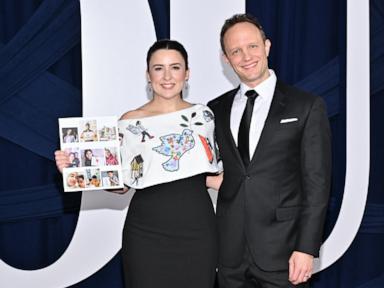
Alongside her creative partner Mr. Aron, Rachel Griffin Accurso has announced her debut album, a project titled I'm So Happy. It is a strange and beautiful evolution. For years, the screen has been the mediator between our children and her gentle encouragement. We have relied on the glowing rectangle to soothe meltdowns, build vocabulary, and buy us ten minutes to unload the dishwasher. Now, the music is breaking free from the video. It is coming for our car rides, our rainy Sunday afternoons, our kitchen floors.
Consider what happens next: the digital creator makes the leap into physical, permanent audio.
This is not a trivial pivot. For decades, children's music has fallen into two distinct camps. There is the sanitized, corporate elevator pop designed to make adults want to drive their cars directly into a brick wall. And there is the chaotic, over-stimulating noise of modern animation soundtracks that leave a toddler vibrating with nervous energy like a wind-up toy. Parents navigate these extremes with a low-grade headache, searching for something—anything—that will not rot their child's developing brain while also sparing their own sanity.
Ms. Rachel sits in a different category entirely. Her content is built on developmental psychology. It uses slow pacing, direct eye contact, repetition, and exaggerated mouth movements to encourage language acquisition. When she sings, she isn't just entertaining; she is working. Every vowel is stretched. Every gesture is intentional.
When that philosophy moves from a YouTube video to a dedicated album, the stakes change.
Imagine a minivan rolling down a wet interstate on a Tuesday afternoon. The kids are melting down in the back. The toddler has lost a favorite toy under the seat; the older sibling is kicking the back of the driver's seat in rhythm to an imaginary drum solo. The driver's knuckles are white on the steering wheel. Tension fills the cabin like carbon monoxide.
You do not want to put on a screen while driving. You need audio. You need something that bridges the gap between chaos and calm.
That is where I'm So Happy enters the picture. Mr. Aron’s acoustic guitar, blended with Rachel’s familiar, welcoming vocal arrangements, offers a sensory anchor. Music bypasses the analytical parts of a child's brain and goes straight to the nervous system. It regulates heart rates. It synchronizes breathing. When a child hears a trusted voice singing a familiar song without the flashing lights of a video, something remarkable happens. They begin to internalize the safety.
Critics often roll their eyes at digital creators branching out into traditional media. They see cash grabs. They see a pivot toward merchandise lines and Spotify streaming royalties. But to view Ms. Rachel through the cold lens of corporate expansion is to misunderstand why she occupies such a sacred space in modern households.
Parenting in the digital age is an exercise in profound guilt. We are the first generation of mothers and fathers expected to raise children while competing directly with algorithms engineered by teams of behavioral psychologists to hijack attention spans. We hand our phones to toddlers with a secret pang of failure, wondering if we are short-circuiting their developing minds.
Rachel Accurso short-circuited that guilt by refusing to pander. She studied early childhood education at Columbia University. She built her channel out of a desperate, personal search for speech therapy resources for her own son. When she talks to a camera, she is not talking down to a demographic; she is talking across a kitchen island to another tired parent who just needs someone to validate how hard this day has been.
Her transition into an album format feels less like a marketing strategy and more like an extension of a living room conversation.
Think about the way songs function in a child's life. A video demands your eyes. It pins you to the couch, locking your gaze onto a glowing surface. An album demands nothing of your eyes. It leaves your hands free to build block towers, to finger-paint, to hold a pair of tiny shoes while you wrestle them onto uncooperative feet. It invites the child to look out the window at the passing trees rather than staring at a digital loop.
In many ways, stripping away the video is an act of trust. It asks the music to do the heavy lifting.
The creation of I'm So Happy alongside Mr. Aron—who has been the musical backbone of her digital universe for years, strumming guitars and carrying harmony behind the scenes—brings a warmth that electronic beats simply cannot replicate. Real instruments. Real breath. Real human imperfection captured in a recording studio.
When you listen to the title track, you hear the deliberate choice to keep things acoustic, accessible, and grounded. It is music meant to be sung off-key in a living room while flour spills onto the floor. It is music designed for the messy, uncurated moments of actual family life.
We live in an era that treats childhood as a series of optimization milestones. Every toy must teach coding. Every show must build spatial reasoning. Every moment must be packed with educational yield. Parents are exhausted because we are constantly evaluating our children for return on investment.
Ms. Rachel’s genius has always been her ability to subvert that anxiety. Yes, she teaches speech. Yes, she uses clinical techniques. But underneath the educational framework is a profound, radical emotional safety. She tells children they are loved. She tells them their feelings are valid. She models patience in a world that has completely forgotten how to wait.
When I'm So Happy drops into the world, it will not change the geopolitical landscape. It will not solve the systemic failures of childcare or ease the crushing financial weight of raising a family in the modern economy.
It will just make Tuesday afternoon a little bit softer.
It will give the parent on the kitchen floor three minutes to catch their breath while a familiar voice sings about the simple joy of being alive, of moving your hands, of saying hello to a friend.
The gray light outside the window shifts. The coffee grows cold in the mug. The toddler stops crying, tilts their head toward the sound of an acoustic guitar, and lets out a small, hesitant smile.
Sometimes, that is the entire victory.