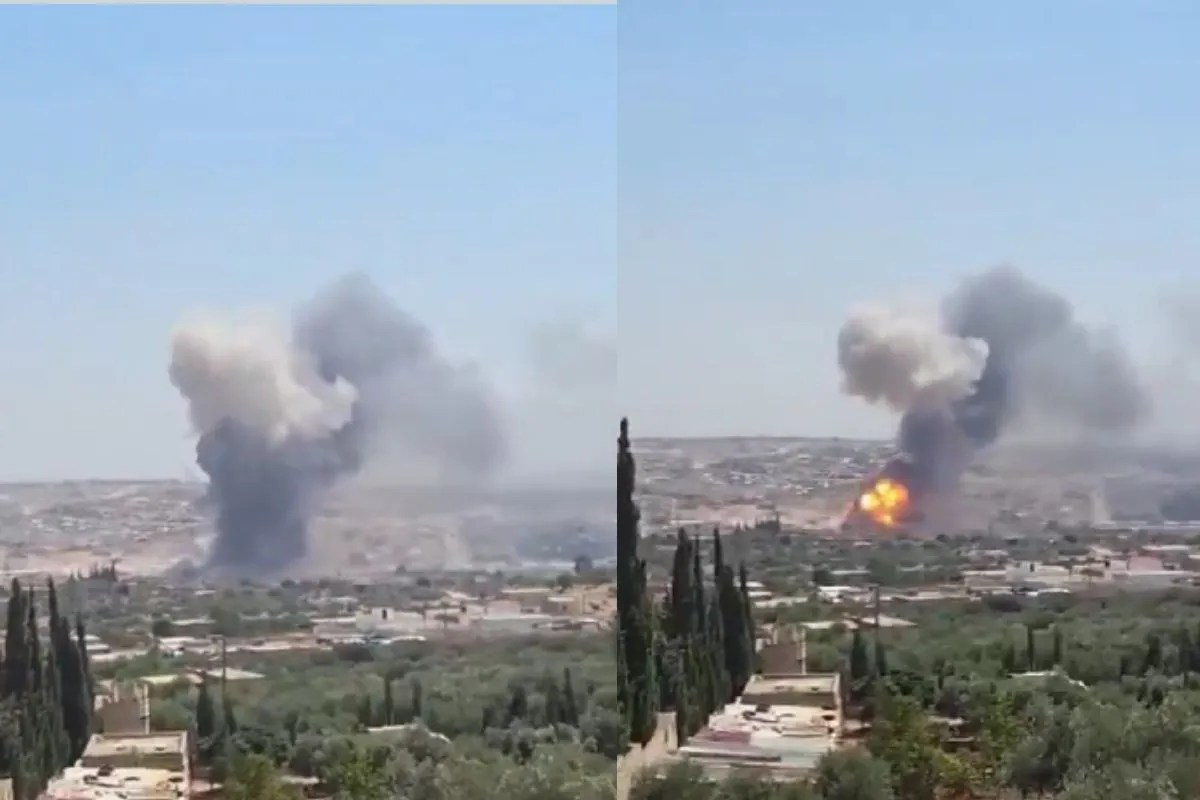
Dawn in Idlib does not arrive with the gentle brushing of sunlight across the hills. It arrives with a weight. For years, the morning air has tasted faintly of old iron and dust, carrying the collective, quiet dread of people who have learned to measure their lives in the intervals between explosions. On this particular morning, however, the air did something worse. It shattered.
Far beneath the surface of a concrete bunker, buried where the heavy summer heat rarely reached, a weapons depot held the concentrated fury of modern conflict. Artillery shells, mortar rounds, and rows of carefully stacked munitions rested in the dim light. They were meant for deterrence, for defense, for the endless chess match of a fractured nation. Instead, they became a bomb waiting for a spark.
We do not know the exact trigger yet. Perhaps it was a miscalculated shift in temperature, a stray electrical current, or the simple, devastating degradation of unstable propellant stored too long in the damp dark. War is rarely efficient; it is messy, rotting from the inside out even when the guns are quiet.
Then came the flash.
To imagine it from the outside is to picture a sudden, blooming flower of orange and black that swallows the horizon. But close up, it is a matter of physics erasing humanity in a fraction of a millisecond. The blast wave tore through the reinforced walls as if they were made of dry parchment. It swept through the corridors, lifting debris, tearing through steel, and obliterating the physical boundaries between the inside world and the sky.
When the smoke finally began to thin, carving gray plumes against the pale sky, the human toll emerged from the silence. Fourteen lives ended in that single, violent breath. Men who woke up that morning tying their boots, thinking of breakfast, of family, of the long shift ahead, were suddenly reduced to casualty lists and weeping relatives. Eleven others survived the initial blast, but their bodies bore the brutal geometry of shrapnel and concussive force—burns, fractured bones, lungs bruised by the invisible hammer of high pressure. Among them were members of the defense ministry forces, men caught in the very machinery they were tasked to maintain.
Consider what happens next in a place like this.
There are no sirens echoing down manicured suburban streets. There is only the frantic scurry of boots on rubble, the frantic calls for stretchers, the raw, unscripted grief of mothers and brothers who know that an explosion at a military site is rarely an isolated tragedy. It ripples outward. It touches the small kitchen tables where tea will now grow cold, the empty sleeping mats, the sudden, terrifying realization that safety is an illusion manufactured by distance.
We talk about depots, military personnel, defense ministries, and casualty statistics as if they are abstract data points on an evening broadcast. We view them through the protective pane of a television screen or the scrolling feed of a smartphone. But numbers are just human stories abbreviated until they don't hurt as much.
Fourteen people. Fourteen distinct universes of memory, inside jokes, fears, and quiet ambitions, extinguished because stored gunpowder is an unforgiving neighbor.
The tragedy in Idlib is not just a localized failure of ordnance management. It is a stark reminder of the gravity that hangs over every corner of a war zone. Even when the front lines momentarily stall, the danger simply migrates inward, hiding in warehouses, basements, and makeshift depots, waiting for a lapse in attention or a cruel twist of fate.
The dust has settled over the ruins now. The injured are in crowded wards where supplies run thin and medical staff work with the grim exhaustion of veterans who have seen every variation of human breakage. The wreckage has been photographed, documented, and filed away into the archives of an ongoing tragedy. Yet, in the quiet alleyways nearby, the children of Idlib still look up at the sky every time a sudden noise rattles their windows, their eyes instinctively searching for the smoke that never truly stops coming.