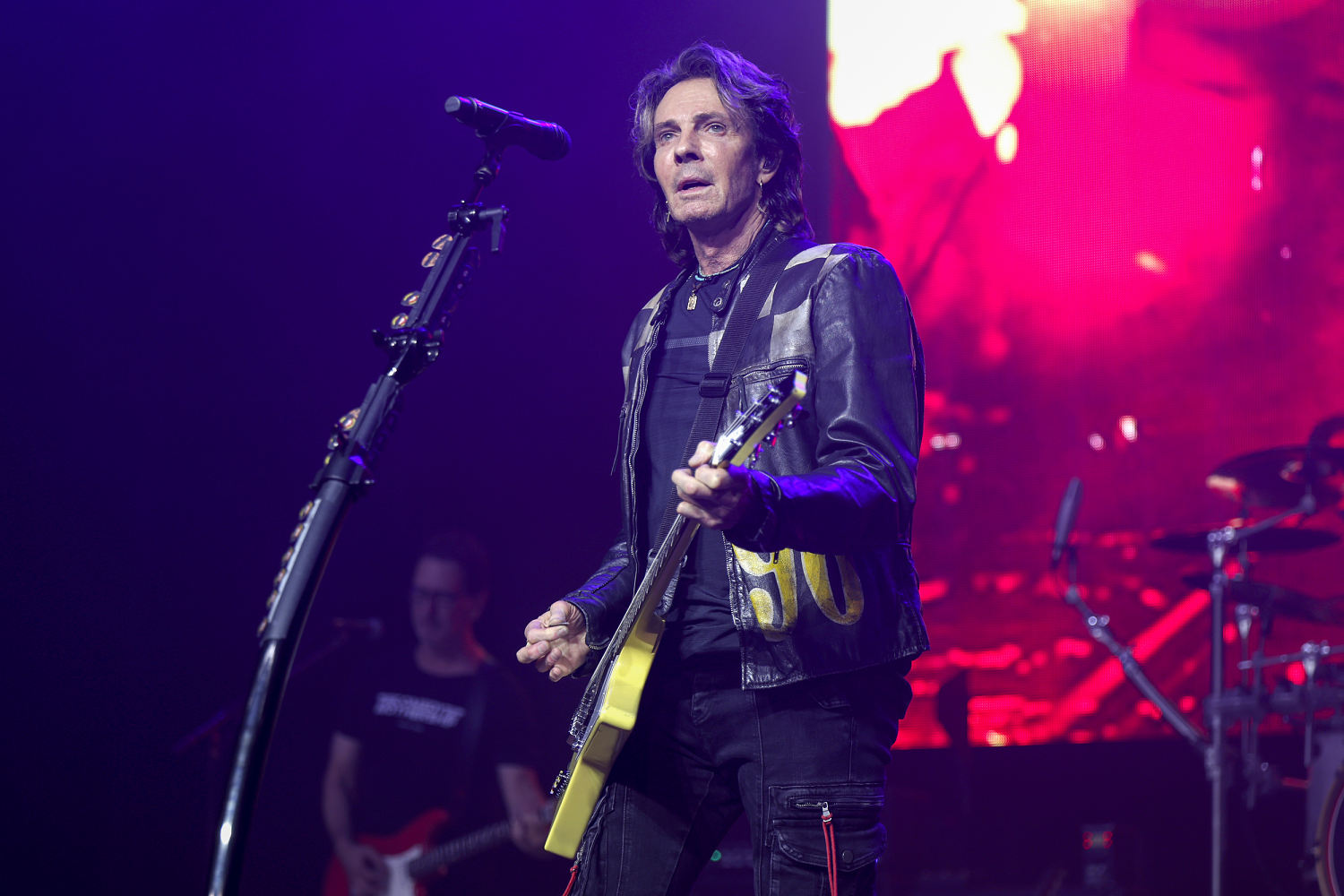
The guitar strap always leaves a mark. It digs into the shoulder, a familiar, physical tether to a life built on volume, adoration, and the bright, blinding glare of a stage. Rick Springfield knew that weight intimately. In the winter of 1978, long before the chart-topping explosion of "Jessie's Girl," before the daytime television heartthrob status, and before stadium tours cemented his name in the rock lexicon, he was just a guy with a six-string trying to make sense of a chaotic world.
The Vietnam War was a wound that America was still trying to staunch with young men and distant headlines. And into that theater of mud, smoke, and unrelenting tension walked musicians. The USO tours were pitched as morale boosters, a slice of home served up with a side of rock and roll to soldiers sleeping in bunkers and counting down the days of their deployments.
Picture a dusty airfield in Southeast Asia, the stifling humidity sticking to skin like a wet wool blanket. The air smells of jet fuel, diesel, and the unmistakable, metallic tang of fear.
Rick stepped off the transport plane holding his guitar case like a shield. He was young, barely twenty-nine, and operating on the invincible ignorance of youth. He thought he was there to play some chords, sign a few autographs, and bring a momentary distraction to kids who were far too young to be carrying rifles. He did not understand the arithmetic of war. He did not know that the boundary between the concert stage and the combat zone was often nothing more than a line drawn in the dirt.
The gig was loud. The amplifiers hummed against generators sputtering in the background. Young soldiers, eyes hollowed out by sleepless nights and the constant hum of dread, crowded close to the makeshift wooden stage. They screamed for rock music because rock music sounded like freedom. For an hour, there were no incoming rounds, no tactical maps, no casualty reports. There was only the beat of the drum and the wail of electric strings.
Then the music stopped.
The transition from the roar of the crowd to the quiet of the perimeter was jarring. It was late evening when the shift occurred, blurring the line between performer and participant. Security was thin, stretched to a breaking point across a base that felt more like a sprawling tent city than a fortress.
What happened next lived in the dark corners of Springfield’s memory for decades, a secret he kept locked away behind hotel doors and platinum records.
It started with a rustling in the perimeter wire. In a combat zone, every shadow is a threat. Every unexpected movement carries the weight of life or death. The human brain, wired for survival, makes split-second calculations that bypass morality and logic. When a figure emerged from the dense foliage near the camp boundary, moving with purpose and ignoring shouted challenges, the illusion of safety evaporated.
There was no time for hesitation. No director yelling cut. No second chance.
In that fraction of a second, the pop star vanished. The survivalist took over. A weapon was thrust into his hands—a reality check from a military escort whose own life was on the line. The command was simple, brutal, and absolute. React or die.
The shot cracked through the humid night air, a sharp, ugly sound that cut cleanly through the lingering echo of guitar feedback.
Silence followed. Not the peaceful quiet of an empty room, but the suffocating silence of a life extinguished in an instant. Springfield walked toward the perimeter wire with his heart hammering against his ribs, stepping away from the bright lights of celebrity and into the grim, unyielding reality of combat. Lying in the dirt was a young man, enemy or insurgent, who had been breathing a second ago.
The weight of that moment did not lift when Springfield boarded the flight back to civilization. It stayed with him. It compounded every time he hit a high note on stage, every time screaming fans reached out to touch his hands, every time a camera flashed in his face. Fame is a strange mirror; it reflects back everything the world wants to see while hiding the ghosts standing just out of frame.
For years, the story remained untold. Not out of shame, necessarily, but because some truths do not fit neatly into the narrative of a pop idol. We want our musicians to be pure, untainted by the violence of the world they sing about. We want them to exist in a bubble of melody and charm. But human history is messy. War touches everyone it reaches, leaving invisible shrapnel in the minds of artists, politicians, and soldiers alike.
When Springfield finally opened up about the incident years later, it wasn't to shock or to court headlines. It was the heavy exhale of a man carrying a boulder up a mountain for forty years, finally deciding to set it down.
Consider the duality of that experience. One day you are strumming the opening chords of a pop melody that will soon define a decade of radio, and the next you are staring down the barrel of a life-altering choice in the dark heart of a jungle.
The guitars eventually stopped echoing in Vietnam, and the troops rotated home to a country that often didn't know how to look them in the eye. Rick Springfield went on to sell millions of records, win Grammy awards, and star in television dramas. He lived the American dream in high definition.
Yet, the true measure of a person is rarely found in their triumphs. It is found in the quiet spaces between heartbeats, in the memories that refuse to fade when the amps are turned off and the stadium lights go dark.
The stage lights fade to black, but the shadow at the edge of the clearing remains.