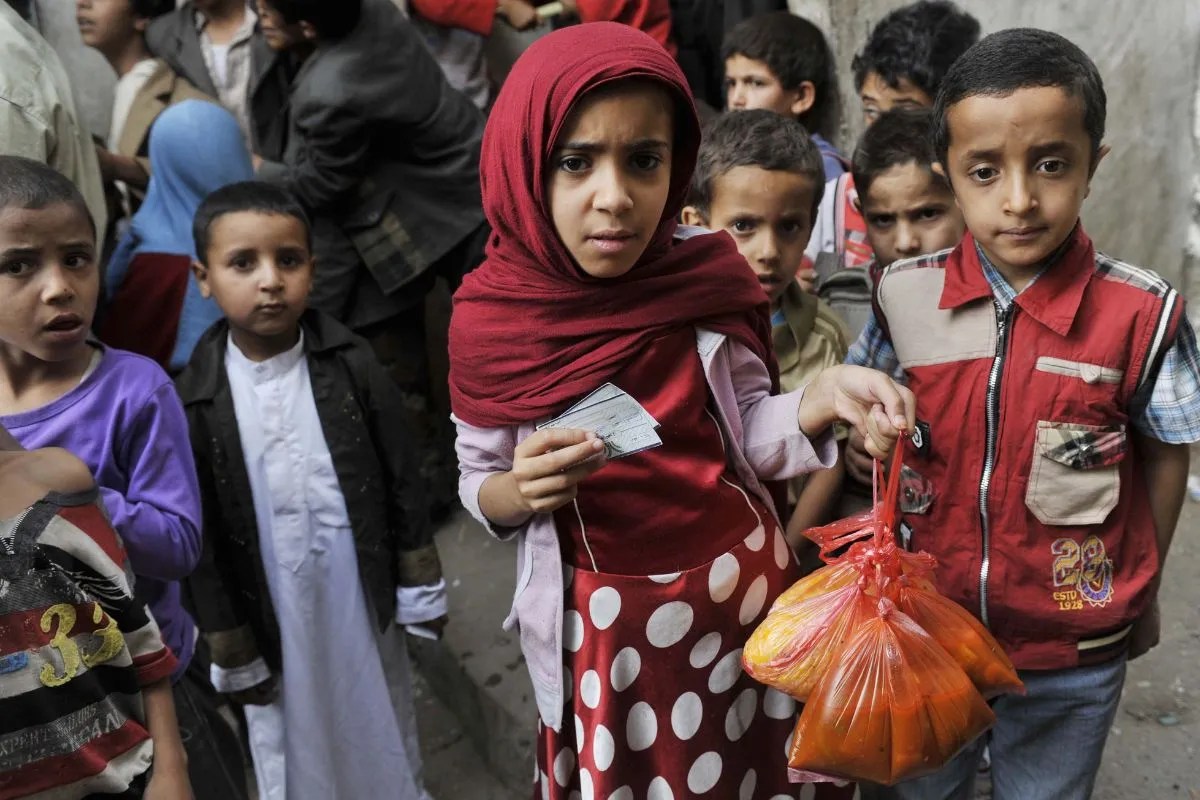
South Asia hunger is not a sudden accident of nature. It is the predictable result of fractured borders, fragile economies, climate volatility, and policy failures stacking on top of one another across a crowded neighborhood.
When headlines claim that four of India's neighbors are reeling from hunger and that Pakistan sits among the top ten worst-affected nations globally, they are usually compressing two very different kinds of food measurement into a single sensationalist bucket. One tracks chronic, long-term nutritional deprivation across populations through the Global Hunger Index. The other tracks acute food crises—situations where conflict, climate shocks, economic collapse, or displaced populations push millions into urgent need of emergency food assistance.
Conflating those two yardsticks breeds confusion. Looking closely at the underlying numbers, however, reveals a sobering regional reality. South Asia as a whole still carries a serious hunger rating under the 2026 Global Hunger Index, posting a regional score of 23.5. Meanwhile, humanitarian assessments of acute food crises place Pakistan among the world's ten largest food emergencies, alongside nations like Afghanistan and Myanmar that border India's wider strategic orbit.
How Headlines Blur Chronic Hunger and Acute Crises
Numbers alone rarely tell the full story on a plate. A country can suffer from deep-rooted child malnutrition even during periods of relative calm, while another can experience a sharp spike in acute hunger because a border closes, a harvest fails, or war disrupts supply chains.
In the 2026 Global Hunger Index, countries are scored from 0 to 100 based on four indicators: undernourishment, child stunting, child wasting, and child mortality. Higher scores mean worse conditions. Scores between 20.0 and 34.9 fall into the serious category, while 10.0 to 19.9 is considered moderate.
| Country or Region | 2026 GHI Score | GHI Severity Level | Key Pressure Point in 2026 Data |
|---|---|---|---|
| Pakistan | 25.5 | Serious | Worsened since 2018; 10.6 million estimated needing humanitarian aid |
| India | 24.1 | Serious | Child wasting near 19%; stunting at 29.3% |
| South Asia (Region) | 23.5 | Serious | High regional burden driven by nutrition and economic shocks |
| Bangladesh | 19.2 | Moderate | Lower GHI score than India and Pakistan, yet flagged in acute crisis tallies |
| Nepal | 14.5 | Moderate | Marked long-term improvement compared with regional peers |
| Sri Lanka | 10.2 | Moderate | Near the low-hunger threshold after years of economic strain |
Look at that table and you immediately spot why sensationalist summaries trip over themselves. Bangladesh scores 19.2—moderate under the Global Hunger Index and ahead of both India (24.1) and Pakistan (25.5)—yet still appears on lists of major acute food crises because economic pressures, climate exposure, and vulnerable pockets leave millions exposed to sudden shocks.
Hunger is rarely a shortage of calories alone. More often, it is a failure of purchasing power, clean water, healthcare, and stable trade routes.
That distinction matters for anyone trying to understand South Asia hunger. Counting "four neighbors in crisis" without separating chronic malnutrition from acute humanitarian emergencies turns a complex regional puzzle into a cheap talking point.
Why Pakistan Slipped Deeper Into Food Insecurity
Pakistan is the clearest warning sign in the neighborhood. Unlike several peers that trimmed their hunger scores over the past decade, Pakistan's Global Hunger Index score climbed from 24.0 in 2018 to 25.5 in 2026, ranking 106th out of 122 countries.
A decade ago, many analysts assumed steady agricultural output and grain buffers would insulate South Asian states from worst-case hunger spirals. That assumption broke down under compounding strain.
In Pakistan, food inflation, sluggish household incomes, unemployment, and macroeconomic instability have squeezed ordinary families at the market stall. When staple prices rise faster than wages, families do not simply eat smaller portions of the same meal. They drop protein, dairy, and fresh produce first, leaving children vulnerable to stunting and wasting even when basic grain supplies have not completely vanished.
Climate extremes make a fragile balance even more brittle. Repeated floods, heatwaves, droughts, glacial lake outburst floods, and erratic monsoons have battered farmland, damaged rural infrastructure, and wiped out livestock livelihoods. Roughly 10.6 million people in Pakistan are estimated to require humanitarian assistance in 2026, even as some macroeconomic headline indicators show tentative stabilization.
Macroeconomic stabilization on paper does not automatically put flour on a rural table. Debt servicing, fiscal austerity, and thin social safety nets often hit low-income households hardest during transitions.
Closed Borders and Regional Chokepoints
Hunger in South Asia does not stop at neat cartographic lines. Trade disputes and regional conflicts reverberate across neighboring economies faster than policymakers like to admit.
Consider Afghanistan, which borders Pakistan and sits at the crossroads of South and Central Asia. Research from the International Food Policy Research Institute analyzing a year of closed borders and regional conflict shows how quickly import dependence turns geopolitical friction into household hunger. Border closures with Pakistan and conflict disrupting alternative routes through Iran choked off food supplies, driving up consumer prices and pushing up to 2.7 million more Afghans below the poverty line.
Even when a local currency holds steady, physical supply bottlenecks bite hard. Rice imports in early 2026 dropped sharply compared with the prior year, fruit and vegetable imports plunged even further, and humanitarian agencies were forced onto longer, costlier overland detours. Meanwhile, farmers trying to grow more food locally ran into steeper fertilizer costs, and restrictions on women's education and employment shrank household earning power.
To see how a single supply shock ripples outward, trace a hypothetical grain trader moving food across a contested border. When customs gates shut or transit corridors become unsafe, trucks sit idle or detour for hundreds of extra miles, multiplying fuel, insurance, and spoilage costs before a single sack reaches a wholesale market. Wholesalers pass those costs down, retailers shrink credit to struggling shoppers, and poor families cut back on meals—turning a diplomatic or security standoff into a nutrition crisis.
The Uncomfortable Mirror for India and Its Neighbors
Pointing fingers at neighbors is easy. Facing structural nutrition deficits at home is harder.
India ranks 100th out of 122 countries in the 2026 Global Hunger Index with a score of 24.1, still inside the serious bracket. While child mortality and stunting have improved over the long run, child wasting in India stands near 19 percent—a stark reminder that rapid economic growth and large grain stockpiles do not automatically cure acute undernutrition among young children.
Poor sanitation, recurring infections, unequal food distribution inside households, and diets heavy in refined carbohydrates rather than diverse micronutrients keep wasting and anemia stubbornly high. At the same time, shrinking international humanitarian funding globally threatens to leave relief agencies under-resourced just as climate shocks and conflicts multiply.
There is also a fair counter-argument worth weighing. Critics of international hunger indices rightly note that composite scores rely on lagged survey windows, modeled estimates, and narrow indicators rather than real-time retail food prices or local harvest surveys. A single index number cannot capture every nuance of a country's food system.
Yet dismissing the data altogether is just as flawed as treating it as gospel. Across South Asia, converging evidence from nutrition surveys, food-price trackers, and climate assessments points in the same direction: food security is tightly linked to political stability, water management, and household resilience.
What Actually Moves the Needle on South Asia Hunger
Quick-fix food handouts keep people alive during emergencies. They rarely solve the underlying rot.
Breaking the cycle of South Asia hunger requires four practical shifts rather than another round of diplomatic blame:
- Protect cross-border agricultural and humanitarian corridors from routine political retaliation so staples and farm inputs keep moving when tensions flare.
- Shift public food support toward dietary diversity—pairing basic grains with pulses, eggs, milk, fortified foods, and clean water access—to tackle child wasting and micronutrient gaps.
- Invest in climate-resilient farming and water storage, including flood drainage, heat-tolerant crops, and early-warning systems for smallholders who live one monsoon away from destitution.
- Keep household income and women's economic participation strong, because families with multiple earners and steady wages withstand food price spikes far better than aid-dependent households.
Until governments treat food security as core economic and national security infrastructure rather than an afterthought after harvests fail, the region's hunger numbers will keep telling a story nobody wants to read.