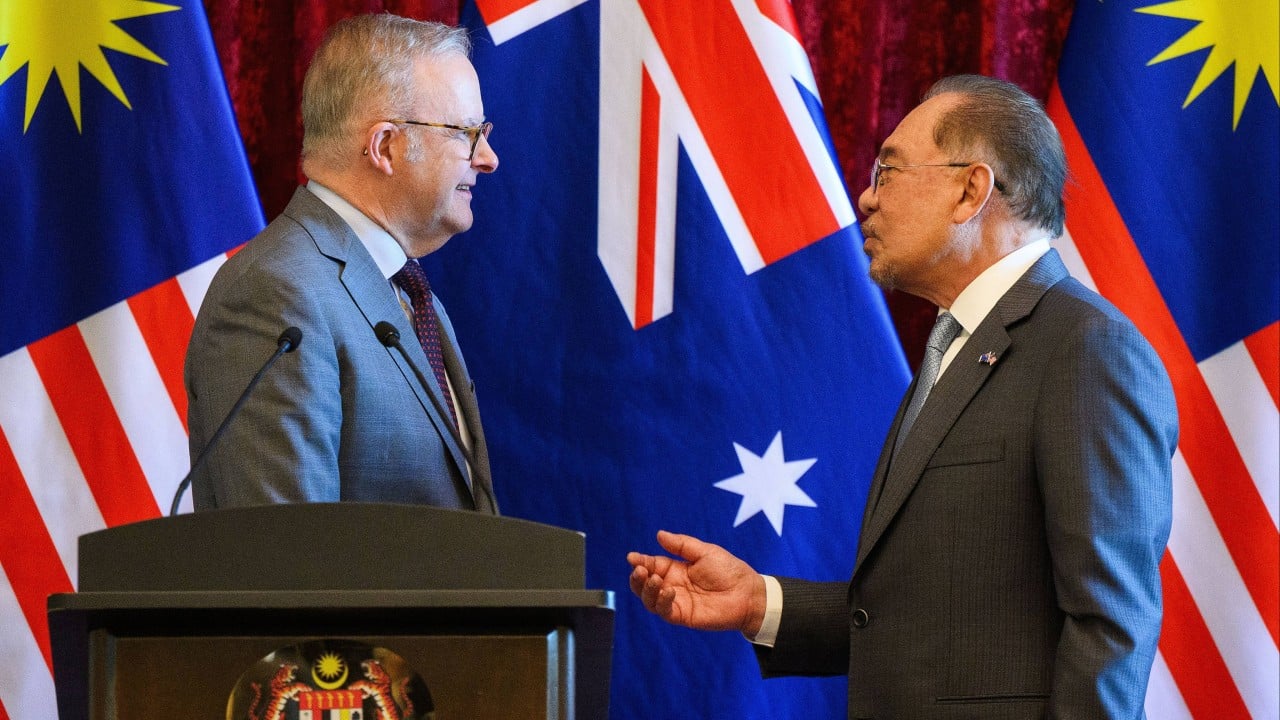
The maritime corridor through the Strait of Hormuz has long functioned as the jugular vein of global energy. However, as the shadow of a wider conflict involving Iran looms over the Persian Gulf, the world’s industrial powers are quietly remapping the planet's fuel routes. Malaysia and Australia have recently formalized a strategic energy supply pact that serves as more than just a bilateral trade agreement. It is a loud admission that the old order of energy security is broken. By tethering Australia’s massive natural gas reserves to Malaysia’s sophisticated processing hubs, these two nations are constructing a "southern bypass" designed to keep the lights on in Asia even if the Middle East descends into total chaos.
For decades, the energy industry operated on the assumption that while the Middle East was volatile, the oil and gas would always flow. That certainty has evaporated. Between drone strikes on tankers and the threat of a full-scale blockade of the world’s most critical chokepoints, the risk premium on Iranian-adjacent waters has become unbearable for state planners. Malaysia and Australia aren't just trading commodities; they are trading insurance policies against a geopolitical collapse. For a closer look into similar topics, we suggest: this related article.
The Strait of Hormuz Trap
To understand why Kuala Lumpur and Canberra are suddenly so cozy, you have to look at the math of the Middle East. Roughly one-fifth of the world’s total oil consumption and a massive portion of its Liquefied Natural Gas (LNG) pass through the Strait of Hormuz. Iran knows this. It is their only real leverage.
When tensions spike, insurance premiums for tankers in the Gulf don't just rise; they explode. This forces energy-dependent nations in Southeast Asia to look for alternatives that don't involve sailing through a shooting gallery. Australia, currently one of the largest LNG exporters on earth, sits safely outside these traditional conflict zones. Malaysia, meanwhile, possesses the infrastructure to receive, process, and redistribute that fuel. This partnership isn't about finding cheaper gas—it is about finding gas that actually arrives. To get more background on the matter, detailed reporting is available on Forbes.
The logic is simple. A tanker moving from Western Australia to the Petronas terminals in Bintulu or Pengerang avoids every single major geopolitical flashpoint currently threatening global supply. There is no Hormuz to navigate. No Bab el-Mandeb. No Red Sea. It is a straight shot through the relatively stable waters of the Indo-Pacific.
Malaysia as the New Regional Clearinghouse
Malaysia is often viewed merely as a producer of oil and gas, but its real value in this new era is its position as a logistical heavyweight. The country has spent billions developing the Pengerang Integrated Petroleum Complex (PIPC) and expanding its regasification capacities.
By securing a "pledge" from Australia, Malaysia is essentially positioning itself as the middleman for ASEAN energy. If the Middle East shuts down, Malaysia becomes the regional battery. They take the Australian raw product, refine it, or use it to power their own massive manufacturing base, then export the surplus to neighbors like Thailand and Vietnam.
This is a power move. It elevates Malaysia from a mid-tier producer to a critical gatekeeper of regional stability. For Australia, it provides a locked-in, long-term customer in a market that is increasingly wary of Chinese dominance. It is a marriage of convenience born out of a shared fear of the dark.
The Infrastructure Reality Check
Talk is cheap, but pipes and piers are expensive. The success of this bypass depends on whether the infrastructure can handle the load. Australia’s North West Shelf projects are aging, and while they still pump massive volumes, the "pledge" requires a commitment to new exploration and extraction that hasn't always been popular with the green-leaning electorate in Canberra.
- Regasification Capacity: Malaysia must continue to expand its ability to turn Australian LNG back into gas for domestic use and industrial export.
- Storage Buffers: Strategic reserves must be built up to survive a total global supply shock, not just a temporary dip.
- Maritime Security: Even though this route avoids Iran, it still passes through the South China Sea, where Beijing’s "Nine-Dash Line" creates its own set of headaches.
Why This Matters for the Average Consumer
Energy security is an abstract term until the price of a liter of petrol doubles overnight or the factory where you work starts rolling blackouts. The Malaysia-Australia pact is a buffer against that specific brand of misery.
The global energy market is currently fragmented. We are seeing the death of the "global price" and the birth of "security-adjusted pricing." This means countries are willing to pay a premium for gas from a friendly, stable neighbor like Australia rather than gambling on a cheaper spot-price shipment from the Gulf that might get seized by a regional navy.
For the consumer in Kuala Lumpur or Melbourne, this translates to long-term price predictability. It means that while the rest of the world watches the news with dread, wondering if a missile strike in the Levant will crash the global economy, the Indo-Pacific energy corridor remains insulated.
The Counter-Argument: A Fragile Solution
Critics argue that this bypass is a temporary fix for a permanent problem. They point out that Australia’s gas industry is under intense pressure to decarbonize. If Australia curtails its gas production to meet domestic climate goals, the pledge to Malaysia becomes a hollow promise.
Furthermore, relying on maritime routes through the Indonesian archipelago and the South China Sea isn't exactly "risk-free." While it avoids the Iranian theater, it puts energy shipments squarely in the middle of the growing friction between Washington and Beijing. If a conflict breaks out over Taiwan or the Spratly Islands, the "safe" Australian route could become just as dangerous as the Strait of Hormuz.
However, the risk profile is objectively lower. You cannot compare the chaotic, multi-actor volatility of the Middle East with the calculated posturing in the South China Sea. One is a tinderbox; the other is a chess match.
The End of the Neutral Energy Market
This deal signals the final nail in the coffin for the idea of a neutral, purely economic energy market. We are back in an era of "resource diplomacy" where your fuel supply is determined by your treaty signatures and your geographical proximity to allies.
The Iran-Israel tensions were the catalyst, but the shift was inevitable. The world is breaking into regional energy blocs. The Malaysia-Australia axis is the first major block to solidify in the Southern Hemisphere. It is a defensive crouch by two nations that realize the "globalized" world of the 1990s is dead and buried.
The real test will come during the next major escalation in the Gulf. When the tankers stop moving through Hormuz, we will see if the Australian taps can turn fast enough to keep the factories of Southeast Asia humming. If they can, the blueprint for the next century of energy trade will have been written in the waters between Dampier and Port Klang.
The message to the Middle East is clear: the world is tired of being held hostage by your geography. We are finding another way around.
Stop looking for a return to the status quo. It isn't coming back. The smart money is already moving south, toward stable coastlines and predictable partners. This isn't just a trade deal; it is a declaration of independence from the volatility of the 20th century’s favorite oil patch.
Watch the ship tracking data. Follow the investment into Malaysian storage tanks. That is where the real power is shifting.