In July 2026, the South Korean defense establishment suffered its most bruising international defeat yet. After a fierce, multi-year campaign to secure Canada’s CA$50 billion Canadian Patrol Submarine Project (CPSP)—a crown jewel contract to build up to 12 long-range conventional submarines—Seoul was abruptly shut out. Canadian Prime Minister Mark Carney announced Germany’s Thyssenkrupp Marine Systems (TKMS) as the preferred bidder.
For South Korea, which has successfully sold K9 self-propelled howitzers, K2 main battle tanks, and FA-50 light fighters to every corner of the globe, the loss was a splash of icy Atlantic water.
Seoul’s joint consortium of Hanwha Ocean and HD Hyundai Heavy Industries offered everything: rapid delivery timelines, massive local industrial offset packages, and a highly advanced, lithium-ion battery-powered platform in the KSS-III. Yet, they lost. The failure exposes a stark geopolitical reality. While South Korea can easily export land and air hardware, its naval export ambitions are running aground on an unyielding, closed-loop Western alliance structure and deep-seated structural disadvantages. Undersea warfare remains a closed shop, and Seoul does not have the key.
The Illusion of the Tech-and-Price Edge
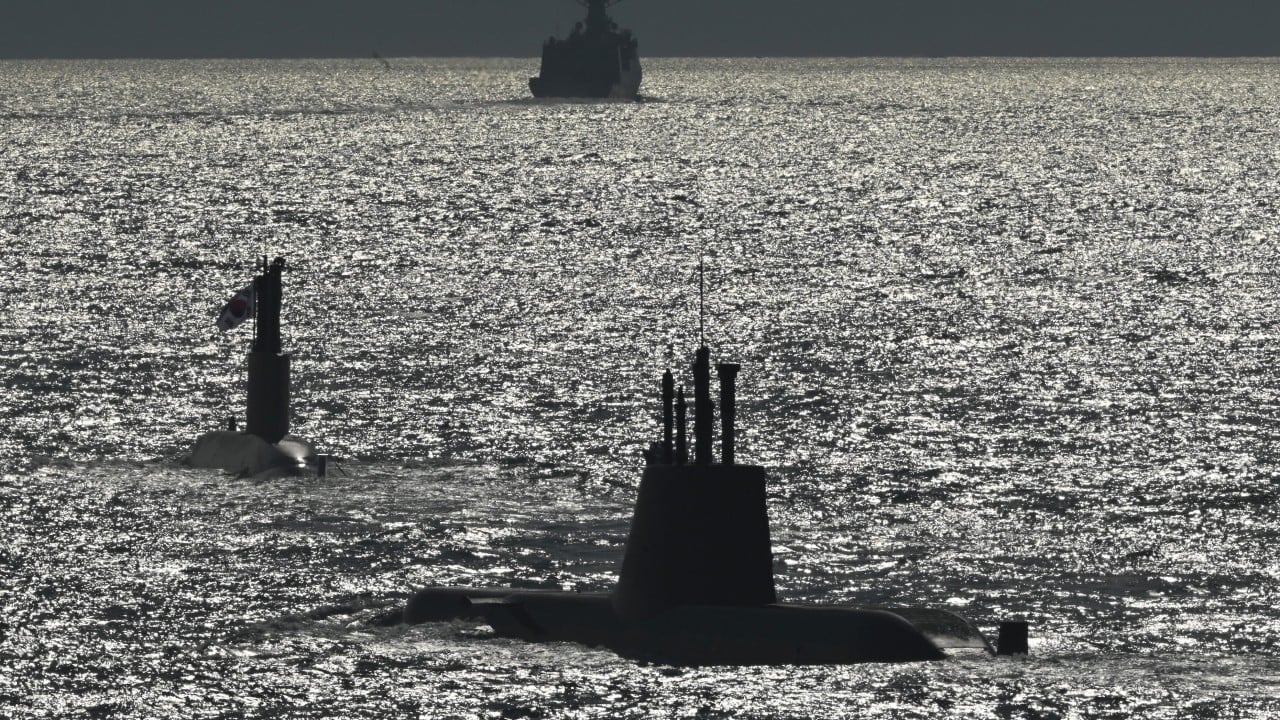
On paper, the South Korean offering was a marvel. The KSS-III Batch-II is a 3,000-ton conventional submarine equipped with an Air-Independent Propulsion (AIP) system and state-of-the-art lithium-ion batteries that offer unmatched underwater endurance. It is a mature, actively operating platform equipped with vertical launch system (VLS) cells capable of firing submarine-launched ballistic missiles—a capability its European competitors lack.
To sweeten the deal, Hanwha Ocean committed to a staggering CA$70 billion industrial package, promising to support tens of thousands of Canadian jobs over two decades. They promised delivery of the first vessel by 2032, a speed Western shipyards can only dream of.
By contrast, the German Type 212CD is a smaller, design-stage submarine with limited range and no active operational history in this specific, enlarged configuration.
Yet, Germany won.
+------------------+-------------------------+-------------------------+
| Feature          | South Korean KSS-III    | German Type 212CD       |
+------------------+-------------------------+-------------------------+
| Status           | Operational / Active    | Design Phase (In Dev.)  |
| Propulsion       | AIP + Lithium-ion       | AIP + Fuel Cell         |
| Weapons Payload  | High (Includes VLS)     | Moderate (Torpedoes)    |
| Delivery Offer   | Highly Rapid (2032)     | Standard / Extended     |
| Alliance Status  | Indo-Pacific Partner    | Core NATO Member        |
+------------------+-------------------------+-------------------------+
The Canadian decision revealed that in the realm of strategic deterrence, technical specifications and aggressive economic offsets are secondary to political geography.
Submarines are not tanks. They are sovereign, strategic intelligence-gathering assets that operate in highly sensitive, shared allied waters. For Ottawa, choosing Germany was not a procurement decision; it was a vote for NATO interoperability, shared Atlantic security architecture, and deep-seated institutional trust. South Korea, despite its "global pivotal state" rhetoric, remains an outsider to this Euro-Atlantic maritime club.
The Tyranny of the NATO Club
The Canadian loss is not an isolated incident. It is part of a pattern of European and NATO consolidation that is systematically freezing South Korea out.
- Poland's Orka Project: Last year, Warsaw passed over South Korean offers for its multi-billion-dollar submarine program in favor of Sweden’s Saab.
- The European Defense Shield: In June, a Franco-British consortium beat out Hanwha for a major rocket system upgrade project.
- The Norway Precedent: To keep South Korea from gaining a foothold in Europe, Norway even ceded its own submarine production slot to help Germany’s TKMS secure full backing from the European bloc.
This is "Team Europe" in action. European defense giants, long complacent under low defense spending, have been shocked awake by the war in Ukraine and the aggressive rise of South Korean arms exports. They are using every bureaucratic, political, and institutional lever at their disposal to protect their home turf.
Submarines require immense life-cycle support, training, and operational coordination. A European navy buying a German, French, or Swedish submarine buys into an existing, highly integrated regional logistics and training ecosystem. To buy South Korean is to build an expensive, isolated logistics bridge across the globe. For cash-strapped Western defense ministries, that risk is simply too high.
The Internal Friction of K-Defense
Beyond the geopolitical barriers, South Korea's naval export drive is suffering from self-inflicted wounds.
The domestic defense industry is defined by an intense, often toxic rivalry between its two titanic shipbuilders: Hanwha Ocean (formerly Daewoo Shipbuilding & Marine Engineering) and HD Hyundai Heavy Industries.
While the two companies formed a marriage of convenience to bid for the Canadian contract, their domestic relationship is characterized by bitter legal disputes, allegations of technology theft, and fierce infighting for domestic naval contracts. This internal civil war drains resources, splits engineering talent, and projects an image of instability to foreign buyers. When international customers buy a submarine, they are buying a 30-to-40-year relationship with the builder. If the builders are constantly at each other’s throats in court, foreign navies hesitate to sign on the dotted line.
Furthermore, South Korea's shipyards are facing an acute domestic crisis: a catastrophic demographic collapse.
The country's shipbuilding sector is suffering from a massive labor shortage, particularly in highly specialized engineering and welding roles. While the government has attempted to patch this with migrant labor, the highly classified, sensitive nature of submarine construction limits the use of foreign nationals. As the domestic workforce ages and shrinks, South Korea's core selling point—unmatched, rapid delivery speed—is under direct threat.
The Temptation of the Nuclear Mirage
Frustrated by the limitations of the conventional export market, some corners of the South Korean defense establishment are pushing for a radical pivot: building nuclear-powered submarines.
In mid-2026, defense officials laid out tentative roadmaps toward acquiring a nuclear propulsion capability, citing the need to counter North Korea's underwater nuclear threats.
This is a dangerous distraction.
Developing a domestic nuclear submarine program requires billions of dollars in bespoke regulatory, training, and qualification ecosystems. It requires domestic uranium enrichment concessions that Washington is highly unlikely to grant, fearing a regional nuclear arms race.
More importantly, it would completely destroy South Korea's naval export potential. Nuclear submarine technology is heavily restricted by non-proliferation treaties. By shifting limited engineering talent and capital toward a highly specialized, non-exportable nuclear program, Seoul risks starving its conventional submarine programs of the innovation needed to compete globally. It is an expensive, geopolitically volatile dead-end.
The Way Out
If South Korea wants to break the European monopoly on naval exports, it must abandon the fantasy of winning massive, solo prime-contractor bids in traditional Western alliances.
Instead, Seoul must pursue a strategy of deep industrial integration and co-development.
Rather than trying to sell whole, black-box South Korean hulls to NATO navies, Korean shipbuilders should position themselves as Tier-1 subsystems suppliers. The KSS-III’s lithium-ion battery technology, advanced AIP systems, and rapid modular construction techniques are world-class. By partnering with European shipyards to integrate South Korean technology into European hulls, Seoul can secure a slice of the global market without triggering the "Team Europe" antibodies.
The era of easy K-defense expansion is over. To survive in the deep ocean, South Korea must learn to swim with the cartel, not against it.