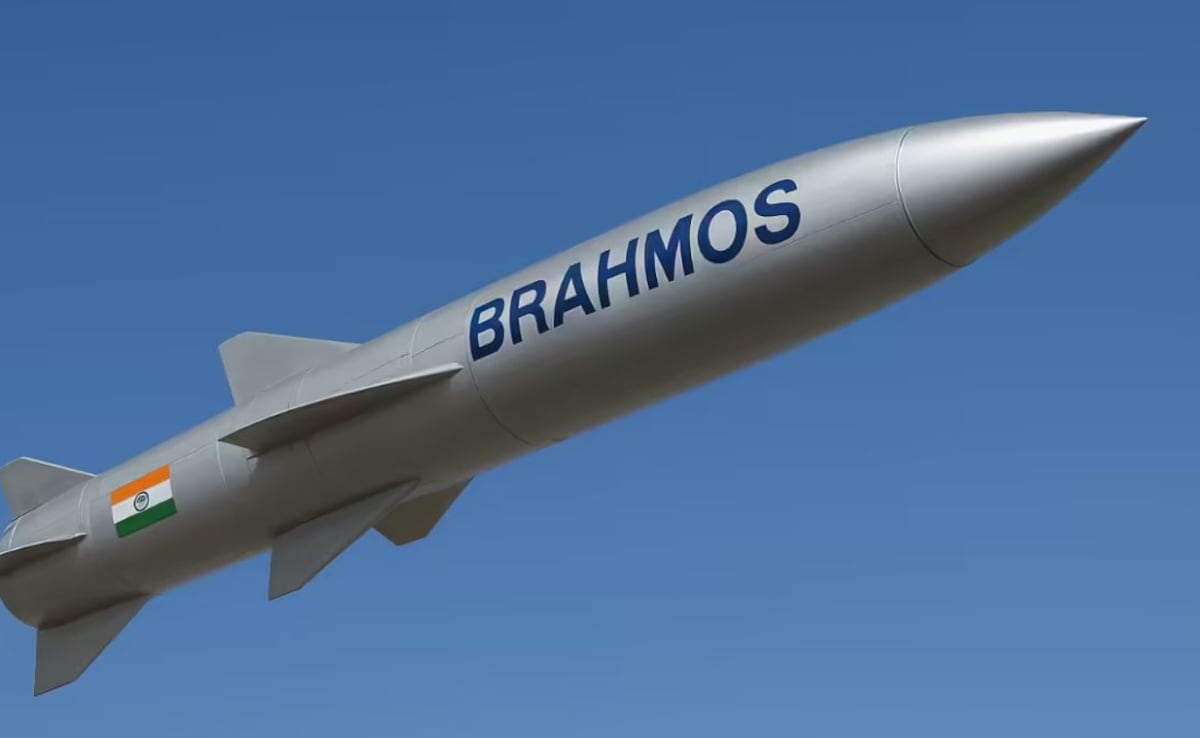
Defense analysts are currently tripping over themselves to celebrate the defense procurement trends in Southeast Asia. The narrative is comforting, neat, and entirely superficial. First, it was the Philippines. Now, the defense commentariat is buzzing over reports that Indonesia is moving closer to securing its own batch of BrahMos supersonic cruise missiles from India.
The mainstream consensus views this as a masterstroke. They call it a potent asymmetric deterrent against maritime encroachment, a rapid upgrade to regional naval power, and a brilliant geopolitical hedge.
They are wrong.
Buying the BrahMos is a textbook example of shiny object syndrome distorting military procurement. It is an expensive, logistically punishing, and doctrinally flawed decision that solves yesterday's tactical headaches while ignoring tomorrow's operational realities. Southeast Asian nations are pouring hundreds of millions of dollars into a highly specific weapon system without the foundational architecture required to make it useful.
The Targeting Mirage: A Missile is Only as Good as Its Eyes
The lazy analysis of the BrahMos focuses almost entirely on its raw performance specifications. It flies at Mach 2.8. It packs a devastating kinetic punch. It skims the sea waves to evade radar.
All of that sounds terrifying on a spec sheet. But a supersonic missile does not magically find its own target over the horizon.
The BrahMos has a range of approximately 290 to 450 kilometers, depending on the variant. At those distances, the curvature of the earth prevents ship-borne or land-based radars from tracking a target. To launch a BrahMos effectively against a hostile surface combatant at maximum range, you need a complex, survival-capable network of Intelligence, Surveillance, and Reconnaissance (ISR) assets. You need maritime patrol aircraft with advanced radar, long-range endurance drones, or real-time military-grade satellite telemetry to provide mid-course guidance updates.
Neither the Philippines nor Indonesia possesses this integrated kill chain in a resilient format.
If a conflict erupts, a superficial defense network cannot just assume a hostile cruiser will be sitting precisely where an old radar scan said it was twenty minutes ago. Without persistent, survivable ISR, these expensive missiles will be fired blindly into empty ocean coordinates, or worse, into civilian shipping lanes. I have watched defense ministries spend eye-watering percentages of their budgets on heavy ordnance while starving the dull, unglamorous sensor networks that actually steer the steel. It is theater, not strategy.
The Supersonic Fallacy vs. The Mass Attrition Reality
The foundational premise for buying the BrahMos is that its sheer speed makes it uninterceptable. Defense writers love to quote the Mach 2.8 figure as if it is an absolute shield against modern air defenses.
This ignores the physics of supersonic flight at low altitudes.
Flying at nearly three times the speed of sound near the ocean surface generates massive thermal friction. The missile glows like a flare on infrared sensors. Furthermore, compression of air at supersonic speeds creates a distinct, highly visible hydrodynamic wake and acoustic signature. Modern multi-domain air defense systems, such as the latest iteration of the Aegis Combat System or advanced close-in weapon systems (CIWS), do not need twenty minutes of warning. They operate on automated, high-frequency algorithms designed to track and swat high-speed, predictable trajectories.
Worse, because the BrahMos is massive—weighing around three tons for the ship-launched variant—it cannot be easily hidden or rapidly repositioned on a small vessel or a standard truck chassis without significant logistics trails.
Compare this to the changing nature of naval warfare. The ongoing conflicts in the Black Sea and the Red Sea have exposed the vulnerability of capital assets to high-volume, low-cost attrition. Cheap, subsonic, sea-skimming cruise missiles like the Neptune, paired with swarms of uncrewed surface vessels (USVs), have successfully neutralized major naval assets at a fraction of the cost.
Weapon System       Approx. Unit Cost    Weight          Speed
-----------------------------------------------------------------------
BrahMos             $3.5M - $4.5M        ~3,000 kg       Mach 2.8
Subsonic Alternative $1.2M - $1.5M        ~800 kg         Mach 0.8
For the price of a single battery of BrahMos missiles, a nation can acquire dozens of stealthy, subsonic anti-ship missiles or hundreds of long-range strike drones. In an era where saturation beats sophistication, buying a handful of ultra-expensive supersonic missiles is an archaic approach to coastal defense.
The Logistical Nightmare of the Indo-Russian Supply Chain
Let us look at the geopolitical reality of the weapon itself. The BrahMos is not a purely Indian product; it is a joint venture between India’s DRDO and Russia’s NPO Mashinostroyeniya. The "Brah" is for the Brahmaputra river, and the "Mos" is for the Moskva.
This dual lineage is a ticking logistical time bomb for any buyer.
The Russian components of the BrahMos—including the critical ramjet propulsion system and certain seeker technologies—are tied directly to an industrial base currently strained by severe international sanctions and domestic wartime production demands. When you buy a weapon system, you are not just buying the hardware on the day of delivery. You are entering into a twenty-year marriage contract for maintenance, spare parts, software updates, and proprietary components.
If a critical component in the ramjet assembly fails three years from now, Jakarta or Manila will be forced to navigate a Byzantine web of export controls, CAATSA sanction risks from Washington, and production bottlenecks in Moscow. A missile system sitting in a warehouse waiting for a sanctioned Russian microchip or a delayed Indian factory component is nothing more than a very expensive paperweight.
Dismantling the Conventional Wisdom
The mainstream discussion around this acquisition is littered with flawed premises. Let us address the most prominent assertions directly.
"The BrahMos provides an instant asymmetric capability."
This statement misunderstands the definition of asymmetry. True asymmetry uses low-cost, decentralized methods to deny a superior force the ability to operate. The BrahMos is a symmetric response: a massive, conventional, highly centralized missile system that requires specialized launch platforms, heavy prime movers, and highly trained personnel. It is easily targeted by pre-emptive strikes and satellite reconnaissance before it even raises its launch tubes.
"It deters major naval powers from entering territorial waters."
Deterrence requires both capability and credibility. If a major adversary knows your radar networks can be jammed, your command-and-control centers can be severed by cyberattacks, and your missile inventory is too low to survive initial electronic countermeasures, they are not deterred. They are amused. A small inventory of high-value missiles invites a pre-emptive strike to eliminate them early in a crisis.
The Hard Truth of Naval Denial
If the goal is genuine maritime denial on a budget, the solution is not to copy the procurement strategies of large, blue-water navies. The solution is aggressive decentralization.
Instead of heavy, supersonic cruise missiles that require specialized multi-ton trucks, regional powers should invest heavily in smart sea mines, containerized subsonic anti-ship missiles that can be disguised on ordinary commercial flatbed trucks, and hundreds of low-cost, expendable aerial and surface drones.
This creates a chaotic, distributed target environment that an adversary cannot easily plan against. Force multiplication happens when you make the enemy waste million-dollar air defense interceptors on ten-thousand-dollar drones, not when you hand them a small number of massive, high-value targets to track and destroy.
Stop looking at the flashing lights of supersonic speed specs. Stop listening to defense analysts who evaluate military strength by counting the parades. Southeast Asia is buying a status symbol when it desperately needs a functional, unglamorous, distributed network of survival.
Pouring capital into the BrahMos without fixing the broken sensor framework beneath it is a strategic error. The missiles will look magnificent in promotional videos and holiday parades, but in a real conflict, they will be deaf, blind, and ultimately irrelevant.